Best Wheels for Honda Civic Type R — FK8 & FL5 Fitment Guide
The FK8 Type R runs a 5x120 bolt pattern with a 64.1mm hub bore — the same pattern as most Japanese performance cars, which means an excellent selection of quality aftermarket wheels with confirmed fitment.
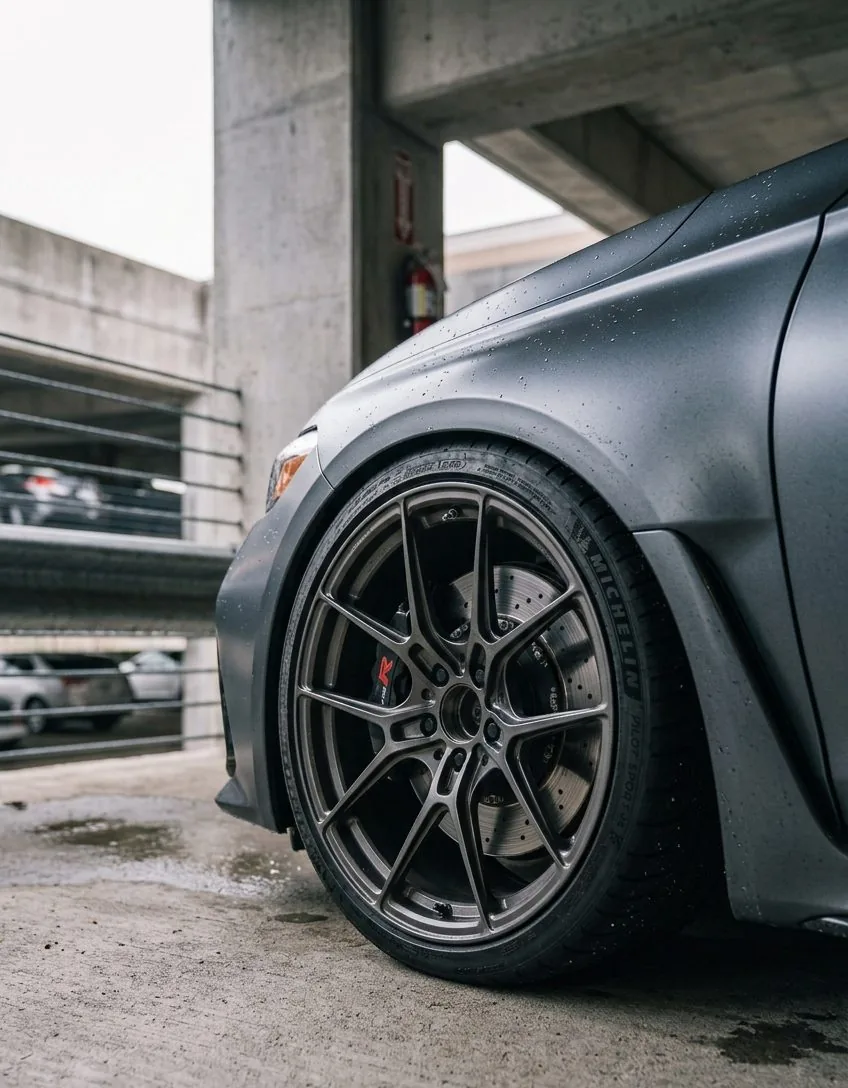
This is a wheel-buying guide: use it to compare wheel diameter, weight, brake clearance, finish and intended use. Offset and width are summarized here so you can choose a wheel, while the dedicated offset guide and wheel-width guide cover the detailed measurement questions.
Related guide: Civic Type R tire sizes →Civic Type R wheel offset guide →Civic Type R wheel width explained
The best Type R wheel is not simply the lightest wheel you can afford. The useful choice is the one that clears the Brembo brakes, works with the tire you actually want, keeps the car predictable on your roads, and gives you enough sidewall for the way you drive.
Start with the car, not the wheel catalog. FK8 and FL5 share a 5x120 bolt pattern and 64.1 mm center bore, but their factory wheel/tire packages are different. Honda lists the FK8 with a 20-inch wheel and 245/30ZR20 tire, while the current FL5 uses a 19x9.5 wheel with a 265/30ZR19 tire. Treat a wheel advertised as “5x120 Type R fitment” as a starting point—not proof that it clears your brakes or fits your chosen tire.
FK8 vs FL5: The Factory Baseline
| FK8 | FL5 | |
|---|---|---|
| Factory wheel | 20 x 8.5 | 19 x 9.5 |
| Factory tire | 245/30ZR20 | 265/30ZR19 |
| Bolt pattern | 5x120 | 5x120 |
| Center bore | 64.1 mm | 64.1 mm |
| Common OEM offset reference | ET60 | ET60 |
Honda's current FL5 specification confirms the 19x9.5 wheel and 265/30ZR19 tire, while Honda's FK8 material confirms the 20-inch wheel and 245/30ZR20 tire. The bolt pattern and center-bore figures are cross-checked against fitment references, but aftermarket fitment still depends on the individual wheel design.
What Actually Makes a Good Type R Wheel?
For a street-driven Type R, I would rank the decision in this order: brake clearance, correct width/offset, tire choice, weight, durability, then appearance. A wheel that looks perfect in a photo is not a bargain if its spokes touch the Brembo caliper or its low-profile tire makes every broken road miserable.
| Priority | Why it matters |
|---|---|
| Brake clearance | Diameter alone does not tell you whether the spokes clear the front caliper. |
| Width + offset | These determine where the inner barrel and outer lip sit relative to the suspension and fender. |
| Tire compatibility | The same wheel can behave very differently with different tire widths and sidewalls. |
| Weight | Reducing unsprung and rotational mass can sharpen response, but only if durability and fitment remain sensible. |
| Construction | Cast, flow-formed and forged wheels each involve different cost, weight and durability trade-offs. |
Choose the Wheel Around Your Use Case
Daily street car
Keep the fitment conservative. A slightly taller sidewall and a wheel that does not sit on the edge of the fender can be worth more than an aggressive stance. On poor roads, preserving tire sidewall and avoiding unnecessary spacers reduces the number of things you have to worry about.
Street + canyon driving
This is where a lighter wheel and sensible tire can make the car feel more eager without turning it into a dedicated track setup. You want enough clearance for compression and steering lock, not just a perfect static photo.
Track days
Start with brake clearance and tire availability. A smaller-diameter package can make sense if the wheel clears the brakes and the tire you want is available in a suitable size. The correct setup is the one that survives heat, curbs and repeated impacts—not the one with the most aggressive offset.
Why Wheel Weight Matters — But Not by Itself
A lighter wheel can reduce unsprung mass and rotational inertia, which can help steering response and acceleration/braking feel. But there is a point where chasing a few pounds becomes a poor trade for a wheel that is fragile, difficult to replace or expensive enough that you hesitate to drive the car normally.
For a daily Type R, I would rather have a reputable flow-formed wheel with a sensible fitment than an ultra-light wheel that forces an awkward tire size or questionable brake clearance.
Brake Clearance Is a Wheel-Design Problem
This is where many wheel lists go wrong. Two 18-inch wheels with identical diameter, width and offset can have completely different spoke profiles. One may clear the Brembo caliper comfortably; the other may not. Ask the wheel manufacturer for a brake-clearance application or template when available. Do not treat diameter and bolt pattern as a brake-clearance certificate.
Offsets: Use the Number, Then Check the Car
Offset tells you where the mounting face sits relative to the wheel's centerline. Lowering the ET number generally moves a wheel outward; raising it generally moves the wheel inward. But changing width at the same time changes both inner and outer clearance, so quoting a single “safe offset” without the wheel width and tire is misleading.
For the detailed math, use the Civic Type R offset guide. For width and tire pairing, use the wheel-width guide.
What I Would Buy for Different Builds
| Build | What to prioritize | What to avoid |
|---|---|---|
| Comfortable daily | Moderate fitment, good tire sidewall, durable wheel | Extreme poke or unnecessarily low-profile tire |
| OEM+ street | Near-OEM geometry with a lighter wheel | Copying an internet fitment without checking the exact tire |
| Canyon/spirited | Weight, brake clearance, tire support and steering response | Choosing by appearance alone |
| Track | Brake clearance, tire availability, durability and easy replacement | Fragile show wheels or fitment that relies on rubbing tolerance |
Before You Order: The Five-Minute Fitment Check
- Confirm 5x120 bolt pattern and 64.1 mm hub requirements.
- Confirm the exact wheel width and ET—not just “Type R compatible.”
- Confirm Brembo brake clearance for the specific wheel design.
- Check the tire's approved rim-width range and overall diameter.
- Check full-lock, compression and fender clearance if the car is lowered or spaced.
If a seller cannot give you a clear answer on brake clearance or application, that is a reason to keep shopping.
Three Fitment Scenarios That Look Similar on Paper
Scenario 1: Same width, lower ET
This is the easiest comparison to understand. If the wheel width stays the same and you reduce ET, the wheel moves outward. Inner clearance improves, but the outer lip and tire move closer to the fender. That can be exactly what you want for a flush street build—or exactly what you do not want if the car is lowered.
Scenario 2: Wider wheel, same ET
Now the center of the wheel stays in roughly the same place, but the added width extends both inward and outward. You may gain tire support, but you also consume clearance on both sides. This is why “same offset” does not mean “same fitment.”
Scenario 3: Wider wheel and lower ET
This is where forum fitment lists become dangerous. You are adding width and simultaneously moving the wheel outward. It can work beautifully on a particular car, but the exact tire, camber and ride height become much more important. Treat these combinations as a complete setup rather than a wheel-only recommendation.
What to Measure Before You Buy
If you are replacing the factory wheels, write down the complete package you have now: wheel diameter, width, ET, tire size and tire model. Then record the new wheel's same five details. If the car is lowered, measure the current fender-to-tire relationship and inspect the inner side around the strut and brake area. Photos from another FK8 or FL5 are useful for inspiration, but they are not a substitute for measurements.
Also check the wheel manufacturer's lug-seat specification. A wheel can share the Type R's 5x120 pattern and still require different hardware from the factory wheel. The same goes for hub bore: a larger bore can be adapted with an appropriate hub-centric ring, but a smaller bore cannot simply be forced over a 64.1 mm hub.
Why 18-Inch Type R Setups Are Popular
The appeal is not that 18 inches is magically faster. The appeal is the extra tire sidewall that becomes possible while keeping overall tire diameter in a sensible range. On a daily-driven FK8, that can make the car more forgiving over potholes and broken pavement. On a track car, the decision is more about the tire sizes available, brake clearance and wheel durability. The FL5 already starts from a 19x9.5 package, so the reason for downsizing is a little different: you are usually trading the factory low-profile package for more sidewall and a different tire/wheel combination.
That distinction matters because the “best wheel size” is not universal across the two generations. Start with the use case and tire, then choose the wheel around them.
Sources and Fitment Notes
Factory FK8 and FL5 specifications in this guide are based on Honda documentation. Honda lists the current FL5 with 19x9.5 wheels and 265/30ZR19 tires, while Honda's FK8 material lists the 20-inch wheel and 245/30ZR20 tire. Bolt pattern, center-bore and offset references are cross-checked against established fitment databases. Aftermarket wheel clearance is always application-specific.
Honda Civic Type R specifications · Honda FK8 brochure
OEM+ vs Aggressive Wheel Fitment
There are two common directions for a Type R wheel build. An OEM+ setup keeps the visual proportion close to factory while prioritizing predictable clearance, ride quality and easy ownership. An aggressive setup may push wheel width, tire width or outer position further, but it also reduces the margin for error.
Neither approach is automatically better. For a daily-driven FK8 or FL5, the sensible choice is the setup that clears the brakes and suspension at full steering lock and compression without relying on permanent rubbing or an extreme alignment. If appearance is the priority, measure the actual car before copying another owner's specification.
Use the Whole Wheel-and-Tire Package
A wheel diameter by itself tells you very little about fitment. A 19-inch wheel can have different widths, offsets, spoke profiles and barrel shapes. The tire adds another variable because two tires with the same nominal size can have different measured section widths and approved rim-width ranges.
That is why this page should be your buying overview, while the FK8 fitment guide, wheel width guide and offset guide handle the technical questions in more detail.
For owners specifically considering year-round street use, see our Best All-Season Tires for Civic Type R guide.
Frequently Asked Questions
What is the Type R bolt pattern? FK8 and FL5 use a 5x120 bolt pattern with a 64.1 mm center bore. Always verify the wheel's fastener/seat requirements separately.
Can an FK8 wheel fit an FL5? The basic bolt pattern and center bore are shared, but that does not make every wheel a direct fit. Brake clearance, width, offset, tire size and spoke design still have to be checked.
Is a smaller wheel automatically better? No. A smaller wheel can allow more sidewall and sometimes reduce weight, but only if the wheel clears the brakes and the resulting tire package suits the car.