Honda Civic Type R Wheel Width Explained — FK8 & FL5
Wheel width on the FK8 and FL5 Type R affects tyre support, sidewall shape, brake clearance and overall fitment — here is how to choose the right width for your setup.
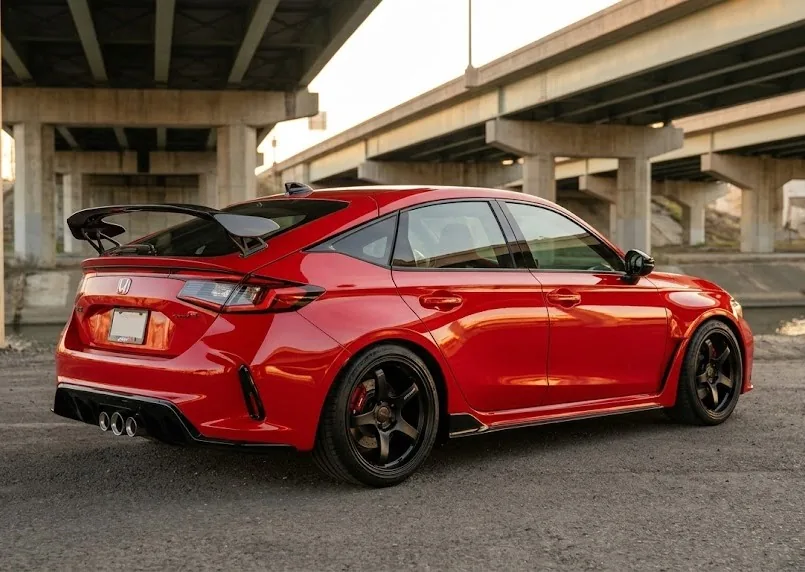
Wheel width changes more than the look of the car. It changes where the inner barrel and outer lip sit, how the tire sidewall is supported, and how much room you have left for brakes and suspension.
Factory Widths: FK8 vs FL5
| Model | Factory wheel | Factory tire |
|---|---|---|
| FK8 | 20x8.5 ET60 | 245/30ZR20 |
| FL5 | 19x9.5 ET60 | 265/30ZR19 |
What One Inch of Width Actually Changes
Adding one inch of width adds 25.4 mm across the wheel. If the offset stays the same, roughly half of that extra width goes inward and half outward. Change the offset at the same time and the split changes. That is why a “9.5-inch wheel” cannot be judged without its ET.
Width and Tire Shape Belong in the Same Decision
The tire manufacturer's approved rim-width range matters. A tire can technically mount on a wheel while still producing a shape you don't want for your use. For a street Type R, the goal is usually a supported sidewall with enough clearance rather than stretching the tire to chase an aggressive look.
Why a Wider Wheel Isn't Automatically Faster
A wider wheel can support a wider tire, but the extra width also adds weight and can create clearance problems. If the wider package forces more camber, a spacer, a stiffer setup or a tire you don't actually want, the theoretical grip gain may not be worth the compromises.
Brake Clearance Still Wins
The front Brembo caliper makes wheel design important. Two wheels with the same width and ET can have different spoke clearance. Always check the manufacturer's brake application data for the specific wheel.
Width by Use Case
| Use | Width strategy | Reason |
|---|---|---|
| Daily | Close to a proven application | More clearance and easier tire selection |
| Spirited street | Moderate increase if the tire supports it | Balance response and practicality |
| Track | Choose around the tire and brake package | Grip and heat management matter more than stance |
Lowered Cars Need an Extra Check
Lowering changes the suspension's position relative to the fender. A wheel that clears at static ride height can move into the arch under compression. Check the car at steering lock and through suspension travel rather than judging clearance from a parked photograph.
A 9-Inch Wheel and a 9.5-Inch Wheel Are Not “Almost the Same”
The difference is only half an inch, but that is 12.7 mm of total wheel width. When you are working with a few millimeters of clearance, that is enough to matter. If the ET also changes, the final inner and outer positions can move even farther.
Wheel Width and Tire Shoulder Shape
Two tires with the same nominal width can have different section widths and shoulder shapes. One may look almost square on a particular wheel; another may bulge more. This is why tire model matters when you are close to the fender or suspension. Use the tire manufacturer's dimensional data where available rather than assuming every 265 tire occupies the same space.
What Wider Means for a Daily Driver
A wider wheel can make steering response feel more immediate when paired with a suitable tire, but it can also make the setup less forgiving. The tire may have less room to move without touching the fender, and a heavier wheel can cancel some of the performance benefit you expected from the wider package.
How to Compare Two Wheel Options
Put both wheel specs on paper. Compare width, ET, tire size, tire model and brake application. Then calculate the approximate inner and outer movement. This five-minute exercise is more useful than choosing between two wheels based on a photograph.
Frequently Asked Questions
Is 9.5 inches too wide for a Type R? Not as a blanket statement. The FL5 is factory-equipped with a 19x9.5 wheel, while an FK8 owner needs to consider the different factory package and the complete aftermarket fitment.
Should I choose the wheel first or the tire first? For a performance build, choose the tire/use case first, then select a wheel that supports the tire properly and clears the car.
For ET calculations, continue to the Type R offset guide.
When the narrower option makes more sense
A narrower wheel can be easier to package, lighter in some product ranges and less demanding on fender clearance. For a daily car that sees poor roads, those advantages can be more valuable than chasing maximum width.
When a wider option makes sense
A wider wheel may be useful when the chosen performance tire requires or benefits from a larger approved rim width. The decision should start with the tire's specification and intended use, then work backward to wheel dimensions.
Compare the complete package
Before calling a wheel upgrade, compare the old and new wheel width, ET, tire size, total weight and brake clearance. That prevents a wider wheel from being treated as automatically better when it may actually add weight or reduce clearance.
Do Not Confuse Width With Tire Clearance
Wheel width changes the rim position, but the tire is what ultimately occupies the available space. A wider tire can extend farther than the rim itself, and shoulder shape can vary significantly between tire models. When a fitment is close, use the tire manufacturer's published section width and rim-width range instead of assuming the nominal tire number tells you everything.
Weight is part of the equation
Moving to a wider wheel can add mass, particularly when moving to a larger diameter at the same time. Added unsprung and rotational mass can affect how the car feels even if the wider tire provides more grip. For a street-driven Type R, the lightest wheel that properly supports the chosen tire and clears the brakes can be a more sensible goal than maximum width.
Ask for the wheel's actual brake application
If the wheel is intended for the Type R, verify its specific brake-caliper compatibility. Diameter, width, and ET are not enough to describe spoke-to-caliper clearance. The same nominal wheel dimensions can package differently depending on spoke profile and barrel shape.