Civic Type R Tire Sizes: FK8 and FL5 Guide
Factory FK8 and FL5 Civic Type R tire sizes, plus the fitment checks that matter before changing wheels or tire dimensions.
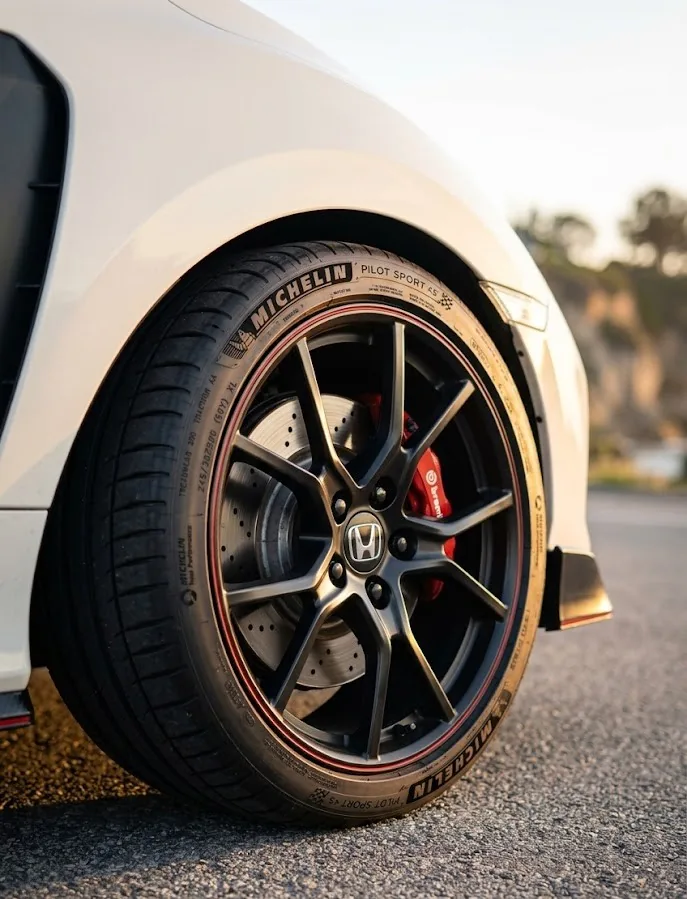
Factory Civic Type R Tire Sizes by Generation
The tire size printed on the sidewall encodes width, aspect ratio, construction and wheel diameter. For the modern Type R, the key factory baselines are 245/30ZR20 for the FK8 and 265/30ZR19 for the FL5. Honda lists the current Type R with 19 x 9.5J wheels and 265/30ZR19 93Y Michelin Pilot Sport 4S tires. The 265 mm section width is 20 mm wider than the prior-generation Type R's factory tire width. That change affects wheel fitment, clearance and replacement cost.
| Generation | Factory wheel | Factory tire size | Practical note |
|---|---|---|---|
| FK8 (2017–2021) | 20-inch alloy | 245/30ZR20 | Low-profile 20-inch package; pothole and replacement-cost concerns are common |
| FL5 (2023–present) | 19 x 9.5J | 265/30ZR19 93Y | Factory 19-inch package offers a wider tire and more sidewall than FK8 |
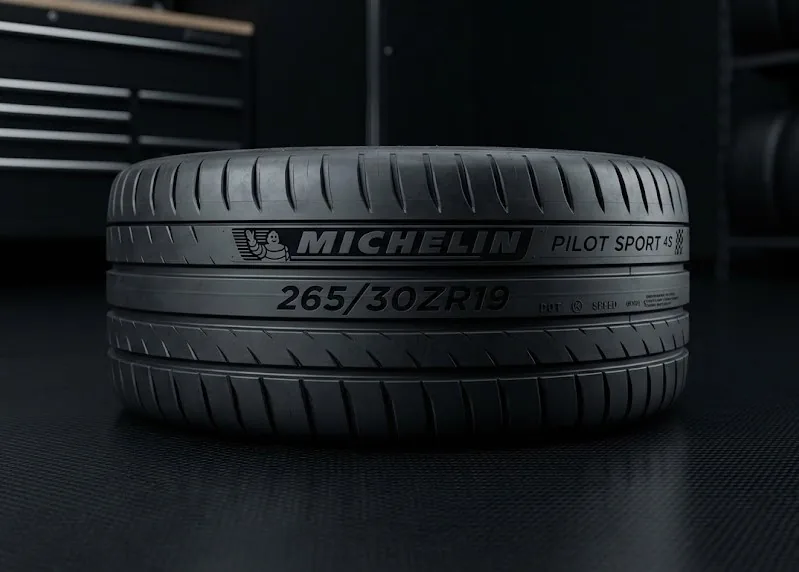
How to Read 265/30ZR19
In 265/30ZR19, 265 is the nominal section width in millimeters. The 30 is the aspect ratio, meaning sidewall height is approximately 30 percent of the nominal width. ZR identifies radial high-speed tire nomenclature, and 19 is the wheel diameter in inches. The load index and speed rating follow the size—for the current Type R, Honda specifies 93Y. Those ratings are part of the tire's suitability, not optional decoration. A size that physically mounts can still be inappropriate if its load capacity or speed rating is wrong.
Published dimensions vary by brand and model. A 265 from one manufacturer can be wider or narrower in actual measured section width than a 265 from another. This is why clearance advice based only on size is incomplete. Check the tire maker's measured rim width and overall diameter data, then use the wheel offset guide to account for your wheel.
Replacement Versus Alternative Sizes
The safest replacement choice is the OEM size with an appropriate load and speed rating. It keeps the speedometer, ABS/traction-control assumptions, gearing and clearance closest to Honda's calibration. Alternative sizes may be appropriate for track tires, snow tires or a wheel change, but they should be selected as a system. Large overall-diameter changes alter indicated speed and effective gearing. Large width changes can create rubbing at steering lock or compression.
For a square setup, keep the front and rear rolling circumference closely matched. For staggered setups, be especially cautious on a front-wheel-drive Type R: the driven front axle, steering response and rotation strategy all matter. Do not copy a size from social media without knowing wheel width, offset, ride height, alignment and tire model.
Tires, Wheels and Pressure Work Together
Wheel width supports the tire's shape. A tire mounted on a wheel narrower or wider than its approved range can change steering response, tread contact and sidewall behavior. Offset moves the wheel inward or outward relative to the hub. A lower numerical offset commonly pushes the wheel outward; a higher offset pulls it inward. Neither is automatically "better"—clearance to the suspension and fender must be checked.
Use the door-jamb label and owner's manual as the starting point for cold pressure. Track pressures require separate, condition-specific management. Set pressures cold, check them warm at the event, and inspect tread wear across the tire rather than relying on a single internet number. Alignment and driving style can make shoulders disappear long before the center tread tells you anything useful.
Buying Guide for Type R Tires
- Start with the exact OEM size for your generation unless you have a defined reason to change.
- Match or exceed the required load index and speed rating.
- Choose summer, all-season or track-focused performance based on climate and use.
- Verify wheel width, offset and clearance for every non-stock size.
- Replace tires as axle pairs at minimum and keep rolling circumference consistent.
When a 19-Inch Conversion Makes Sense
Many FK8 owners investigate 19-inch wheels to gain more sidewall and expand tire choices. That can be a sensible road-oriented move, but it is not a universal upgrade. The conversion has to clear the large front brakes, use a wheel with appropriate load rating and spoke design, and retain a tire diameter close enough to stock. A 19-inch wheel alone tells you none of those things. Consult the wheel maker's brake-clearance template where available.
Civic Type R Dimensions and Track Width
Tyre width and vehicle width are directly related — the track width determines how much rubber sits beneath the car's centre of gravity and how the tyre interacts with the wheel arch at full lock and full suspension travel. These are the key dimensions for the FK8 and FL5:
| Dimension | FK8 (2017–2021) | FL5 (2023–present) |
|---|---|---|
| Overall body width (mirrors folded) | 1,877mm (73.9 in) | 1,890mm (74.4 in) |
| Overall body width (mirrors out) | 2,089mm (82.2 in) | 2,104mm (82.8 in) |
| Front track width | 1,575mm (62.0 in) | 1,601mm (63.0 in) |
| Rear track width | 1,589mm (62.6 in) | 1,610mm (63.4 in) |
| Wheelbase | 2,700mm (106.3 in) | 2,735mm (107.7 in) |
| Overall length | 4,557mm (179.4 in) | 4,621mm (181.9 in) |
| Overall height | 1,434mm (56.5 in) | 1,411mm (55.6 in) |
The FL5 is wider, longer and sits lower than the FK8. Its wider front and rear track is part of why the FL5 OEM tyre moved from a 245/30ZR20 (FK8) to a 265/30ZR19 — the wider track benefits from a wider tyre contact patch. When choosing aftermarket tyres, the track width tells you how much room you have before the tyre starts to interfere with the arch liner at full droop or full lock.
Tyre Section Width Explained
The first number in a tyre size code — 265 in 265/30ZR19 — is the section width in millimetres measured at the widest point of the tyre sidewall, not the tread width. The actual tread contact patch is typically 10–15mm narrower than the section width on a correctly sized rim. Running a tyre on a rim that is too narrow causes the sidewall to bulge and the tread to round off — this increases section width beyond nominal and can cause arch contact. Running a tyre on a rim that is too wide stretches the sidewall, flattens the tread profile and can cause inner shoulder wear.
| Tyre size | Section width (nominal) | Recommended rim width | Fits |
|---|---|---|---|
| 245/30ZR20 | 245mm | 8.0–9.5J | FK8 OEM |
| 265/30ZR19 | 265mm | 9.0–10.5J | FL5 OEM |
| 255/30ZR19 | 255mm | 8.5–10.0J | FK8 19-inch conversion |
| 275/30ZR19 | 275mm | 9.5–11.0J | Track-focused FL5 fitment |
Tyre Pressure Reference — FK8 and FL5
Honda specifies tyre pressures on the door jamb sticker, which accounts for the vehicle's weight distribution and suspension tune. These are the typical OEM cold pressure specifications — always verify against your specific door sticker as values can differ by trim and market:
| Condition | FK8 front | FK8 rear | FL5 front | FL5 rear |
|---|---|---|---|---|
| Cold (street / daily) | 35 PSI | 33 PSI | 36 PSI | 34 PSI |
| Track day (hot baseline) | 32–33 PSI | 30–31 PSI | 33–34 PSI | 31–32 PSI |
| High speed motorway | 36 PSI | 34 PSI | 37 PSI | 35 PSI |
On a track day, check pressures hot after 2–3 laps rather than cold in the paddock. Hot pressure rise depends on ambient temperature, load, speed, tire construction and starting pressure. Measure your own tires rather than assuming a fixed cold-to-hot PSI increase. Always return to OEM cold pressures for road driving after a track session.
Recommended Tyre Picks for FK8 and FL5
Three tyre choices cover most Type R use cases — an OEM-match performance summer, an all-season option for year-round driving, and a harder-wearing high-performance alternative:
Choosing a Type R Tire Setup by Use
For a daily-driven FK8 or FL5, stay close to the factory overall diameter and prioritize wet grip, ride quality and availability. An 18-inch conversion can add useful sidewall and reduce replacement cost, but only when the wheel width, offset and brake clearance have been confirmed. A canyon-focused setup usually values steering response and heat tolerance, while a track setup should be selected around the event, alignment and the driver's ability to monitor hot pressure.
| Use | Practical priority | Fitment note |
|---|---|---|
| Daily | Wet grip and comfort | Keep rolling diameter close to OEM |
| Canyon | Steering response and consistency | Match tire width to wheel width |
| Track | Heat tolerance and shoulder support | Confirm clearance at compression |
Common Tire-Fitment Mistakes
The usual mistake is choosing a tire only because its nominal width looks wider. Tire section width changes with rim width, and a wide tire on an unsuitable wheel can feel vague or contact the liner under load. Do not use a spacer to solve an inner-clearance issue until you understand its effect on effective offset. For a complete wheel plan, use the Civic Type R wheels guide, then compare wheel width and offset before buying tires.
Civic Type R Tire-Size Decision Guide
Should I keep the factory tire size?
The factory size is the simplest baseline because the vehicle was engineered around that wheel-and-tire package. An alternative can make sense for a specific goal, such as adding sidewall or changing wheel diameter, but overall diameter, section width, approved rim width, load rating, speed rating and clearance should all be checked.
Can I use a smaller wheel for more comfort?
Sometimes, but brake clearance is the first question on a Type R. A smaller diameter wheel can provide more sidewall, yet the wheel still needs enough internal clearance for the brake hardware. Do not assume a smaller diameter will clear simply because the tire diameter is similar.
Does a different tire size change handling?
It can. Section width, sidewall height, construction and overall diameter can alter steering response, ride quality and available grip. The result also depends on wheel width and tire pressure. Evaluate the complete package rather than treating the tire size number as an isolated specification.
Alternative Tire Sizes: When They Make Sense and When They Don't
An alternative tire size can solve a specific problem, but it should not be chosen simply because the number looks close to the factory size. Owners sometimes move to a different sidewall height to improve ride comfort or protect a wheel, while others choose a different width for a particular wheel. Each change affects the complete package, including gearing, speedometer behavior, clearance and steering response.
Check Overall Diameter
Compare the calculated overall diameter of the alternative with the original size. A meaningful difference can change the vehicle's effective gearing and speedometer reading. Even when the diameter is close, the tire's actual measured dimensions can vary by model, so use manufacturer data where available.
Check Load and Speed Ratings
Performance cars place real demands on tires. An alternative size should meet the vehicle's required load and speed specifications rather than being selected purely for appearance or price. The tire's approved rim-width range is equally important when changing wheel width.
Check Clearance at Full Steering Lock
A tire can clear the fender while driving straight and still contact the liner or suspension during steering. Check both directions of steering lock and, where appropriate, suspension compression. This is especially important after changing both tire width and wheel offset at the same time.
How Tire Diameter Changes the Car
When comparing alternative tire sizes, do not focus only on width. Overall tire diameter affects effective gearing, indicated speed and the amount of sidewall available to absorb bumps. A larger overall diameter can reduce engine rpm at a given road speed, while a smaller diameter can do the opposite. The actual result depends on the exact tire dimensions and wheel combination.
For a street-driven Type R, staying close to the factory rolling diameter is usually the easiest way to keep the car predictable. If you intentionally move away from the OEM diameter for a track, winter or wheel-conversion setup, calculate the change and verify the tire maker's published dimensions rather than assuming the nominal size tells the whole story.
All-Season, Summer and Track Tire Decisions
The right size depends on how the car is used. An all-season tire may be chosen for temperature range and wet-weather practicality, while a summer performance tire prioritizes dry and warm-weather grip. Track tires introduce another layer of heat, pressure and clearance considerations. The tire category and the size should therefore be selected together.
Important: A tire can physically fit a wheel and still be a poor choice for the vehicle's intended use. Check load index, speed rating, approved rim width, overall diameter and actual measured dimensions before ordering.
For owners specifically considering year-round street use, see our Best All-Season Tires for Civic Type R guide.
For Type R fitment, continue to the FK8 fitment guide, wheel-width guide and tire-pressure guide. Those pages answer different parts of the same decision instead of forcing every fitment question into one tire-size table.
Changing tire size is not just a diameter decision. Section width, sidewall height, wheel width and offset all interact. A tire that is close in overall diameter can still create clearance issues if it is substantially wider or mounted on a different wheel. Before changing sizes, compare the complete wheel-and-tire package against the factory setup.
Tire Size Changes Should Be Evaluated With the Wheel
Frequently Asked Questions
What size tires are stock on the FL5 Civic Type R? Honda lists 265/30ZR19 93Y tires on 19 x 9.5J wheels for the current Type R. Check your own door placard for the vehicle-specific specification.
What size tires are stock on the FK8? The FK8 factory package used 245/30ZR20 tires. Confirm the size shown on your own vehicle before replacing tires.
Can I run a wider tire? Possibly, but only after checking the specific tire's dimensions, wheel width, offset, alignment and clearance at steering lock and compression.
Can I use all-season tires? Yes where climate and use call for them, provided size, load and speed requirements are met. They trade ultimate warm-weather grip for broader conditions.
Does changing tire size affect the speedometer? It can. Overall diameter changes alter wheel revolutions per mile, which can affect indicated speed and other vehicle systems.
Conclusion
Stay close to the factory Type R tire size unless you can explain the wheel, tire and clearance consequences of an alternative. The correct size is the one that preserves load capability, fitment and the way the car works—not simply the widest number that looks possible.
Use manufacturer instructions and the vehicle service information as the controlling documents for fitment, fastener procedures and maintenance. Product listings and owner discussions are useful leads, but listings can combine generations, show universal photographs or change over time. Before ordering, compare part numbers, application notes and exclusions. If a seller cannot establish the application clearly, pause rather than treating a similar-looking component as proof.
Budget for the supporting work. The best result often requires inspection, consumables, alignment or professional installation in addition to the visible part. A purchase that uses the whole budget can leave no room for fresh fluid, correct hardware, a post-install check or a tire replacement. In performance-car ownership, the unglamorous support work is usually what makes the modification dependable on a normal Tuesday as well as on an event day.
Make one meaningful change at a time when possible. It is far easier to evaluate a new component when wheel fitment, tire pressure, alignment, brake condition and engine calibration have not all changed in the same week. Keep notes on setup values, mileage, weather and impressions. That record helps you correct a problem and is valuable to the next owner if you eventually sell the car.
After installation, perform a controlled verification. Look for interference, leaks, warning lights, unusual noise and loose hardware. Test the car gently before escalating load. Reinspect after the first heat cycles or a short break-in period, then include the part in your normal maintenance routine. This is especially important on a vehicle that sees spirited driving, where heat and suspension movement reveal issues a driveway inspection cannot.
Be skeptical of universal claims. A part can be excellent for one climate, road surface, tire, driver and use case while being the wrong answer for another. Good buying advice names tradeoffs: comfort versus response, noise versus engagement, maximum grip versus longevity, and cost versus serviceability. Decide which compromise you can happily live with, then buy toward that outcome.
Finally, keep legal and safety requirements in view. Local inspections, noise rules, emissions rules and insurance requirements may apply to modified vehicles. Keep receipts and original components where practical. If you are unsure whether a change is safe or lawful for your use, ask a qualified installer or the part manufacturer before proceeding. A careful plan protects both the vehicle and the enjoyment that made you modify it in the first place.
Seasonal conditions matter. The setup that feels excellent on warm, smooth pavement may behave differently in cold rain, on rough roads or when the vehicle is fully loaded. Revisit the decision with those conditions in mind. If the Type R is a daily driver, its real value is how consistently it works across the trips you actually make—not only how it performs in a short, ideal test.
Keep an eye on wear patterns. Uneven tire wear, unusual brake dust, new vibration, loose exhaust hardware or suspension noise should be investigated promptly. Do not treat a new symptom as normal merely because the car is modified. A quick inspection often identifies a simple correction before it damages a more expensive component.
Good documentation also makes future maintenance easier. Keep the product manual, installation invoice, alignment sheet, part numbers and a note of any settings. If you later change wheels, tires, pads or suspension, that baseline will help you understand what has changed and avoid starting fitment research from zero.
Finally, leave room for your priorities to change. A dedicated track build can justify compromises that become tiring when the car starts doing commuting duty. Conversely, a street-focused setup can be the correct long-term answer even if it is less dramatic in a parking-lot conversation. The most successful Type R builds are coherent, safe and enjoyable for their owner.
Enthusiast upgrades reward patience. The finished setup should operate safely, feel intentional and make clear why that specific part was selected. Keeping receipts, fitment notes and original components where practical makes future maintenance and ownership easier.
Keep a record of tire model, date, mileage and rotation history. It makes future replacement and troubleshooting easier, particularly when wheels or suspension have changed. A thoughtful size choice should stay predictable as the tires wear, not only look right when new.
Sources & verification
Street tire pressure should be taken from the vehicle tire placard/owner's manual. Track pressure is setup-specific and should be established by monitoring the actual tire.
What to Read Next
If you're working through this modification, these guides cover the next decisions that usually come up. See the 18 vs 19 inch Type R wheel and tire guide for the next fitment decision.