Best Tires for Honda Civic Type R — Street and Track
The Type R is one of the most capable front-wheel-drive platforms available. The right tires unlock everything Honda built into the chassis. The wrong ones hold back performance that's already there.
Factory Tire Sizes — FK8 and FL5
The FK8 Civic Type R uses 245/30ZR20 tires on 20×8.5-inch wheels. The FL5 uses 265/30ZR19 tires on 19×9.5-inch wheels in Honda’s current U.S. specification. Always confirm the exact model year and market before ordering replacement tires.
Many owners keep the factory tire size because it preserves the vehicle’s original gearing, clearance and speedometer relationship. If you change size, check overall diameter, load/speed rating, wheel width, clearance and brake/suspension interference for the exact setup. This size has a huge selection of performance tire options across summer and track categories, and changing from the factory size requires confirming speedometer accuracy and potential rubbing changes that most owners don't want to deal with on an otherwise stock-suspension car.
Summer vs All-Season — The Right Category for a Type R
| Category | Dry Grip | Wet Grip | Cold Weather | Tread Life | Right For |
|---|---|---|---|---|---|
| Summer Performance | Excellent | Excellent | Poor below 7°C | 25-35k miles | Enthusiast daily drivers |
| All-Season Performance | Good | Very Good | Acceptable | 35-50k miles | Year-round mild climates |
| Semi-Slick (R888R) | Outstanding | Good | Poor | 10-20k miles | Occasional track days |
| Track / Cup 2 | Outstanding | Fair | Poor | 8-15k miles | Dedicated track builds |
| Winter / Snow | Poor (dry) | Excellent (wet/snow) | Excellent | 40-60k miles | Cold climate winter use |
The Type R is a performance car first. All-season tires compromise dry and wet performance significantly compared to summer performance tires — the rubber compound in an all-season is designed to remain flexible in temperatures approaching freezing, which means it's softer and less responsive at the elevated temperatures that performance driving generates. On a front-wheel-drive performance car, a tire compound suited to the temperature and intended use can materially affect grip and steering response; the exact difference depends on the tire and conditions.
Summer performance tires are the correct category for any Type R that's driven enthusiastically, even if it's a daily driver in a mild climate. The grip improvement over a quality all-season is immediately noticeable on the first back road or on-ramp. If you live in a climate with genuine winter weather, a dedicated set of winter tires is the right solution — not all-seasons as a compromise that performs acceptably at neither end.
Track-focused tires (semi-slicks and dedicated track compounds) offer even more performance at the expense of tread life and wet weather capability. These are for owners who regularly run the car at track events and are willing to accept 10,000-15,000 mile tread life in exchange for substantially more grip on track days.
Top Picks — Street Performance
Track Day Tires — For Owners Who Run Events
If your Type R sees regular track time — more than 3-4 events per year — a dedicated track tire setup is worth the investment. Running street performance tires on track generates more heat than they're designed for, which causes rapid degradation and reduces both grip and tread life significantly faster than street driving does.
Toyo Proxes R888R is the most popular semi-slick option in the Type R community for occasional track days — significant grip improvement over PS4S on track, still street-legal, and more durable than full race compounds. Track use can shorten tread life substantially; the actual mileage depends on alignment, temperatures, track surface and driving style.
Michelin Pilot Sport Cup 2 is the premium semi-slick option — more grip than the R888R, shorter street tread life, and significantly more performance at the limit. The choice for owners who take their track times seriously and are willing to pay for the capability.
Comparison Table
| Tire | Category | Dry Grip | Wet Grip | Tread Life |
|---|---|---|---|---|
| Michelin PS4S | Summer Performance | Excellent | Excellent | 25-35k miles |
| Continental EC Sport 02 | Summer Performance | Excellent | Excellent | 20-30k miles |
| Bridgestone Potenza Sport | Summer Performance | Excellent | Very Good | 20-28k miles |
| Yokohama V107 | Summer Performance | Very Good | Very Good | 25-35k miles |
| Toyo R888R | Semi-Slick | Outstanding | Good | 10-20k miles |
| Michelin Cup 2 | Semi-Slick | Outstanding | Fair | 8-15k miles |
What the Factory Continental SportContact 6 Is Like
Worth understanding before you replace them — the factory tires on the FK8 are actually a solid choice that Honda specifically selected for the platform. The SportContact 6 performs well in both dry and wet conditions and suits the Type R's balance of performance and daily usability. Many owners keep the factory tires until their condition, tread depth, age and performance indicate replacement without feeling like they're missing anything.
The upgrade to PS4S or Continental EC Sport 02 is real and noticeable, particularly at the limit during spirited driving. But if the factory tires are in good condition and not worn, there's no urgency to replace them purely for performance reasons. Replace them when they reach wear indicators, and use that timing to upgrade rather than replacing serviceable tires prematurely.
Tire Pressure — How It Affects Type R Handling
The Type R's TPMS is calibrated for the factory Continental SportContact 6 tires at specific pressures. When switching to a different tire, the factory recommended pressure may not be optimal for the new compound. For street driving, start with the vehicle manufacturer's cold-pressure recommendation on the door placard/owner's manual, then follow the tire manufacturer and track-event guidance for any non-OEM setup.
On track days, tire pressure management becomes more important than on the street — tires build heat and pressure during a session, and what starts at 35 PSI cold may read 42-45 PSI hot. Track pressure is setup- and tire-specific. A track-day starting pressure should be treated as a test baseline and adjusted while monitoring hot pressure, tire temperature and wear—not as a universal number. Dedicated track day tires have specific pressure recommendations from the manufacturer that are worth following.
Incorrect tire pressure on a front-wheel-drive car as capable as the Type R shows up in handling balance in ways that are immediately noticeable. Over-inflated fronts reduce contact patch area and make understeer worse. Under-inflated fronts overheat the shoulder and wear unevenly. Getting pressure right is free performance that too many owners overlook in favor of more expensive modifications.
When to Replace Type R Tires
The 2/32" legal minimum tread depth that most countries enforce as the replacement threshold is not the performance threshold for a car like the Type R. Summer performance tires lose meaningful grip well before they reach the wear indicators — most Type R owners and track day organizers recommend replacing performance tires at 3-4/32" remaining rather than waiting for the legal minimum.
The reason is compound hardening as the softer performance rubber wears away to deeper layers that are formulated for durability rather than grip. On a wet road at 3/32" tread depth, a worn performance tire behaves significantly worse than a new budget all-season. On a track, the difference in confidence and lap time between fresh PS4S and worn PS4S is dramatic enough that most serious track day drivers replace before the end of the useful grip life rather than the end of the legal tread life.
For daily drivers, the practical test is wet weather performance in the rain. When you start noticing less confidence in heavy rain — longer braking distances, less composure through wet corners — that's the signal to replace regardless of what the tread depth gauge shows. The Type R's capability at the limit depends on the tires performing properly; aging performance tires degrade the experience more than most drivers expect before they've experienced it firsthand.
Choose Tires by Climate and Driving Goal
The best tire for an FK8 or FL5 depends on whether the car sees cold mornings, heavy rain, long highway trips or repeated track heat cycles. A max-grip summer tire may be excellent in dry weather but unsuitable near freezing temperatures. An all-season tire can improve year-round usability but usually gives up ultimate warm-weather response. Check the tire maker's temperature guidance and do not use a track-biased tire as a winter solution.
| Priority | What to compare | Trade-off |
|---|---|---|
| Daily comfort | Noise, wet grip, treadwear | Less ultimate dry response |
| Canyon driving | Steering feel and wet confidence | Faster wear |
| Track use | Heat tolerance and shoulder support | Noise and temperature limits |
| All-season | 3PMSF needs and cold behavior | Reduced peak dry grip |
Confirm the printed size works with your wheels before shopping. The Type R tire-size guide is the informational fitment reference; the wheel-width guide explains how the tire sits on the rim.
Type R Tire Buying Checklist
Are summer tires always the best Type R tire?
Not for every climate. Summer performance tires can provide excellent warm-weather grip, but cold temperatures and winter conditions can make them a poor year-round choice. An all-season performance tire can be more practical for an owner who drives the car throughout the year.
What matters more than the tire's headline grip rating?
Consider wet braking, temperature range, tread life, road noise, steering feel and how often the car is driven aggressively. The best tire is the one that performs well in the conditions you actually encounter rather than the one with the most extreme dry-grip reputation.
Can I use a track-focused tire on the street?
Some owners do, but the trade-offs include noise, tread life, wet-weather behavior and operating temperature. If track use is occasional, a strong street-performance tire may provide a more convenient compromise. Frequent track use deserves a tire selected for repeated heat cycles and the specific event.
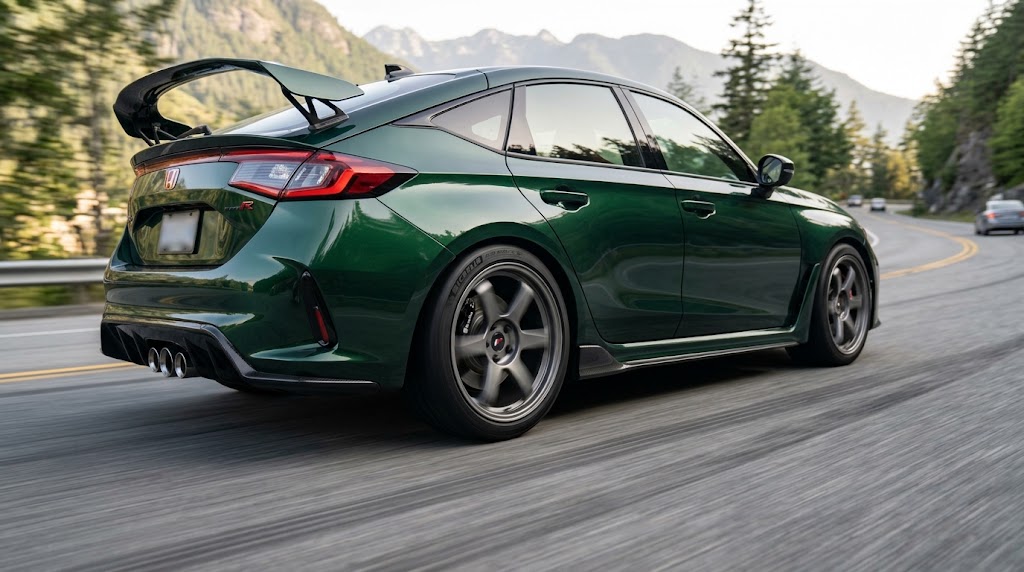
All-Season Tires for Owners Who Drive Year-Round
If the Type R is your only car and it sees cool mornings, frequent rain and long commutes, an all-season tire deserves a more detailed look than a simple summer-versus-winter comparison. The trade-off is straightforward: you give up some peak warm-weather grip and steering response in exchange for a wider range of usable conditions.
For a second set of wheels, an all-season package can also make sense as the road set while a more focused summer tire remains available for warmer months. Keep the wheel and tire dimensions consistent with your intended fitment and check load and speed ratings before ordering.
How We Would Choose by Driving Pattern
| Driving pattern | Best direction | Reason |
|---|---|---|
| Warm-weather enthusiast | Summer performance | Maximum steering and dry-road response. |
| Cool/wet daily driver | Performance all-season | Broader weather usability. |
| Snowy winter climate | Dedicated winter set | Better cold-weather traction than an all-season. |
For the dedicated all-season discussion, see our Best All-Season Tires for Civic Type R guide. That page is intentionally narrower so this article can remain the broader tire comparison.
Frequently Asked Questions
What size tires does the Civic Type R FK8 use? 265/35R19 front and rear from factory. Most aftermarket replacements stay with this size to maintain speedometer accuracy and avoid fitment changes.
Can I run all-season tires on a Civic Type R? Yes, but performance is noticeably compromised compared to summer tires. Better approach for cold climates is summer tires year-round in mild weather and dedicated winter tires when temperatures regularly drop below 45°F.
How often do Type R tires need replacing? Quality summer performance tires can have very different service lives depending on compound, alignment, temperature, road surface and driving style, so avoid treating a fixed mileage figure as a replacement schedule. Track use can shorten tire life substantially, but mileage varies too much with compound, alignment, temperatures, driving style and track surface to give a universal lifespan.
Is Michelin PS4S worth the premium over Continental EC Sport? For most owners the difference in real-world performance is small enough that the Continental at a lower price represents better value. For owners who track the car occasionally and want maximum wet weather confidence, the PS4S edge in wet conditions justifies the price for some.
Do FK8 and FL5 use the same tire size? Both use 265/35R19 front. Rear may differ on some FL5 configurations — confirm your specific build's rear size before ordering.