Honda Civic Type R FK8 Wheel Fitment Guide — 2017–2021
A practical FK8 wheel fitment guide covering width, offset, bolt pattern, tire choice, brake clearance and real-world fitment checks.
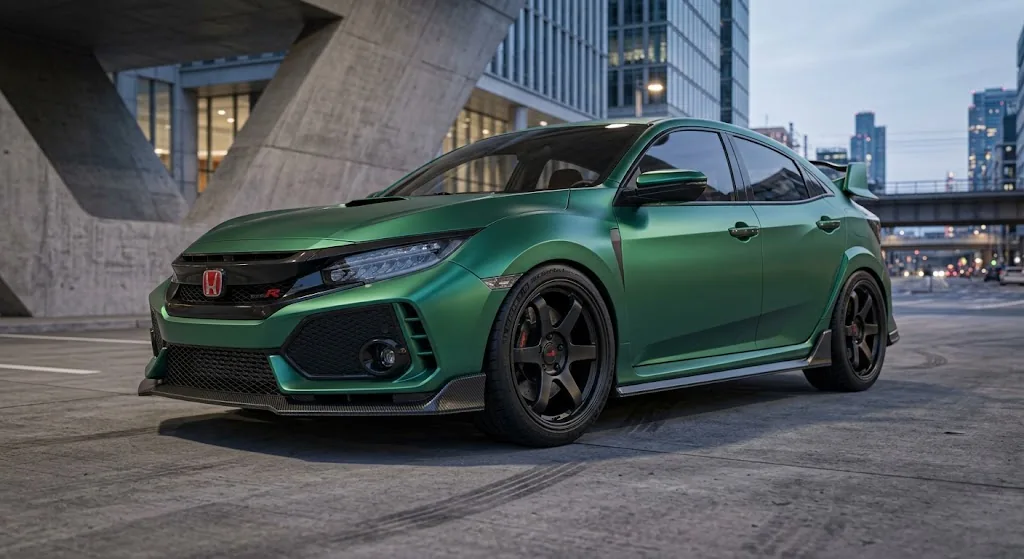
The FK8 is unusually sensitive to wheel fitment because the factory package is wide, low-profile and backed by large Brembo brakes. The safest way to shop is to work outward from the factory dimensions rather than starting with an aggressive offset you saw on somebody else's car.
Factory reference: Honda's FK8 documentation specifies 20-inch wheels and 245/30ZR20 maximum-performance tires. Common fitment references list the factory wheel as 20x8.5 ET60, 5x120 with a 64.1 mm center bore. Use those figures as the baseline, then verify every aftermarket wheel individually.
FK8 Factory Fitment
| Spec | Factory reference |
|---|---|
| Wheel | 20 x 8.5 |
| Offset | ET60 |
| Bolt pattern | 5x120 |
| Center bore | 64.1 mm |
| Factory tire | 245/30ZR20 |
Why 18x9 or 18x9.5 Gets Complicated
Moving to an 18-inch wheel is popular because it creates room for more sidewall. But once you increase width, the inner barrel and outer lip move in different directions depending on the offset. That means “18x9.5 fits” is incomplete information. You need the ET, tire, spoke profile and suspension height as well.
Offset Is Not a Magic Fitment Number
A lower ET generally pushes the wheel outward. A higher ET pulls it inward. The FK8's factory ET60 is a useful reference, but aftermarket wheels commonly use lower offsets. Whether a particular setup works depends on the entire package, not the ET number in isolation.
Brake Clearance Comes Before Fender Clearance
The Brembo caliper can be the limiting factor even when the wheel diameter looks generous. Spoke shape and barrel design matter. Ask for the wheel manufacturer's brake-clearance confirmation or template when available. A wheel that is “5x120” and “18-inch” is not automatically Brembo-compatible.
Tire Choice Changes the Fitment
A 245-width tire can have a different section width and shoulder shape from another manufacturer's 245. Some tires run square; others are more rounded. That can be enough to change fender clearance on a lowered FK8. Check the tire maker's approved rim-width range and actual dimensions before treating an internet build as a copy-and-paste recipe.
Daily vs Track Fitment
| Use | What I would prioritize |
|---|---|
| Daily | Conservative offset, sidewall, full-lock clearance and pothole tolerance |
| Street + canyon | Lower weight, strong tire support and predictable clearance |
| Track | Brake clearance, tire availability, heat durability and easy replacement |
Before Buying a Used FK8 Wheel
- Confirm 5x120 and 64.1 mm hub compatibility.
- Measure width and ET from the actual wheel if the seller cannot provide documentation.
- Inspect the inner barrel and spoke area for repairs or cracks.
- Check whether the wheel requires a different lug-seat type.
- Confirm brake clearance for the FK8 Brembo package.
18-Inch Fitment: What the Number Does Not Tell You
An 18-inch wheel only tells you the diameter. It says nothing about the barrel shape, spoke profile or ET. That matters on the FK8 because the Brembo front brake is a real clearance constraint. Two 18x9.5 wheels can have very different spoke-to-caliper clearance even when their published dimensions match.
If a wheel manufacturer lists a specific FK8 application, that is much stronger evidence than a forum post saying “18s fit.” If no application data exists, ask for a brake template or a documented application before buying.
Why a Taller Tire Can Be the Better Daily Choice
The FK8's factory 245/30ZR20 tire leaves little sidewall between the wheel and the road. A smaller-diameter wheel can allow a taller tire while keeping overall diameter close to stock. That does not automatically improve handling—the tire compound, construction and alignment still matter—but it can make the car less punishing on rough pavement and reduce the chance of wheel damage from sharp impacts.
Do Not Forget the Suspension
Wheel fitment should be checked again if you later add lowering springs or coilovers. Lowering changes the suspension's operating position and the amount of travel available before the tire reaches the fender. A setup that is fine at factory height can rub after the car is lowered, particularly with a wide tire and aggressive ET.
Used-Wheel Checklist
For a used FK8 wheel, inspect the bead area, inner barrel and spoke roots for impact damage or repairs. Spin the wheel if possible and look for obvious runout. Ask whether it has been repaired or welded. A cosmetic refinish is one thing; a repaired structural crack is a very different purchase.
Sources and Fitment Notes
Honda's FK8 brochure confirms the factory 20-inch wheel and 245/30ZR20 tire. The 5x120, 64.1 mm and ET60 factory reference is cross-checked against established wheel-fitment databases. Because brake clearance depends on the actual wheel design, those dimensions should not be treated as a universal aftermarket fitment certificate.
Use a Fitment Worksheet Before Ordering
For an FK8, record the complete proposed specification before you buy: wheel diameter, wheel width, offset, bolt pattern, center bore, tire size, tire load/speed rating and whether the suspension is stock or modified. Then check inner clearance, brake clearance, outer clearance and tire sidewall position. This prevents the common mistake of asking whether a wheel "fits" without defining what fit means.
| Check | Question |
|---|---|
| Brake clearance | Does the wheel clear the caliper and barrel with the intended wheel design? |
| Inner clearance | Is there sufficient room to the strut, control arms and other suspension components? |
| Outer clearance | Does the tire remain clear through steering and suspension travel? |
| Tire specification | Is the tire approved for the wheel width and appropriate for the vehicle? |
| Suspension | Will lowering or other changes alter the clearance you checked? |
Why a Complete Specification Is Better Than an Offset Number
Offset only describes the wheel's mounting position relative to its centreline. It does not tell you the wheel's total width, brake-barrel shape, spoke clearance or tire dimensions. That is why two wheels with the same diameter and offset can still have different fitment outcomes. When comparing aftermarket wheels, use the actual wheel model and dimensions rather than treating an offset number as a universal fitment guarantee.
Check the Tire, Not Just the Wheel
A wheel that clears the brake and suspension can still produce rubbing once a wider or taller tire is installed. Sidewall shape also varies between tire models with the same nominal size. If the goal is an 18-inch street setup, compare the complete wheel-and-tire package against the factory diameter and available clearance rather than choosing the wheel first and searching for a tire afterward.
Use the Type R wheel-offset guide, Type R wheel-width guide and Type R tire-size guide alongside this fitment checklist.
Frequently Asked Questions
What is the FK8 bolt pattern? 5x120.
What is the factory FK8 wheel size? The U.S.-market factory package uses a 20x8.5 wheel with a 245/30ZR20 tire.
Can any 18-inch 5x120 wheel fit? No. Brake clearance and wheel design still need to be verified.
For the broader buying decision, continue to the Civic Type R wheel guide. For the math behind ET changes, see the Type R offset guide.
The fitment mistakes that cost the most
The expensive mistake is buying four wheels and tires before discovering that the spokes contact the calipers. Another is choosing a tire that clears at rest but rubs at full steering lock or during compression. A third is copying a photographed setup without knowing its alignment, ride height or exact wheel specification.
These problems are avoidable when the purchase is treated like a measurement exercise. Save the wheel specification, tire specification and vehicle setup together. If any one of those changes, reassess the fitment.
Why wheel weight belongs in the decision
A lighter wheel can preserve some of the responsiveness people expect from a Type R. A very heavy wheel/tire combination can make the car feel less eager even when the stance looks better. Compare complete package weight when manufacturers publish it, not just wheel diameter.
Buy the complete specification
Before ordering, write the intended package as one line: wheel diameter, wheel width, ET, centre bore, lug-seat type and tire size. That simple record makes it much harder to accidentally mix information from two different fitments.
Use a Fitment Worksheet Before Ordering
Write down your current wheel diameter, width, offset, tire size, and any suspension changes. Then record the proposed setup. Comparing the two side by side exposes clearance changes that are easy to miss when looking only at an advertised “fits FK8” label.
Check inner and outer movement
Wheel width and offset work together. A wider wheel can move toward the suspension and toward the fender at the same time, while an offset change shifts the entire package. Calculate both directions before ordering.
Verify brake clearance separately
Brake clearance depends on spoke and barrel design, not just wheel diameter. A wheel manufacturer or dealer should be able to identify compatible brake applications for the specific wheel model. See the 18 vs 19 inch Type R setup guide for the next fitment decision.