Best All-Season Tires for Honda Civic Type R — FK8 & FL5
All-season tires can make a Type R easier to live with in cooler, wetter weather. Here is how to choose the right compromise between wet grip, cold-weather usability, tread life and the sharp response the FK8 and FL5 are known for.
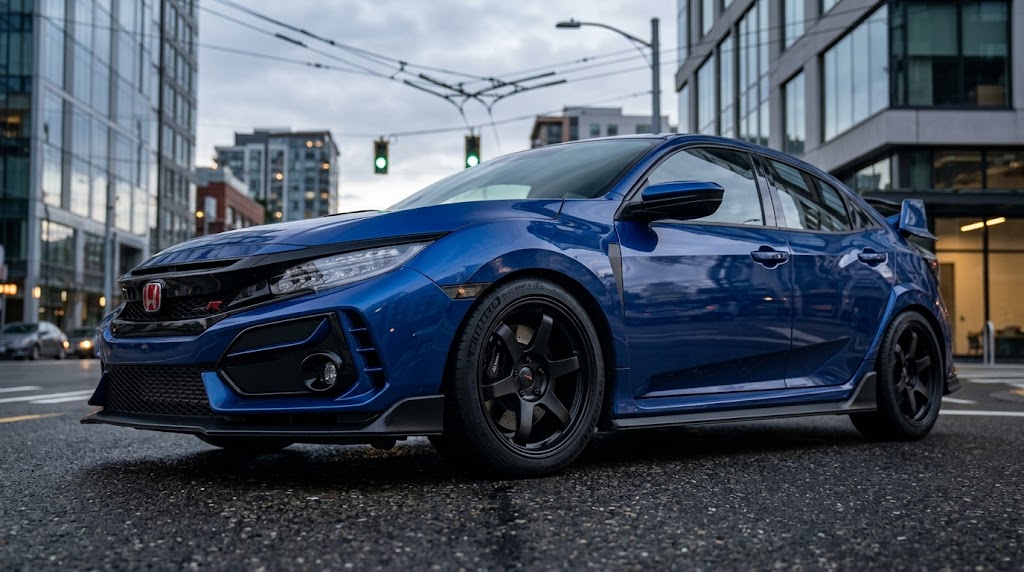
Do All-Season Tires Make Sense on a Civic Type R?
Yes, but only if you are clear about the compromise. A Civic Type R is unusually sensitive to tire choice because the front axle is responsible for steering, braking and putting turbocharged power to the pavement. An all-season tire can be a sensible solution for an owner who drives the car every day, sees frequent rain and cooler mornings, and does not need maximum dry grip on every drive.
The important distinction is that an all-season tire is not a substitute for a winter tire in genuinely snowy conditions. It is a compromise designed to remain usable across a wider temperature range than a summer performance tire. If your FK8 or FL5 regularly sees snow, ice or sustained freezing temperatures, a dedicated winter setup is the more appropriate choice.
Best All-Season Tire for the Civic Type R
The Michelin Pilot Sport All Season 4 is the most natural starting point when an FK8 or FL5 owner specifically wants an all-season tire while retaining a performance-oriented design. The supplied listing is a 245/30ZR20 90Y XL tire, so treat that size as an application-specific option rather than assuming it fits every wheel configuration. Always match the tire size to the wheel and vehicle setup you actually run.
What to Look for in an All-Season Type R Tire
| Factor | Why it matters | What to prioritize |
|---|---|---|
| Cold-weather grip | Rubber behaviour changes as temperatures fall. | True all-season compound rather than a summer tire. |
| Wet traction | Rain is a bigger everyday concern than snow for many owners. | Strong wet braking and hydroplaning resistance. |
| Steering response | Soft sidewalls can dull the Type R's front-end feel. | XL construction and a performance-oriented casing. |
| Tread life | Daily drivers can accumulate miles quickly. | A realistic balance rather than an extreme track compound. |
| Wheel compatibility | The tire must match your actual wheel width and diameter. | Verify size, load index and clearance before ordering. |
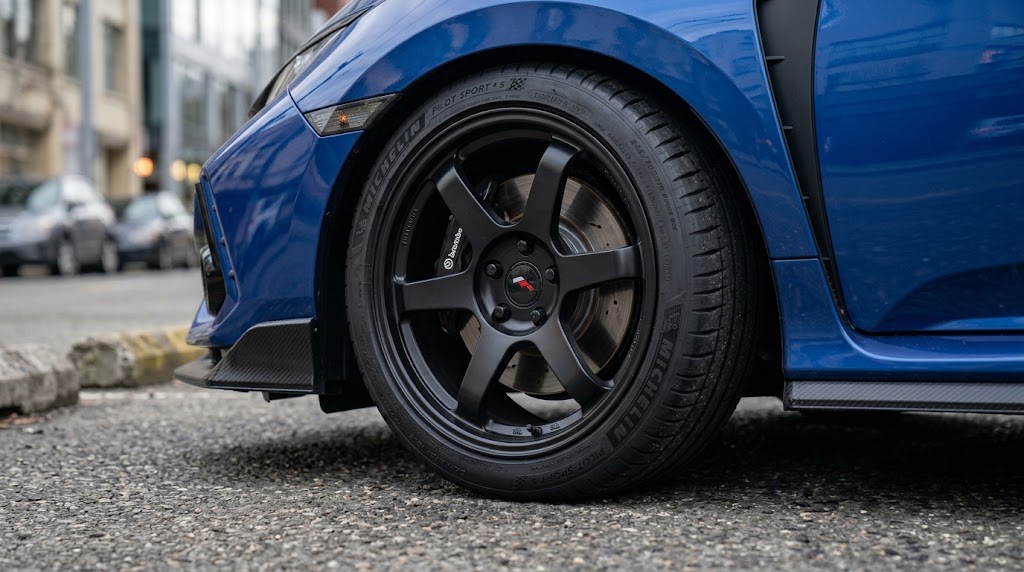
All-Season vs Summer Tires on an FK8 or FL5
The biggest reason to choose a summer performance tire is response. Summer compounds are designed to work particularly well in warmer conditions, and that shows up in steering precision, braking and dry grip. The downside is that their operating window becomes less forgiving as temperatures fall.
An all-season tire gives up some of that peak performance to remain more usable across a broader range of weather. For a year-round daily driver, that trade can be worthwhile. For an owner who drives the Type R primarily in warm weather and wants the sharpest possible response, a summer tire remains the better fit.
| Use case | Better choice | Why |
|---|---|---|
| Warm-weather spirited driving | Summer performance | Higher dry grip and sharper response. |
| Cool, wet daily commuting | All-season performance | Broader temperature and weather usability. |
| Snow and ice | Dedicated winter tire | All-season tires are not a replacement for a winter compound. |
| Track days | Track-oriented summer tire | Higher heat tolerance and predictable performance. |
What About the FK8 and FL5 Factory Tire Sizes?
The FK8 and FL5 use different factory wheel-and-tire packages, so don't shop from a generic “Civic Type R tire” search and assume every result is interchangeable. The FK8's factory package is based around a 20-inch wheel and 245/30R20 tire, while the FL5 moved to a 19-inch wheel with a wider 265/30R19 tire. Aftermarket 18-inch setups introduce another set of size and clearance considerations.
That is why our Civic Type R tire-size guide and FK8 wheel-fitment guide should be read before ordering. A tire that looks attractive on paper still has to work with the wheel width, offset, brake clearance, suspension and fender clearance on your particular car.
Can You Run 18-Inch Wheels With All-Season Tires?
Yes, an 18-inch package can make sense for a street-driven Type R, particularly when the goal is more sidewall and a less punishing ride over rough pavement. But the exact tire size must be selected around the wheel dimensions and the clearance available on the car. Do not choose a 35-series or 40-series tire simply because the diameter sounds appealing.
When changing wheel diameter, compare overall tire diameter, section width, load rating and clearance rather than focusing on only one number. The goal is a complete wheel-and-tire package that maintains safe fitment and predictable handling.
Best All-Season Setup for Different Drivers
| Driver | Recommended direction | Why |
|---|---|---|
| Daily commuter | Performance all-season | Comfort and weather range matter more than maximum dry grip. |
| Weekend enthusiast | Summer performance | Better steering and dry-road response. |
| Year-round cold climate | All-season + winter set | One tire cannot replace a true winter compound in severe conditions. |
| Occasional track user | Dedicated summer/track set | Keep the all-season set for road use and use a suitable tire for events. |
How Tire Pressure Changes the Type R's Feel
Pressure has a noticeable effect on a front-wheel-drive performance car. Too little pressure can make the steering feel vague and increase sidewall movement; too much can make the ride harsher and reduce the tire's ability to follow imperfect pavement. Start with the vehicle's recommended cold pressure and adjust only with a clear reason, checking pressures when the tires are cold.
If you change tire size, wheel width or tire construction, do not assume that the pressure printed for another setup is automatically the right target. The tire manufacturer and vehicle recommendations should guide the final setup.
Common Mistakes When Buying All-Season Tires for a Type R
- Choosing a tire because the size is close without checking wheel compatibility.
- Assuming “all-season” means capable of serious snow and ice.
- Mixing unrelated tire models or compounds across the front and rear.
- Ignoring load index and speed rating.
- Buying based only on price and ignoring wet braking and tread life.
- Changing wheel diameter without checking total tire diameter and clearance.
Our Buying Checklist
Before ordering, confirm the exact wheel diameter and width, tire size, load index, speed rating and clearance for your FK8 or FL5. Decide whether you need true winter capability or simply better cold-and-wet street usability. Then compare tread life, wet performance, steering response and price. For most owners, choosing the right category matters more than chasing the biggest-looking tire.
All-Season Tire Construction Matters More Than the Label
Two tires can both carry an “all-season” label and still feel very different on a Type R. Look at the construction, tread design, compound and load rating as well as the marketing category. The FK8 and FL5 put substantial demands on the front tires, so a performance-oriented casing is preferable to a soft touring tire when steering response matters.
An XL, or extra-load, tire can be useful when it matches the vehicle and wheel application because its construction is designed for a higher load capability. That does not automatically make every XL tire a better performance tire, though. Fitment, compound and the manufacturer's intended use still matter.
Wet Weather: Where an All-Season Can Be a Smart Compromise
For many daily drivers, the real advantage of an all-season tire is not snow. It is the ability to remain predictable when the weather is cool and wet. A summer performance tire can be excellent in warm rain, but an all-season is designed to give the driver a broader range of usable conditions.
That makes the category attractive for owners who commute year-round but do not face severe winter conditions. If your local climate regularly produces freezing temperatures, packed snow or ice, use a dedicated winter tire instead of expecting an all-season performance tire to do the same job.
Ride Comfort, Noise and Tread Life
Performance tires are not automatically uncomfortable, but the combination of a very low-profile sidewall and stiff construction can make rough pavement feel sharper. An all-season tire may improve the overall daily experience, particularly when the alternative is an aggressive summer compound.
Noise is another practical consideration. A tread designed for a wide range of conditions can be easier to live with over long highway drives than a highly focused performance tire. Tread life also tends to matter more to daily drivers than it does to owners who use a second set of tires for track days.
Should You Buy One Set or Two?
If the Type R is driven in a mild climate, one good performance all-season set can simplify ownership. You avoid seasonal tire changes and still get a performance-oriented tire for everyday roads. The compromise is that you will not have the same dry grip as a strong summer tire or the severe-winter capability of a dedicated winter tire.
A two-set strategy is more flexible. A performance summer tire can handle warm-weather driving, while a winter tire can take over when temperatures and road conditions demand it. For an enthusiast who wants to preserve the Type R's performance character without asking one tire to do everything, two sets are often the more complete solution.
What We Would Prioritize Before Ordering
- Confirm your wheel size and width. The correct tire has to match the wheel you actually own.
- Confirm the exact tire size. Do not assume FK8 and FL5 sizes are interchangeable.
- Check load and speed ratings. Match the vehicle's requirements and your intended use.
- Decide whether you need winter tires. If snow and ice are routine, plan for a dedicated winter set.
- Compare wet performance and tread life. These matter every day on a street-driven Type R.
- Check clearance after wheel changes. Width and offset can change the way the tire sits relative to the suspension and fender.
Where This Fits in the ModManual Type R Tire Cluster
This guide is deliberately focused on all-season use. For a broader performance-tire comparison, read our Best Tires for Civic Type R. For exact factory and common replacement dimensions, use the Civic Type R Tire Sizes guide, and for pressure basics see our Civic Type R Tire Pressure Guide. If you are changing wheel diameter or width, continue to the FK8 Wheel Fitment Guide.
All-Season Tire Setup: Start With the Wheel, Not Just the Tire
One of the easiest mistakes on a Type R is choosing an all-season tire first and trying to make the wheel fit afterward. The tire's listed size, approved rim-width range, load index and speed rating all need to make sense for the wheel you actually have. A change from the factory wheel can also change sidewall height, steering response and clearance even when the overall diameter looks close on paper.
For an 18-inch conversion, for example, do not assume that any tire with a similar overall diameter is automatically equivalent. Check the wheel width, offset, brake clearance and the tire manufacturer's approved rim-width range as a package. The same tire size can behave differently on different wheel widths, and a lower-profile tire can make an otherwise acceptable street setup less forgiving of potholes.
Three All-Season Setups Worth Considering
| Use case | What to prioritize | Main compromise |
|---|---|---|
| Daily street use | Wet grip, cold-weather behaviour, reasonable tread life | Less ultimate dry response than a summer tire |
| Year-round performance street use | Performance-oriented casing, wet braking and predictable steering | Higher cost and potentially shorter tread life |
| Cold-weather commuter | Temperature flexibility and wet/cold traction | Do not treat it as a dedicated snow/ice tire |
The right choice therefore depends less on a universal "best" tire and more on the conditions the car actually sees. If the car is used for spirited driving in warm weather, a summer tire remains a logical benchmark. If it is a daily driver exposed to rain and colder temperatures, the broader operating range of a performance all-season can be more useful.
Before ordering, compare the proposed tire with the vehicle's current setup using our Civic Type R tire-size guide, then check the wheel information in the Civic Type R wheels guide. For pressure decisions, use the Type R tire-pressure guide rather than copying a pressure from another wheel-and-tire combination.
An all-season tire can make sense when the car is driven regularly in cooler or wet conditions and outright dry-track grip is not the only priority. It is not a substitute for a dedicated winter tire in severe winter conditions, and it does not turn the Type R into a winter vehicle. Think in terms of the climate and roads you actually drive rather than the label alone.
When an All-Season Makes Sense
Tire size is only the starting point. The Type R uses a wide, performance-oriented package, and changing tire model can change wet grip, steering response, noise and cold-weather behavior even when the nominal size stays the same. Honda currently lists the Civic Type R with 19 x 9.5J wheels and 265/30ZR19 tires, so an alternate tire should be checked for the correct load, speed rating and wheel-width compatibility rather than selected by diameter alone. Honda’s current specifications are the reference point for the factory package.
Do Not Treat Every 19-Inch Type R Tire as the Same
Frequently Asked Questions
Are all-season tires good for a Civic Type R? They can be a good choice for a daily-driven Type R in cool and wet conditions, but they trade some warm-weather grip and response for a broader operating range.
What is the FK8 factory tire size? The FK8 uses a factory 245/30R20 tire on its OEM 20-inch wheel package. Verify your exact wheel setup before ordering replacements.
Can all-season tires replace winter tires? Not when you regularly encounter snow, ice or sustained freezing conditions. A dedicated winter tire is designed for those conditions.
Is the Michelin Pilot Sport All Season 4 a good Type R option? It is a logical performance all-season option for owners who want broader weather usability, provided the exact tire size and wheel configuration are appropriate for the car.
Should I use the same tire size on FK8 and FL5? No. The factory wheel-and-tire packages differ between generations, and aftermarket setups can differ further. Use the correct size for your actual wheel package.