Civic Type R Tire Pressure Guide
A practical FK8 tire-pressure guide covering cold checks, hot readings, tools, tire changes and spirited-driving considerations.
Why FK8 Tire Pressure Matters
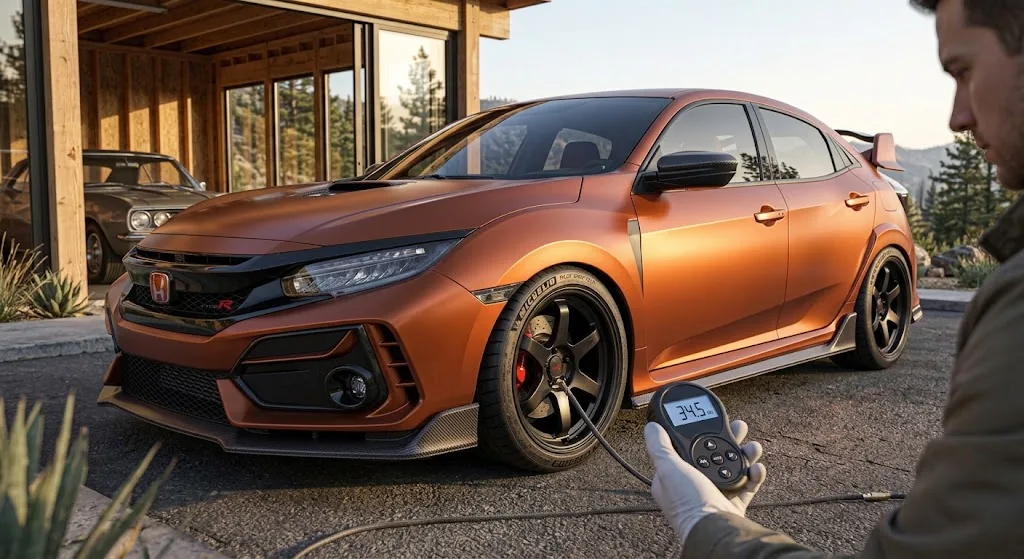
The Civic Type R's tires are a major part of its steering, braking and ride behavior. Pressure changes the tire's contact patch and carcass behavior, so a small change can affect steering response and how quickly the tire builds heat.
The safest starting point is the vehicle's specified cold pressure for the installed configuration. Do not replace that baseline with a random forum number. Tire model, size, load, ambient temperature and driving conditions can all change the result.
Cold vs Hot Pressure
A cold reading is a repeatable reference because the tire has not been heated significantly by driving. Once you drive, air temperature inside the tire rises and pressure increases. That increase is normal and is not automatically a reason to bleed the tire.
For useful comparisons, check the tires under similar conditions. A morning reading before the first drive is easier to compare than readings taken after different amounts of highway or spirited driving.
How to Check Pressure Correctly
Park safely, remove the valve cap, seat the chuck firmly and take the reading without repeatedly leaking air. Check all four tires. Replace the caps afterward and record anything unusual if you are tracking pressure over time.
A tire that repeatedly loses pressure deserves inspection. Look at the tread, sidewall, valve and bead area. Adding air every day without finding the cause can hide a puncture or wheel problem.
Tools for Checking Tire Pressure
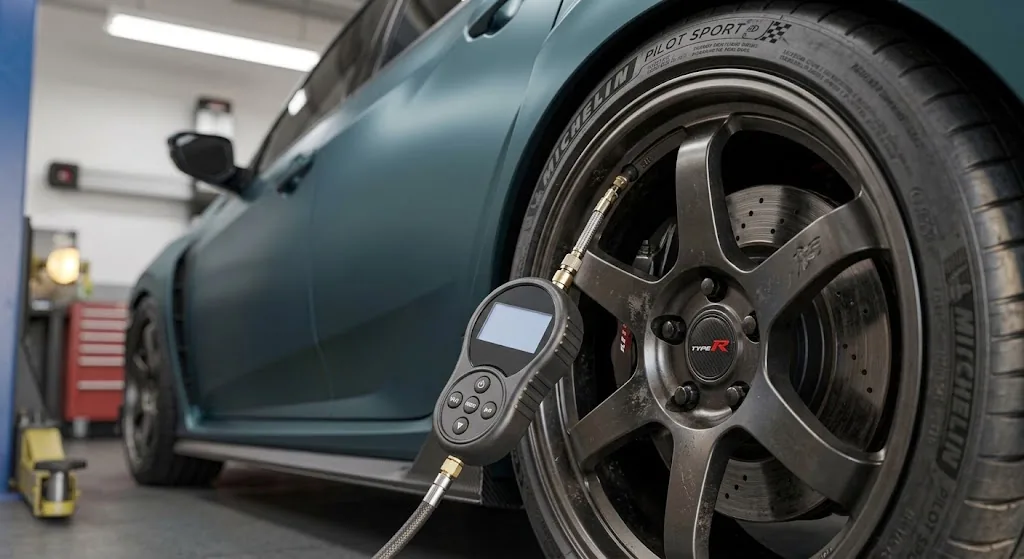
A reliable tire-pressure gauge is more useful than guessing from sidewall appearance or relying only on a dashboard TPMS reading. Check pressure when the tires are cold and use the vehicle placard as the street-driving baseline unless the vehicle or tire manufacturer gives different application-specific instructions. TPMS is a warning system, not a substitute for measuring pressure accurately.
If you track the car, record ambient temperature, cold pressure, hot pressure and session conditions consistently. Do not copy a pressure target from another tire model or wheel setup without confirming it is appropriate for your tire and use.
What Changes Pressure?
Ambient temperature is a major variable. A cool morning and a hot afternoon can produce different readings even before a long drive. Sunlight can also heat one side of the car more than the other.
Driving adds another variable. Braking, cornering and speed generate heat, and repeated hard use can raise pressure faster than a gentle commute. A hot reading is therefore useful information about operating conditions, not a replacement for the cold baseline.
Street Driving vs Spirited Driving
For normal street use, the vehicle's cold-pressure specification is the appropriate starting point. The goal is predictable handling, proper load support and even tire behavior. Check pressure regularly instead of making constant tiny adjustments.
Track or very aggressive driving is different. There is no universal hot pressure because tire construction, compound, ambient temperature, surface, alignment and driving pace all change the operating window. Use manufacturer guidance and controlled testing rather than copying somebody else's number.
Why You Should Not Copy a Random Track Number
Two tires with the same nominal size can have different constructions and respond differently to heat. A different alignment or suspension setup can also change how the tire loads across the tread. That means a pressure number that worked on another FK8 may not be appropriate for yours.
If you do not have a repeatable way to monitor the tire, there is little value in chasing a precise track number from another driver. Start from a sensible baseline and learn how your specific tire behaves.
Changing Tire Size? Recheck the Setup
A different tire size can change sidewall height, section width and the way the tire supports the vehicle. The vehicle's recommended pressure remains the starting reference, but the tire manufacturer's load and pressure information should also be considered.
The same applies when changing wheel width. Make sure the tire is within the manufacturer's approved rim-width range and do not assume that a new wheel-and-tire package should use exactly the same pressure without checking the application.
Signs That Pressure Deserves Attention
If the car suddenly pulls, steering feel changes, a tire looks visibly different from its partner or one tire repeatedly loses pressure, stop and investigate. Pressure loss can come from a puncture, valve issue, bead leak or wheel damage.
Uneven tread wear can also be a reason to inspect alignment and pressure habits. Tire wear is useful evidence about how the car has been maintained and driven, so use it to guide inspection instead of guessing.
A Repeatable FK8 Pressure Routine
Choose a consistent checking point, such as before the first drive. Check all four tires, record unusual readings and correct them to the appropriate cold specification. Inspect the tread and sidewalls while you are there.
Consistency is the goal. You do not need to obsess over every tiny weather-related change, but you should notice a tire that is losing pressure faster than the others or a setup that behaves differently after a wheel or tire change.
FK8 vs FL5: Use the Door-Jamb Label as the Baseline
The most useful number for your car is the cold inflation pressure printed on the vehicle placard. Honda’s owner guidance tells Civic Type R owners to measure pressure when the tires are cold and use the vehicle’s specified pressure rather than treating a generic internet number as a substitute. The exact specification can vary with the vehicle, market and installed tire configuration, so check the label on the car you are actually servicing.
That distinction matters especially when comparing the FK8 and FL5. They use different wheel-and-tire packages, and a pressure that happens to work for another Type R is not automatically the correct starting point for yours. After a wheel, tire or tire-model change, verify the new tire’s load and pressure information and use the vehicle documentation as the baseline.
TPMS Calibration After a Pressure Change
Pressure adjustment is not the end of the job on a Civic Type R. Honda’s TPMS guidance states that calibration should be started after adjusting pressure, rotating tires or replacing one or more tires. On the FK8 documentation, calibration requires the tires to be set to the correct cold pressure before the procedure is started.
This is easy to overlook after a tire shop installs a new set. If the car has a TPMS warning or the system has not been recalibrated after a pressure change, follow the owner’s procedure for the exact model year rather than assuming the system will learn the new baseline by itself.
How Temperature Changes Your Reading
Temperature is one of the biggest reasons two healthy readings can look different. A cold morning, direct sunlight and a long highway drive can all produce different gauge readings. Honda’s high-performance tire guidance explains that a hot tire can read several psi higher than a cold tire, which is why the normal maintenance baseline should be established before driving.
For routine maintenance, do not chase the pressure number while the tire is hot. Let the car cool, measure consistently and correct the pressure to the appropriate cold specification. For spirited or track use, hot pressure can become a useful testing variable, but it should be part of a repeatable setup process.
Pressure After Changing Wheels or Tires
A new tire is not automatically a drop-in replacement from a pressure-management perspective. Section width, sidewall construction, load rating and the wheel width used with the tire can all change how the package behaves. Tire manufacturers publish approved rim-width ranges and load/pressure information, so use those specifications alongside the vehicle placard.
If you move from the factory package to a different wheel and tire size, record the new tire’s exact size and load information. Check the tire manufacturer’s guidance and monitor wear and handling rather than assuming the old setup’s pressure is universally optimal.
Street, Spirited and Track Use
| Use | Pressure approach | Monitor |
|---|---|---|
| Daily street | Vehicle cold specification as baseline | Consistency, wear, steering feel and leaks |
| Spirited | Start at normal cold baseline and evaluate repeated use | Heat, tread behavior and handling |
| Track | Controlled test plan and tire-maker guidance | Hot pressure, temperature pattern and wear |
Street maintenance and track setup are different jobs. A track number copied from another Type R can be wrong for your tire, alignment, weather and driving pace.
A Better Monthly Check
Make pressure checks repeatable: inspect all four tires, measure them cold, look for tread or sidewall damage, compare readings with the vehicle specification and investigate any tire that repeatedly loses pressure. Honda emphasizes that TPMS is not a replacement for manual tire maintenance.
Sources: Honda Owners TPMS guidance and Honda Civic Type R tire-pressure guidance.
For owners specifically considering year-round street use, see our Best All-Season Tires for Civic Type R guide.
Frequently Asked Questions
Should I check pressure hot or cold? Use a cold reading for the normal baseline.
Should I lower pressure when the tire gets hot? Not automatically. Heat raises pressure normally; use a controlled testing method before making changes.
Can I use the same pressure after changing tire brands? Start with the vehicle specification and check the new tire's load and pressure information.
How often should I check? Use a regular routine and always check before long trips or when the car's handling suggests something changed.