Civic Type R 18 vs 19 Inch Wheels & Tires
A practical look at the trade-offs between 18-inch and 19-inch Type R wheel-and-tire packages, without pretending one setup fits every owner.
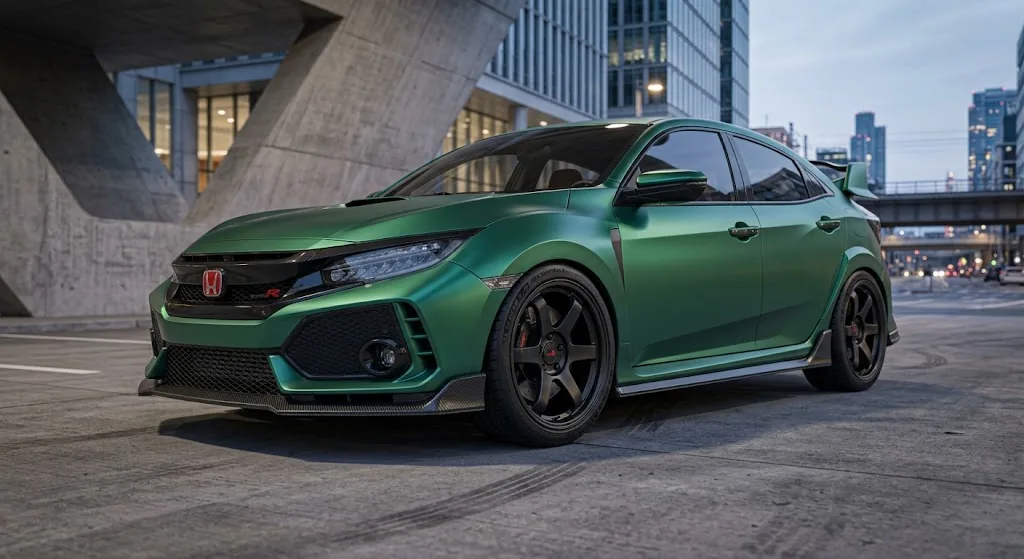
Start With the Factory Package
Honda currently lists the Civic Type R with 19 x 9.5J wheels and 265/30ZR19 Michelin Pilot Sport 4S tires. That low-profile package is part of the car’s factory performance setup, so an 18-inch alternative should be evaluated as a complete wheel-and-tire package rather than simply as “one inch smaller.” Honda’s current specifications are the baseline for the current car.
For FK8 owners, do not assume current FL5 specifications are interchangeable. Use the FK8 fitment guide when shopping for an older Type R.
What an 18-Inch Setup Changes
An 18-inch wheel can allow a taller sidewall when the overall tire diameter is kept close to stock. That can increase sidewall compliance and can make wheel protection easier on rough roads, but the exact result depends on the tire selected and the wheel’s weight and construction.
Brake clearance is the non-negotiable check. The Type R has large performance brakes, so an 18-inch wheel cannot be assumed to clear simply because the overall tire diameter is similar. Confirm the exact wheel’s brake-caliper clearance for your chassis.
What You Keep With the 19-Inch Setup
The factory 19-inch package preserves the original wheel diameter and tire specification and avoids the need to solve a new brake-clearance question. The trade-off is the very short sidewall, which can make impacts and wheel damage more consequential on poor roads.
18 vs 19: Think in Terms of the Whole Package
Do not compare wheel diameter alone. Compare wheel width, offset, tire section width, overall diameter, tire load/speed rating, wheel weight and brake clearance. The wheel-width guide and offset guide are the next steps before ordering.
FK8 and FL5 Are Not Automatically the Same Fitment
The FK8 and FL5 share the Type R name but have different factory dimensions and wheel/tire specifications. An aftermarket wheel advertised for one chassis should therefore be checked against the exact chassis rather than assumed to fit the other.
A Practical Buying Checklist
- Confirm FK8 or FL5 before shopping.
- Verify brake-caliper clearance for the exact wheel.
- Match wheel width and offset to the tire size you intend to run.
- Keep overall tire diameter close to the intended specification unless you have a specific reason to change it.
- Check inner and outer clearance at steering lock and through suspension travel.
- Verify load and speed ratings and follow the wheel manufacturer’s lug and torque requirements.
- Confirm the exact FK8 or FL5 chassis.
- Confirm brake-caliper and wheel-barrel clearance for the exact wheel model.
- Compare wheel width and offset with the intended tire size.
- Check overall tire diameter and section width rather than relying on diameter alone.
- Confirm load and speed ratings and the manufacturer’s approved wheel-width range.
- Test steering clearance and inspect for contact after installation.
What Should You Measure Before Buying 18s?
Do not choose tire pressure simply because the wheel diameter changed. Start with the vehicle manufacturer’s recommended cold pressure and the tire manufacturer’s application guidance, then account for the exact tire size and load requirements. The Type R tire-pressure guide covers the pressure decision separately.
Do You Need a Different Tire Pressure?
A lower-profile tire can provide a different steering response because the sidewall has less deflection. A taller sidewall can trade some immediate response for additional compliance. The effect depends on the tire and the exact setup, so the article should be used to compare trade-offs rather than promise that one diameter will handle better for every driver.
What Happens to Handling?
The wheel diameter itself is not the entire ride-quality story. What changes most directly is the amount of tire sidewall available when overall tire diameter stays similar. More sidewall can absorb some sharp impacts before they reach the wheel, but tire construction, pressure and wheel weight also matter. A heavy 18-inch package is not automatically more comfortable than a light 19-inch package.
Ride Quality: What Actually Changes?
Wheel diameter is one piece of a larger decision. Use wheel width to understand how the tire sits on the rim, offset to understand where the wheel moves, and tire sizes to check overall diameter and section width. That is the safer way to compare 18- and 19-inch packages without reducing fitment to one number.
Do Not Forget the Rest of the Fitment Chain
The current Type R specification gives you a reference point for diameter, width and tire size. Moving away from it is not inherently a problem, but each change should have a reason: more sidewall, a different tire choice, a lighter wheel, easier replacement cost or a specific fitment requirement. If there is no clear reason to change the package, the factory specification remains the simplest baseline to compare against.
The Factory Package Is Still the Useful Baseline
Frequently Asked Questions
Are 18-inch wheels better for a Civic Type R? They can offer more sidewall with a properly sized tire, but brake clearance, wheel weight, tire choice and chassis-specific fitment have to be checked first.
Does the FL5 come with 19-inch wheels? Yes. Honda’s current specifications list 19 x 9.5J wheels with 265/30ZR19 tires.
Can any 18-inch wheel fit a Type R? No. Brake-caliper clearance and the wheel’s width and offset must be verified for the exact chassis.
Sources & Fitment Checks
Wheel diameter alone does not determine fitment. Verify the exact wheel, tire and chassis combination before purchase.