Best Brake Pads for Honda Civic Type R
Civic Type R brake pad choices for street, fast-road and track use—how to choose the right compound without sacrificing predictable braking.
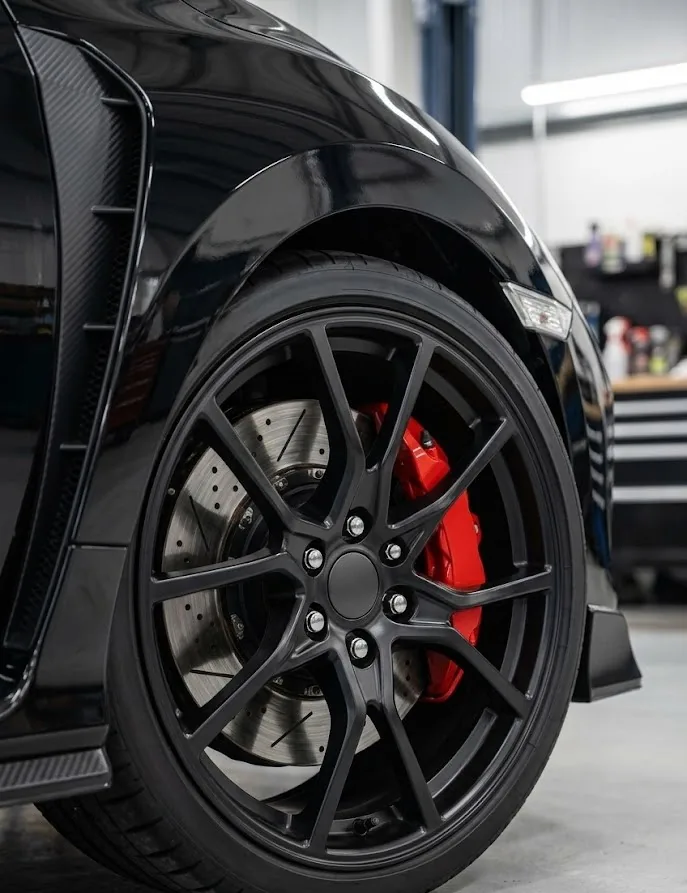
Start With the Job You Are Actually Asking the Pads to Do
The best brake pads for a Civic Type R are not automatically the most aggressive pads in a catalog. The FK8 and FL5 leave the factory with serious front hardware: four-piston Brembo calipers and 13.8-inch front rotors. That baseline is why a street car usually benefits more from a pad chosen for temperature range, noise and cold response than from a race compound chosen solely for friction. A pad that needs heat before it feels consistent is a poor commuter choice even when its peak capability is impressive.
Use this guide to separate daily-driving, fast-road and track-day needs. Brake pads work as part of a system: rotor condition, fluid, tires, cooling, bed-in procedure and driver technique all influence pedal feel. If you have a soft pedal after repeated hard stops, fresh pads alone may not address old fluid or overheated hardware. Begin with an inspection and keep the original pad shims and hardware where the manufacturer requires them.
FK8 and FL5 Brake Basics
Both modern Type R generations use performance-oriented front Brembo calipers, but parts are not interchangeable merely because both cars have Type R badges. Honda changed wheels, tires, suspension calibration and packaging between generations. The FK8 used 245/30ZR20 tires from the factory, while the FL5 uses 265/30ZR19 tires on 19 x 9.5J wheels. Confirm the exact year and axle when shopping, then check the manufacturer’s current application catalog rather than relying on a marketplace title.
| Use case | What matters most | Sensible pad direction |
|---|---|---|
| Daily street | Cold bite, low noise, rotor friendliness | Street-performance or premium OE-style compound |
| Fast road / occasional autocross | Repeatability and heat resistance | Performance street compound |
| Track days | High-temperature stability and predictable release | Track-focused compound, dedicated rotors and fluid |
| Mixed street and track | Compromise management | Separate pad sets is often the cleanest answer |
How to Compare Brake Pad Compounds
Friction material affects initial bite, heat tolerance, dust, noise and rotor wear. It does not make sense to declare one material universally “best.” Organic and low-metallic street pads can be quiet and responsive at low temperature. Semi-metallic formulations commonly tolerate more heat but can create more dust or noise. Dedicated track compounds are engineered to stay stable at temperatures that a street commute rarely produces; they can be noisy, wear rotors faster and feel weak when cold. Read the pad maker’s temperature and intended-use guidance as a starting point, not a promise.
Pay attention to consistency rather than only peak friction. A good street pad lets you modulate braking when the tires are near their limit. A good track pad should remain predictable lap after lap without long pedal travel or a changing release point. Changing compounds without bedding them in correctly can leave incompatible transfer layers on the rotor face, which is a common source of vibration complaints.
Recommended Buying Paths
For a road-driven Type R, choose a reputable street-performance pad that is explicitly listed for your caliper and wheel year. It should provide dependable cold response and tolerate the occasional back-road or autocross session. For frequent track use, use a separate track compound and a dedicated rotor set if possible. This makes the changeover less mysterious and prevents a track compound from becoming your compromise commute pad.
Do Not Skip Brake Fluid, Rotors and Tires
Brake pads cannot compensate for fluid that has absorbed moisture or boiled at the track. A firm, repeatable pedal under heat depends on fluid condition as well as pad choice. Inspect rotor thickness against the service limit, look for cracking or severe heat checking, and clean the hub face before fitting a rotor. Uneven deposits are often blamed on “warped rotors,” but the root cause can be pad transfer or a sticking caliper. Diagnose before buying more parts.
Tires set the ceiling for stopping distance. The FL5’s factory 265/30ZR19 Michelin Pilot Sport 4S tires are 20 mm wider than the prior-generation Type R’s factory tires, according to Honda. That does not turn the tire into a reason to over-brake the car; it is a reminder that tires, alignment and pressure matter as much as the pad compound. See our Civic Type R tire guide before choosing a mixed street/track setup.
Installation and Bedding-In
Use the service information for torque values and pad-retainer orientation. Support the caliper correctly; do not let it hang by the hose. Clean and lubricate only the specified sliding/contact points with a brake-safe product, keeping all lubricant off friction surfaces. After installation, follow the specific pad maker’s bedding procedure. Typically, bedding uses controlled moderate stops to build an even transfer layer, followed by a cooling period. It is not an excuse for panic stops on public roads.
After the first heat cycle, inspect for fluid leaks, hardware movement, abnormal noise and wheel clearance. A track day deserves another check: torque wheels when cool, monitor pad thickness, and stop using a pad before the friction material approaches the backing plate. If you are not comfortable working on brakes, this is a good job for a qualified shop.
Buying Guide: Questions to Answer Before You Order
- Which generation, year and axle am I buying for?
- How many track days or high-temperature sessions will the car see?
- Can I accept dust, noise and cold-response tradeoffs?
- Are the rotors within specification and is the fluid fresh?
- Does the manufacturer explicitly list my application?
Frequently Asked Questions
Are track pads safe for daily driving? Some are technically usable, but a pad designed around track temperature can be noisy, dusty and less confidence-inspiring when cold. Choose according to the maker’s stated use.
Will better pads reduce stopping distance? Only when the existing system, tire grip and surface allow it. On the street, tires and ABS control are major limits; the real gain may be repeatability and pedal confidence.
Should I replace rotors with pads? Measure and inspect first. Replace rotors that are below specification, damaged or incompatible with the new pad’s intended use.
Why do new pads squeal? Noise can come from compound choice, hardware, bedding, rotor condition or installation. Diagnose rather than adding lubricant to friction surfaces.
Conclusion
The right Civic Type R brake pad matches how you drive, not a marketing label. Prioritize verified fitment, fresh fluid and correct bedding. A quiet, confidence-inspiring street setup is usually the better daily decision; save a true high-temperature compound for the track environment that can use it.
Deeper Planning Notes
Brake-pad selection works best when the decision is documented before money changes hands. Write down the exact vehicle year, current parts, intended use, road conditions and the result you are trying to improve. That sounds basic, but it prevents the common situation where one change fixes a perceived problem while creating an unrelated clearance, comfort or maintenance issue. Pad choice should be evaluated in the context of the whole vehicle, because a Type R is a tightly integrated package rather than a collection of isolated catalog parts.
Use manufacturer instructions and the vehicle service information as the controlling documents for fitment, fastener procedures and maintenance. Product listings and owner discussions are useful leads, but listings can combine generations, show universal photographs or change over time. Before ordering, compare part numbers, application notes and exclusions. If a seller cannot establish the application clearly, pause rather than treating a similar-looking component as proof.
Budget for the supporting work. The best result often requires inspection, consumables, alignment or professional installation in addition to the visible part. A purchase that uses the whole budget can leave no room for fresh fluid, correct hardware, a post-install check or a tire replacement. In performance-car ownership, the unglamorous support work is usually what makes the modification dependable on a normal Tuesday as well as on an event day.
Make one meaningful change at a time when possible. It is far easier to evaluate a new component when wheel fitment, tire pressure, alignment, brake condition and engine calibration have not all changed in the same week. Keep notes on setup values, mileage, weather and impressions. That record helps you correct a problem and is valuable to the next owner if you eventually sell the car.
After installation, perform a controlled verification. Look for interference, leaks, warning lights, unusual noise and loose hardware. Test the car gently before escalating load. Reinspect after the first heat cycles or a short break-in period, then include the part in your normal maintenance routine. This is especially important on a vehicle that sees spirited driving, where heat and suspension movement reveal issues a driveway inspection cannot.
Be skeptical of universal claims. A part can be excellent for one climate, road surface, tire, driver and use case while being the wrong answer for another. Good buying advice names tradeoffs: comfort versus response, noise versus engagement, maximum grip versus longevity, and cost versus serviceability. Decide which compromise you can happily live with, then buy toward that outcome.
Finally, keep legal and safety requirements in view. Local inspections, noise rules, emissions rules and insurance requirements may apply to modified vehicles. Keep receipts and original components where practical. If you are unsure whether a change is safe or lawful for your use, ask a qualified installer or the part manufacturer before proceeding. A careful plan protects both the vehicle and the enjoyment that made you modify it in the first place.
Ownership and Follow-Up Checks
Once a new pad compound is in service, use the car normally before deciding whether another change is necessary. Early impressions are useful, but they can be distorted by unfamiliar feel, a new sound or the expectation of a dramatic difference. Check the basics first: tire pressures, fluid condition, fasteners, warning lights and any contact marks. These checks turn a modification from a one-time purchase into a maintainable part of the vehicle.
Seasonal conditions matter. The setup that feels excellent on warm, smooth pavement may behave differently in cold rain, on rough roads or when the vehicle is fully loaded. Revisit the decision with those conditions in mind. If the Type R is a daily driver, its real value is how consistently it works across the trips you actually make—not only how it performs in a short, ideal test.
Keep an eye on wear patterns. Uneven tire wear, unusual brake dust, new vibration, loose exhaust hardware or suspension noise should be investigated promptly. Do not treat a new symptom as normal merely because the car is modified. A quick inspection often identifies a simple correction before it damages a more expensive component.
Good documentation also makes future maintenance easier. Keep the product manual, installation invoice, alignment sheet, part numbers and a note of any settings. If you later change wheels, tires, pads or suspension, that baseline will help you understand what has changed and avoid starting fitment research from zero.
Finally, leave room for your priorities to change. A dedicated track build can justify compromises that become tiring when the car starts doing commuting duty. Conversely, a street-focused setup can be the correct long-term answer even if it is less dramatic in a parking-lot conversation. The most successful Type R builds are coherent, safe and enjoyable for their owner.
Make the Decision With Confidence
Verify the details twice: once before ordering and again during installation. Compare the part number, vehicle application, instructions and condition of the surrounding components. If a seller listing conflicts with manufacturer documentation, use the current manufacturer information as the deciding source. A specialist shop can often identify a clearance, electronic-control or labor requirement before the vehicle is apart.
Enthusiast upgrades reward patience. The finished setup should operate safely, feel intentional and make clear why that specific part was selected. Keeping receipts, fitment notes and original components where practical makes future maintenance and ownership easier.