What Size Tires Fit a Leveled F-150?
A practical F-150 tire-size guide covering clearance, wheel offset, leveling, suspension configuration and choosing a larger all-terrain setup.
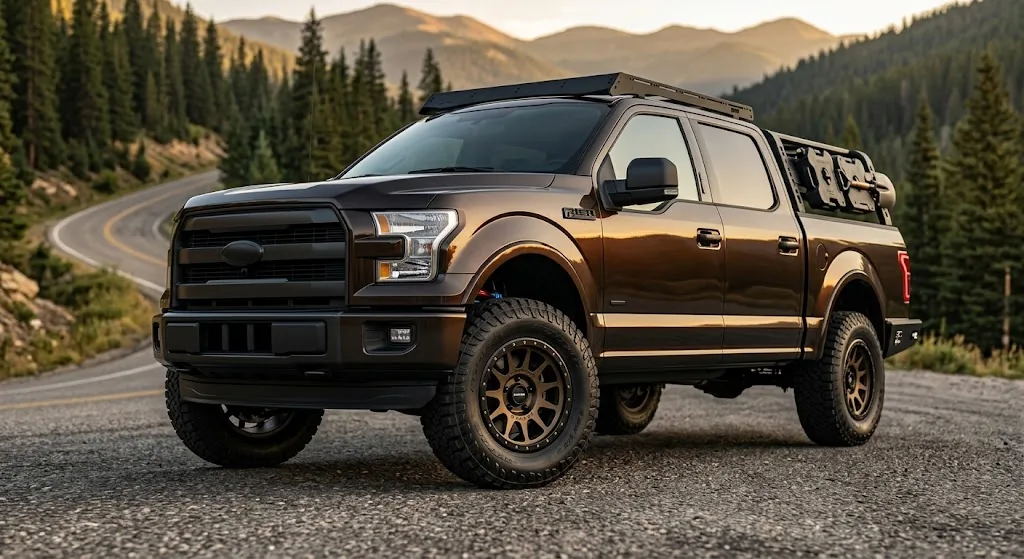
Why Leveled F-150 Fitment Is Not One-Size-Fits-All
A leveling kit changes the truck's stance, but it does not create a universal amount of tire clearance. F-150 generation, cab and drivetrain, factory wheel size, wheel width and offset, tire construction and leveling method all influence the result.
That is why “What is the biggest tire I can fit?” is harder than it sounds. A tire that clears on one F-150 can rub on another with the same nominal lift if the wheel sits farther outward or the tire has a wider shoulder.
| Check | Why it matters | Common mistake |
|---|---|---|
| Tire diameter | Controls vertical clearance | Assuming all 33-inch tires measure the same |
| Section width | Controls side clearance | Using nominal width as exact measured width |
| Wheel offset | Moves tire inward/outward | Ignoring offset after changing wheels |
| Wheel width | Changes tire shape | Comparing tire size without wheel size |
| Leveling method | Changes suspension position | Assuming any 2-inch kit behaves identically |
| Truck configuration | Changes packaging | Treating all F-150s as the same |
What Leveling Actually Changes
Front leveling changes ride height and the suspension's operating position. Depending on the design, that can change the relationship between the tire, liner, upper control arm, strut and body. Steering lock and suspension compression can reveal contact that is invisible while the truck is parked.
The leveling method matters too. A spacer, a ride-height-adjustable shock and a complete suspension package can produce different geometry and ride-height results. If you are replacing shocks or control arms at the same time, plan the tire and wheel package together.
275/65R18: A Moderate All-Terrain Example
The supplied BFGoodrich All-Terrain T/A KO3 in LT275/65R18 is a useful concrete example for a leveled F-150 discussion. It is not a universal guarantee, but it provides a moderate all-terrain size to compare against the exact wheel and truck configuration.
Compare the tire's published dimensions with your current package, then account for wheel width and offset. Keeping a factory wheel can produce a different result from using an aftermarket wheel with the same tire size but a different mounting position.
285/65R20: A Larger Package
The supplied BFGoodrich KO3 in LT285/65R20 is a larger, heavier-duty-looking example. A 20-inch package can create the aggressive stance many owners want, but the larger overall combination requires more careful clearance planning.
Wheel offset can change the result dramatically. A conservative wheel position may clear while an aftermarket wheel with lower offset creates fender contact. Inspect inner clearance, fender clearance and steering lock before assuming the larger tire is a straightforward upgrade.
Bilstein B8 5100 as a Leveling-Suspension Option
The supplied Bilstein B8 5100 application is specifically listed for 2015–2020 F-150 4WD configurations without CCD. Bilstein's ride-height-adjustable B8 5100 design uses spring-seat positions to provide front lift depending on the application, making it relevant to a leveling strategy.
The application limitation matters. Do not present this product as a universal F-150 component. Confirm the exact truck, drivetrain and equipment before ordering, and use the correct part number for the vehicle.
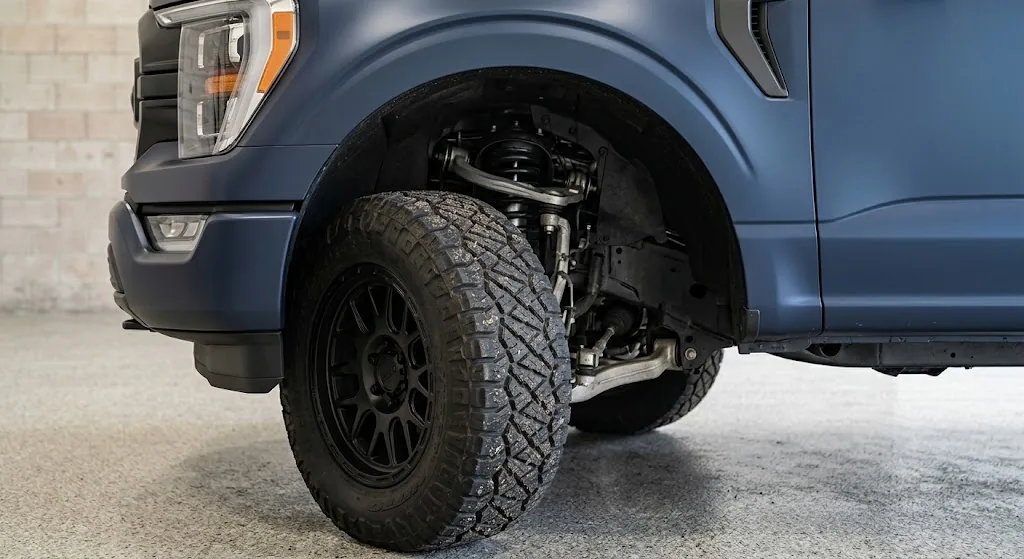
Why Offset Can Create Tire Rub
A larger tire is only part of the package. Moving the wheel outward can increase fender and liner contact, while moving it inward can reduce suspension-side clearance. This is why a tire-size recommendation without a wheel-offset discussion is incomplete.
If you change both wheel and tire, compare the complete package with the factory assembly. Calculate the wheel-position change, then inspect the truck at steering lock. Aftermarket control arms, shocks and other suspension parts also need to be included in the assessment.
Do Bigger Tires Wear Suspension Faster?
A larger or heavier tire can increase loads on wheel bearings, steering components and suspension. That does not mean every larger tire causes rapid failure, but it can change the truck's feel and component loading. Wheel offset can increase those effects.
If durability is the priority, choose a size that meets your needs without chasing the maximum possible diameter. A moderate all-terrain setup with sensible wheel geometry is usually easier to live with than an extreme package that requires constant clearance compromises.
Alignment After Leveling
A suspension-height change should be followed by the appropriate alignment checks. Toe, camber and caster affect tire wear and steering behavior, and a truck can look level while still having alignment settings that need attention.
After fitting larger tires, monitor wear. Feathering, uneven shoulders or a steering wheel that is no longer centered are reasons to inspect alignment and suspension rather than simply changing tire pressure.
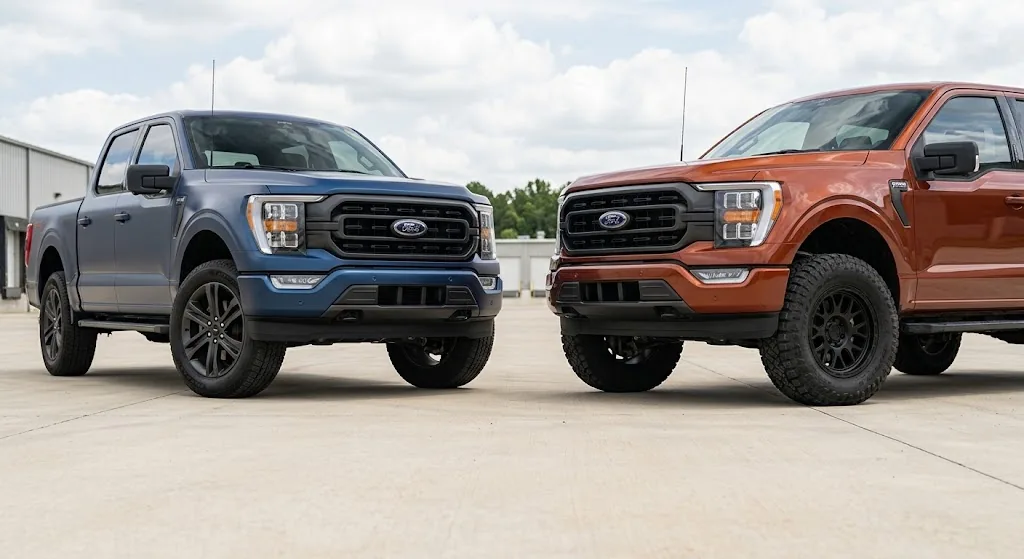
A Better F-150 Fitment Process
Record the exact model year, drivetrain, cab and current wheel/tire package. Obtain the target tire's published dimensions. If the wheel changes, calculate the change in width and offset. Confirm the leveling method and all other suspension modifications.
Then inspect the complete package. Turn the steering lock to lock, look behind the wheel, check the liner and fender relationship and make sure the tire has sensible clearance through normal movement. A fitment with almost no margin is not a robust daily setup.
Technical note — verify the exact truck. F-150 suspension, wheel/tire and powertrain details vary by model year, drivetrain, engine, trim and factory equipment. Ford’s current specifications and owner documentation should be treated as the baseline for vehicle-specific limits. Aftermarket fitment numbers should be treated as application-specific manufacturer guidance, not universal guarantees. Ford F-150 specifications · Ford owner documentation
33-Inch vs 35-Inch Tires: Why the Number Is Not Enough
“33-inch” and “35-inch” are useful shorthand, not exact fitment specifications. Two tires with the same nominal diameter can have different measured dimensions, section widths, tread shoulders and approved wheel-width ranges. Wheel offset can also move the same tire into a different clearance situation.
For a daily-driven leveled F-150, the better question is not simply “Can I fit a 35?” It is “Which complete wheel-and-tire package gives me enough clearance at full steering lock and suspension movement without compromises I do not want?”
Wheel Width and Backspacing: The Missing Half of Tire Fitment
Wheel width affects the tire’s shape and the amount of space the wheel occupies inside the wheel well. Backspacing describes the distance from the hub mounting surface to the inside lip of the wheel, while offset describes the mounting surface’s relationship to the wheel centerline.
If you move to a wider aftermarket wheel, do not compare only tire diameter. Calculate or measure how the new wheel changes inner and outer position. For a deeper explanation, see the F-150 Wheel Offset & Backspacing Guide.
Fitment Decision Matrix
| Build | Prioritize | Why |
|---|---|---|
| Stock wheel + mild level | Measured tire dimensions and liner clearance | Keeps wheel position predictable. |
| Aftermarket wheel + level | Offset, backspacing and tire width together | Wheel position can create rub even when diameter looks reasonable. |
| Large all-terrain | Steering lock, compression and suspension travel | Static clearance does not prove dynamic clearance. |
| Daily driver | Clearance margin, alignment and tire weight | A barely-clear setup can become annoying as conditions change. |
A Safer Way to Test a New Package
- Record exact model year, drivetrain and current wheel/tire package.
- Get target tire overall diameter, section width and approved rim-width range.
- Record new wheel width and offset/backspacing.
- Compare new inner and outer wheel position against the current package.
- Check steering lock in both directions.
- Inspect liner, control arm, strut, tie-rod area and fender clearance.
- After installation, check again after normal driving and alignment.
Tire Rack’s wheel-fitment process likewise checks wheel width, offset, centerbore, load capacity and suspension clearance rather than relying on a single wheel-size number.
- Turn the steering from lock to lock and inspect the inner sidewall, liner and suspension clearance.
- Check the front corners at normal ride height and again after the suspension has settled.
- Inspect for contact with the upper control arm, liner, bumper edge and other nearby components.
- If the setup is intended for off-road use, account for suspension compression and articulation rather than checking only static clearance.
- Recheck after alignment and after any wheel-offset or spacer change.
Full-Lock and Compression Checks Matter
For example, current Tire Rack fitment notes for some ReadyLIFT applications show 33-inch and 35-inch maximums changing with the leveling kit and wheel configuration. That is a good illustration of why a tire-size recommendation should always include the rest of the wheel-and-suspension package rather than just the tire diameter.
There is no single 33-inch or 35-inch answer for every F-150. Year, cab, 2WD/4WD configuration, wheel width, wheel offset, leveling height and tire construction all affect clearance. Even manufacturer fitment notes can specify a maximum tire diameter only for a particular wheel and offset combination.
Why 33-Inch and 35-Inch Fitment Cannot Be Promised Universally
Frequently Asked Questions
What is a good tire size for a leveled F-150? Start with the exact truck and wheel package. 275/65R18 is a useful moderate all-terrain example, but it is not a universal recommendation. Check the tire manufacturer dimensions and the leveling-kit maker's fitment notes for the exact application.
Will leveling automatically allow 35-inch tires? No. Diameter, wheel position, suspension travel and generation all matter.
Do I need different wheels? Not always, but wheel width and offset can determine whether a tire clears.
Should I align after leveling? Yes, an alignment check is an important part of a suspension-height change.
What to Read Next
If you're working through this modification, these guides cover the next decisions that usually come up.
Why tire brand can change the answer
Nominal tire sizes are not precise enough to guarantee clearance. Manufacturers publish actual overall diameter and section width, and those figures can vary among tires carrying similar size labels. Compare the exact tire model before buying.
Check the front at full steering lock
Turn the steering through its normal range and inspect the liner, suspension and surrounding components. Then consider compression. A setup that clears while parked straight ahead can still contact when the wheel is turned or the suspension moves.
Do not forget practical payload
An F-150 used for hauling or towing experiences different loads from an unloaded show truck. If the tire and wheel package adds substantial weight, consider how that affects ride and response. Keep the truck's intended work in the decision.
Document the fitment that works
Record the exact wheel width, ET/backspacing, tire model and leveling hardware. If you later replace only the tire, compare the new tire's published dimensions against that record rather than buying by size label alone. See the 33-inch vs 35-inch comparison for the next fitment decision.