Ford F-150 Suspension Guide
Leveling kits, lift kits, shocks and springs for the F-150 — what each modification does, what order to do them in, and specific products that work on the current generation truck.
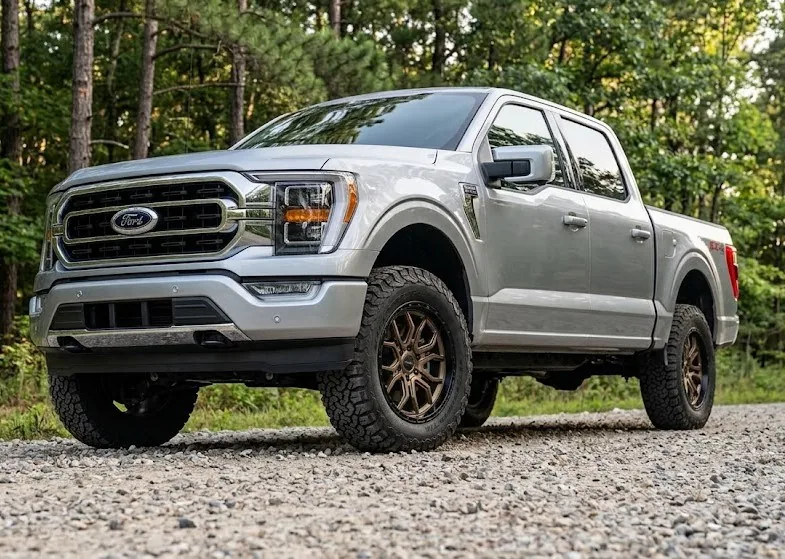
The F-150 Suspension — Starting Point
The factory setup often has a front-to-rear rake, with the rear sitting higher than the front when unloaded. This can help the truck sit closer to level under certain loads. Whether to change that stance depends on how the truck is used; preserving the factory rake can matter for towing and payload use.
Understanding the factory setup matters because every suspension modification interacts with it. A leveling kit corrects the rake without changing rear geometry. A lift kit raises the entire truck. Shock absorber upgrades improve ride quality and capability within the existing geometry. The order you do these in determines whether you are building a coherent setup or creating problems you need to fix later.
Leveling Kit vs Lift Kit — The Core Decision
| Modification | Front lift | Rear lift | Tyre clearance | Ride quality impact |
|---|---|---|---|---|
| 2-inch leveling kit | About 2 inches front lift | None | Application-specific | Less height change than a larger lift, but still changes geometry |
| 3-inch leveling kit | About 3 inches front lift | None | Application-specific | Greater geometry and clearance considerations |
| 4-inch lift kit | About 4 inches front lift | Varies | Application-specific | Requires a matched system and geometry/clearance checks |
| 6-inch lift kit | About 6 inches front lift | Varies | Application-specific | Requires a matched lift system and careful geometry/clearance planning |
For a street-driven F-150 owner who mainly wants to reduce the visual rake, a conservative leveling kit is a common starting point. It does not automatically preserve factory ride quality or guarantee a particular tire size, though. Treat the lift height, wheel/tire package and suspension design as one decision. See our dedicated leveling kit vs lift kit guide for the trade-offs.
What a Leveling Kit Actually Does to the Suspension
A strut spacer leveling kit sits on top of the factory strut and pushes the front suspension down — effectively extending the front suspension travel. This changes the CV axle angle, which is the primary engineering concern with leveling kits. There is no single CV-angle threshold that applies to every F-150. The lift method, model year, drivetrain, final ride height and suspension travel all matter. Treat published kit limits as application-specific engineering guidance rather than a universal 2-inch or 3-inch rule.
The practical implication is that a leveling kit changes suspension geometry. A well-designed, correctly installed kit can work well, but component life still depends on the exact application, alignment, tire/wheel package and use. Buy an application-specific kit and follow its installation and torque instructions.
Special suspension/electronic equipment: Do not assume a generic leveling kit fits every F-150. Tremor, Raptor, CCD-equipped and other specially configured trucks can have different suspension components or kit restrictions. Check the exact year, trim and equipment against the kit manufacturer's application chart before ordering.
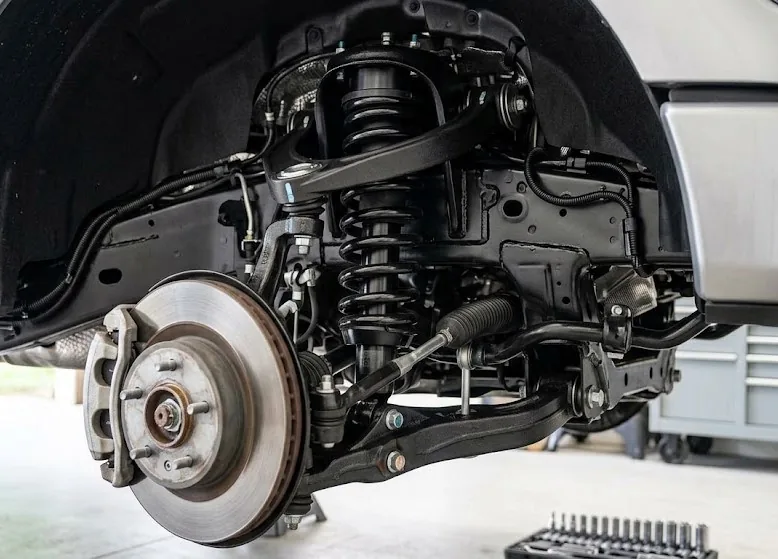
Shock Absorber Upgrades — When and Why
The factory F-150 shocks are tuned to work within the OEM ride height and spring rate. When you level the truck and add heavier all-terrain tyres, the shocks are now operating outside the parameters they were designed for. The result is often a bouncier, less controlled ride — particularly over highway expansion joints and rough tarmac — because the factory shocks cannot dampen the increased unsprung weight effectively.
Upgrading to Bilstein 5100 series shocks is the most common solution. The 5100 is a monotube shock that can be adjusted to different ride heights at the front — important if you are running a leveling kit, because you set the shock's preload ring to match your new ride height rather than running the shock at the wrong operating point.
What to Verify Before Buying Suspension Parts
Compare the exact model-year application, included hardware, stated lift or drop, alignment requirements, remaining suspension travel and any restrictions for towing or off-road use. A kit’s advertised height is not proof that it suits every trim or tire package. Review the manufacturer instructions and plan for a post-installation alignment before ordering.
The Correct Build Sequence
Getting the order right prevents expensive rework. The correct sequence for a leveled F-150 build:
- Tyres first — choose your target tyre size before ordering a leveling kit, because tyre size affects whether you need 2 or 3 inches of lift to clear the arch without rubbing
- Leveling kit + alignment — install together, align immediately after
- Shocks — if you are upgrading shocks, do it at the same time as the leveling kit to save labour and get the full setup dialled at one alignment
- Wheels — after the suspension geometry is set, choose wheels sized for your new ride height and tyre combination
Alignment After Leveling — Not Optional
Every leveling kit installation requires a four-wheel alignment immediately after. The front suspension geometry changes when the strut is extended — caster, camber and toe all shift. A ride-height change can alter alignment settings, so an alignment check after installation is a sensible baseline. Toe, camber and caster all matter to tire wear and steering behavior. Exact shop pricing varies, so treat alignment as part of the installation plan rather than budgeting a universal dollar figure.
Lift Kits, Control Arms and Springs
A leveling kit corrects factory rake; a lift kit is a broader system that may include taller struts, springs, rear blocks or replacement leaf packs, longer shocks and, at larger heights, control arms or geometry correction. The difference matters because a tall spacer lift can create poor ball-joint and CV angles even if the truck looks level. When the intended lift is more than a modest level, buy a system designed around that height rather than stacking spacers.
Aftermarket upper control arms are not a mandatory first purchase for every leveled F-150. They become useful when the alignment shop cannot bring caster and camber into a sensible range at the chosen ride height, or when the build needs more droop travel and stronger ball joints. A quality alignment report is more useful than guessing: retain it with the installation records and compare tyre wear across the first few thousand miles.
Suspension Choices for Towing and Daily Driving
Do not choose suspension only by lift height. A truck that tows regularly benefits from controlled damping, stable rear support and tyres with appropriate load rating more than it benefits from maximum front lift. Levelling raises the front visually, but it does not increase payload or towing ratings. Keep tongue weight, cargo and trailer balance within Ford's ratings, and check headlight aim after changing ride height.
For a daily-driven F-150, a two-inch level paired with good shocks and correctly sized all-terrain tyres is usually the best balance of appearance, ride and maintenance. For repeated rough-road use, a purpose-built lift and matched shocks are a better investment than a spacer-only setup. Set the budget aside for alignment, tyre balancing and possible recalibration if tyre diameter changes materially.
Post-Install Checks
After the first 50 to 100 miles, inspect every accessible fastener, look for contact marks on tyres and wheel liners, and listen for clunks over low-speed bumps. Recheck torque only to the manufacturer's published specification; over-tightening suspension hardware can be as harmful as leaving it loose. Monitor inner and outer tyre shoulders over the next several weeks. Uneven wear is an early warning that the alignment or ride-height plan needs correction.
F-150 Suspension Checklist Before Ordering
- Confirm year, drivetrain, cab, engine and whether the truck has MagneRide.
- Choose the final tyre size before selecting level or lift height.
- Budget for alignment, balancing and headlight adjustment.
- Verify wheel offset and tyre-load rating for towing use.
- Keep torque instructions and have the alignment report checked after installation.
Once the truck is aligned and settled, record the final tyre pressures and ride height. Those notes make future troubleshooting far easier.
Two-Wheel-Drive, Tire Size and Alignment Notes
Two-wheel-drive F-150s do not have front CV angles to manage, but they still need correct alignment, shock travel and ball-joint geometry after a ride-height change. Whether the truck is 2WD or 4WD, choose the final tire size before choosing a level or lift. A 33-inch tire is often simpler to package for a daily driver; 35-inch tires add weight and can require more clearance, offset discipline and sometimes trimming.
Daily Driving, Towing and Off-Road Priorities
For daily driving and towing, controlled damping, appropriate tire load rating and predictable steering are more valuable than maximum front height. For off-road use, a matched lift system with sufficient travel is preferable to stacking spacers. Any suspension change needs a four-wheel alignment, headlight check and a re-torque inspection after the first miles. Compare the trade-offs in the F-150 leveling versus lift guide, then pair the plan with F-150 tire and wheel fitment.
Puck Leveling Kit vs Bilstein 5100-Style Leveling
A puck or spacer leveling kit is usually the lower-cost, simpler concept: it retains the factory spring and strut assembly and primarily changes front ride height. It does not automatically improve damping, and it still changes suspension geometry. Installation effort varies by kit and model year because some applications require strut removal.
A Bilstein 5100-style adjustable strut solution costs more and is more involved because it changes the strut or shock assembly. Depending on the application, it can offer selectable front height and a different damping characteristic. Raising the front still changes geometry; it does not magically prevent component wear or remove the need for an alignment.
Practical answer: For a stock truck, a mild level, easy ownership and component longevity, prioritize a quality moderate-height setup with correct installation and alignment instead of maximum front lift. The better choice depends on the exact truck, desired ride feel, budget and whether the existing dampers are due for replacement.
F-150 Suspension Setup Checklist Before Ordering
Does a leveling kit change F-150 geometry?
Yes. Raising the front changes the suspension's operating position, although the amount and practical effect depend on the truck, lift height and hardware. A mild setup generally introduces less change than a larger lift, but it should not be described as preserving factory geometry exactly.
Do I need an alignment after leveling?
Treat an alignment as part of the installation. Raising the front can alter alignment angles, and an alignment also provides a useful baseline for checking steering pull and tire wear. The correct settings depend on the specific truck and intended use, so use the vehicle and suspension manufacturer's specifications rather than a generic internet number.
Is a puck or adjustable strut better?
Neither is universally better. A puck is attractive for simplicity and cost, while an adjustable strut can combine ride-height adjustment with a different damper package. The better choice depends on whether you want a mild visual change, improved damping, more adjustment or a specific tire fitment. Both approaches still require proper fitment and post-install checks.
Technical note — verify the exact truck. F-150 suspension, wheel/tire and powertrain details vary by model year, drivetrain, engine, trim and factory equipment. Ford’s current specifications and owner documentation should be treated as the baseline for vehicle-specific limits. Aftermarket fitment numbers should be treated as application-specific manufacturer guidance, not universal guarantees. Ford F-150 specifications · Ford owner documentation
Suspension Geometry After Leveling
Leveling the front of an F-150 changes more than the visual stance. Raising the front alters the suspension’s operating position, so the exact effect depends on the leveling method, amount of lift, drivetrain and suspension design. It is better to describe the change as a geometry shift than to promise that a mild level leaves everything exactly as it was from the factory.
That matters because tire clearance and alignment are connected. A wheel and tire that barely clears at rest may contact the liner, control arm or other components at steering lock or during compression.
How Wheel Offset Changes a Suspension Build
Wheel offset belongs in the suspension conversation because it changes where the tire sits relative to suspension components and the fender. A more outward wheel position can improve inner clearance while increasing fender or liner exposure; a more inward position can do the opposite.
For owners choosing a leveling kit and aftermarket wheels together, decide suspension height, wheel width, offset and tire size as one package. See the F-150 Wheel Offset & Backspacing Guide for the measurement side of the decision.
Suspension Build Paths by Use Case
| Goal | Priority | Direction |
|---|---|---|
| Daily street | Ride quality, alignment and tire life | Mild height change with quality dampers and conservative wheel/tire geometry. |
| Towing | Control, stability and load support | Stay within Ford ratings and avoid unnecessary wheel/tire mass. |
| Mixed use | Clearance without excessive compromise | Moderate leveling/lift, appropriate all-terrain tires and checked offset. |
| Dedicated off-road | Travel and clearance | Use a complete suspension system designed for intended travel. |
Why Shocks Matter After You Change Ride Height
Ride height and damping are separate decisions. A leveling spacer can change stance without improving damping, while a ride-height-adjustable shock can combine height adjustment with a different damper package depending on the application. “Leveling kit” should not automatically be treated as a complete suspension upgrade.
Check the exact F-150 generation, drivetrain, factory equipment and intended height. Some products are limited by model year or electronic suspension equipment.
F-150 Suspension and Tire Fitment Work Together
Ford has offered the F-150 with a wide range of factory wheel and tire combinations. Ford’s 2024 technical specifications, for example, list 17-, 18-, 20- and 22-inch wheel options and multiple tire sizes. That variation is why a generic “33-inch tire on a level” statement is not a complete fitment answer.
Record your exact truck’s year, drivetrain, cab, current wheel size, wheel width and offset if known, suspension hardware and target tire dimensions. Then check inner clearance, outer clearance and steering-lock contact.
See the F-150 tire-size fitment guide for a detailed clearance workflow.
Frequently Asked Questions
Will a leveling kit affect my F-150's towing capacity? A leveling kit does not create a higher tow rating. Ford's published towing and payload limits are tied to the exact truck configuration, so keep the loaded vehicle and trailer within those ratings. A larger suspension change can also alter ride, clearance and towing behavior even when the rating itself has not changed.
Can I install a leveling kit myself? Some kits are DIY-friendly, but strut removal can involve a loaded coil spring and requires the correct equipment and procedure. If the installation requires spring compression, use the manufacturer's specified method and appropriate spring-compression equipment or have the assembly handled by a qualified shop. Torque the hardware to the supplied specifications and check alignment afterward.
How long do leveling kits last? A solid spacer itself has no normal service interval like a shock absorber, but corrosion, hardware condition and installation quality still matter. The suspension components around it continue to experience their normal loads plus whatever changes the new ride height introduces. Inspect the system during routine service rather than assuming every component will last the life of the truck.
What is the biggest tire I can fit on a stock or leveled F-150? There is no universal maximum. Ford and aftermarket manufacturers publish size and load information for particular configurations, and wheel width, offset, tire dimensions, drivetrain and suspension height all affect clearance. Use the exact model-year and wheel/tire application rather than a generic “33-inch” or “35-inch” rule.