F150 Leveling Kit vs Lift Kit — Which Is Right for Your Truck
The F150 sits lower in the front than the rear from the factory — a design feature for towing, not aesthetics. A leveling kit fixes that. A lift kit takes it further. Here is what actually separates the two and which one makes sense for your situation.
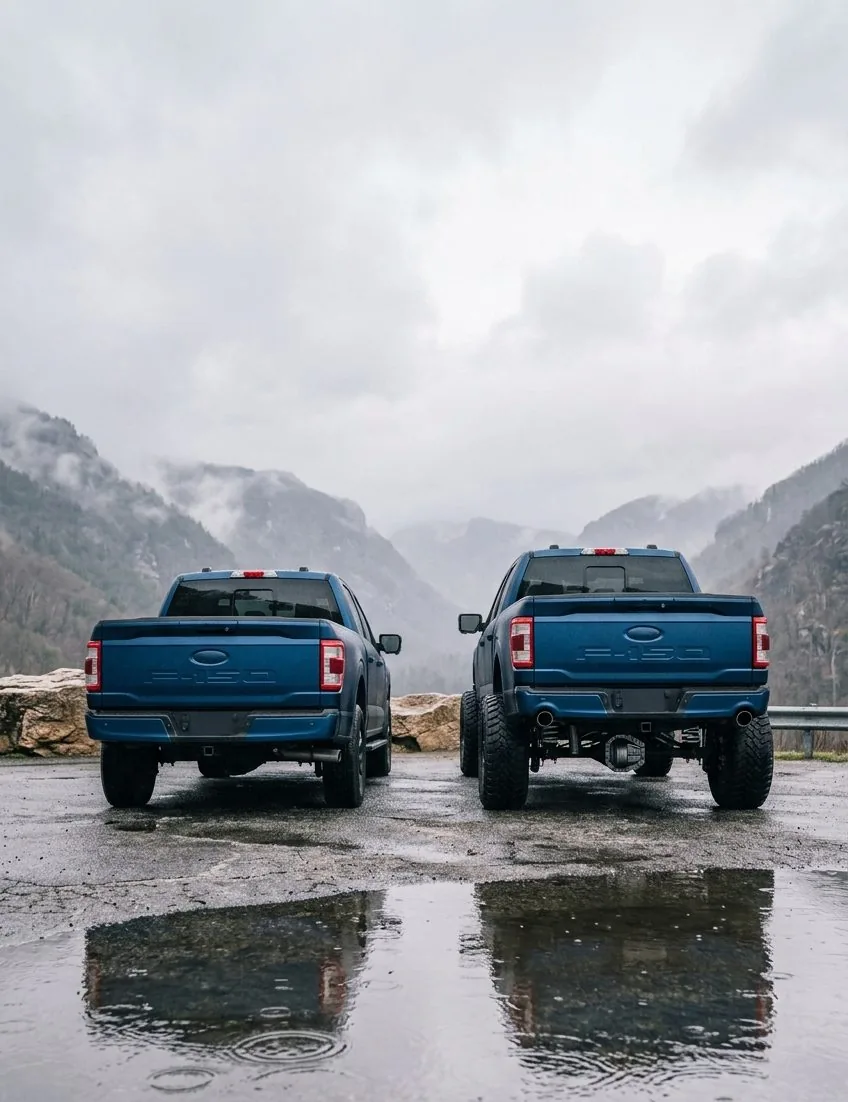
Why the F150 Sits Uneven From the Factory
Ford engineers the F150 to rake slightly — front lower than rear — for functional reasons. When the truck is loaded or towing, the rear compresses under weight and the truck levels out naturally. This is the intended behavior for a work truck. The result is that an unloaded F150 looks nose-down, which bothers a lot of owners who don't regularly tow heavy loads.
A leveling kit raises the front by 1.5-2.5 inches to match the rear height, giving the truck a level, more aggressive stance. It is the simplest and most affordable suspension modification available for the F150 and the most popular first mod among owners who want a cleaner look and the ability to run slightly larger tires.
Leveling Kit — What It Does and Doesn't Do
A leveling kit raises only the front of the truck. It does not lift the rear. This is an important distinction — after a leveling kit, your F150 sits level rather than raked forward. The overall ground clearance increases at the front but the rear stays at stock height.
Most F150 leveling kits consist of spacers that sit between the upper strut mount and the strut itself, effectively extending the front suspension travel upward. They are bolt-on components that do not require cutting, welding, or replacing stock suspension components on most applications.
Towing consideration: Leveling the F150 removes the factory rake that helps the truck handle tongue weight during towing. If you regularly tow heavy loads, a leveled truck may feel slightly different under load than stock. Most owners who tow occasionally find this acceptable — heavy daily towers should be aware of the trade-off.
Lift Kit — What It Does and Doesn't Do
A lift kit raises the entire truck — both front and rear — by a consistent amount, usually 4-6 inches on the F150. This allows significantly larger tires (35-37 inches), dramatically increases off-road ground clearance, and changes the visual profile of the truck far more dramatically than a leveling kit.
The trade-off is complexity and cost. Depending on the system and height, a lift can involve different shocks, control arms, brackets, brake-line considerations and other geometry changes. An alignment check is part of responsible installation. Do not assume every lift kit uses the same component list or installation time.
Leveling Kit vs Lift Kit — Direct Comparison
| Factor | Leveling Kit | Full Lift Kit |
|---|---|---|
| Front lift | 1.5-2.5 inches | 4-6 inches |
| Rear lift | None (stock) | 4-6 inches |
| Max tire size | 33-35 inches | 35-40 inches |
| Installation | DIY possible — 2-4 hours | Shop recommended — full day+ |
| Alignment | Check/adjust after installation | Check/adjust after installation |
| Cost (parts) | $50-300 | $800-3,000+ |
| Towing impact | Minor | Moderate — geometry changes |
| Best for | Level stance, modest tire upgrade | Serious off-road, large tires |
Best Leveling Kits for the F150
Which One Is Right for You
Get a leveling kit if: You want a cleaner, level stance. You want to run 33-35 inch tires. You do occasional off-road use. You want a simple, affordable first mod with a DIY-friendly install. You tow occasionally but not heavily every day.
Get a lift kit if: You want 35+ inch tires. You do serious off-road use that demands real ground clearance. You want a dramatically different visual stance. You're willing to invest in a complete suspension overhaul and accept the complexity that comes with it.
Geometry, Control Arms and Tire Clearance
A leveling kit corrects rake; a lift kit is designed to raise more of the truck and can include matched springs, shocks, brackets or control arms. As lift height grows, ball-joint angle, alignment range and steering geometry become more important. Upper control arms can be useful when the chosen height requires more alignment correction or travel, but they are not a universal first purchase.
| Goal | Usually suits | Plan for |
|---|---|---|
| Daily stance with 33s | Conservative level | Alignment and clearance check |
| More trail clearance | Matched lift system | Geometry and shock travel |
| 35-inch tires | Build-specific lift and wheels | Offset, trimming, weight and gearing |
Cost and Use-Case Reality
Installation cost includes the alignment, possible tire work and any needed wheel or brake-line clearance parts. For towing and daily use, choose a modest, well-aligned setup that retains controlled ride quality. For frequent off-road use, invest in a system engineered for the chosen height rather than a stack of spacers. The F-150 suspension guide explains the component choices, while best F-150 tires helps establish your clearance target.
F-150 Leveling vs Lift: Practical Buying Checklist
Is a 2-inch level automatically safe for an F-150?
No lift height can be treated as universally safe for every F-150. The truck's drive configuration, suspension design, hardware and tire package matter. A moderate lift generally produces less geometry change than a larger one, but alignment and clearance still need to be checked.
Should I buy the lift before choosing tires?
Ideally decide the tire size and wheel offset first. That lets you determine how much height is actually needed for clearance. It also helps avoid paying for additional lift that only creates more geometry change without providing a useful benefit.
Will a level make my F-150 ride worse?
Not automatically. Ride quality depends on the suspension hardware, tire sidewall, spring and damper characteristics and road surface. A moderate setup with appropriate tires can remain comfortable, while an aggressive lift combined with stiff tires and large wheels can feel much harsher.
Technical note — verify the exact truck. F-150 suspension, wheel/tire and powertrain details vary by model year, drivetrain, engine, trim and factory equipment. Ford’s current specifications and owner documentation should be treated as the baseline for vehicle-specific limits. Aftermarket fitment numbers should be treated as application-specific manufacturer guidance, not universal guarantees. Ford F-150 specifications · Ford owner documentation
Frequently Asked Questions
Do I need an alignment after a leveling kit? An alignment check is an important part of the installation because ride-height changes can alter alignment settings. The exact adjustment depends on the truck and kit.
Will a leveling kit affect my F150's ride quality? Slightly. Spacer-style leveling kits can marginally firm up the front ride feel since they alter the suspension's operating position. Most owners consider this barely noticeable. Strut extension kits like ReadyLIFT are generally considered to preserve ride quality better than simple spacers.
What's the biggest tire I can run with a 2-inch leveling kit? There is no universal maximum. Published kit guides can give a starting point, but the actual limit depends on year, drivetrain, wheel width, offset, tire construction and the rest of the suspension. Verify the complete wheel/tire package rather than buying from a diameter number alone.
Can I install a leveling kit myself? Yes — most leveling kits are bolt-on installs that require basic tools and a safe way to lift the truck. Budget 2-4 hours for a first-time install, plus an alignment visit afterward.
Does a leveling kit void the F-150 warranty? There is no blanket answer. The relevant questions are what part failed, what the written warranty says, and whether the modification caused or contributed to that failure. Do not promise coverage or denial; document the installation and keep the kit manufacturer's instructions.
What F150 Owners Actually Experience After Leveling
The most consistent feedback from F150 owners who've installed leveling kits is that the visual transformation is more dramatic than they expected, the ride quality change is less noticeable than they feared, and the only genuine regret is not doing it sooner. The F150's factory rake is significant enough that leveling produces a noticeably different-looking truck — more purposeful, more planted, more aggressive without any aggressive modifications.
A consistent note on F150Forum is that the alignment is non-negotiable after a leveling kit. Skipping an alignment after a ride-height change can lead to uneven tire wear, but the timing varies with the actual alignment, tire, roads and driving style. An alignment check should be part of the installation plan. The alignment cost is a fraction of the cost of replacing tires early — it's not optional.
Ball joint wear is another topic that comes up repeatedly in F150 leveling kit discussions. Running a leveling kit on worn ball joints accelerates wear further since the changed geometry puts additional stress on the joint. Before installing a leveling kit, especially on trucks with 50,000+ miles, inspecting the front ball joints is worth the time.
Tire Sizing Reality Check
The tire size question is where most F150 leveling kit research leads, and where the most optimistic claims from product listings and YouTube videos can mislead buyers. The "fits 35s" claim that appears on many leveling kit product pages is often technically accurate for specific trim levels on 4WD trucks with specific wheel offsets, but not universally applicable.
Leveling Kit and Headlight Aim
An often-overlooked consequence of leveling the F150 is headlight aim. The factory headlights are aimed assuming the stock rake — nose slightly down, rear slightly higher. After leveling, the front of the truck rises and the headlights now aim higher than intended, potentially blinding oncoming drivers.
Most F150 headlight assemblies have accessible vertical adjustment screws. After leveling kit installation and alignment, checking headlight aim and adjusting if necessary is a safety step worth taking, especially if you drive frequently at night.
The Cost Breakdown — Leveling Kit Total Investment
| Item | Budget Option | Recommended Option |
|---|---|---|
| Leveling Kit (parts) | Rough Country ~$60 | ReadyLIFT ~$150 |
| Installation (labor) | DIY — $0 | Shop — $100-200 |
| Alignment | $80-120 | $80-120 |
| New tires (optional) | $400-700 (33") | $600-1,200 (35") |
| Total (kit + alignment) | $140-180 DIY | $330-470 shop installed |
Final recommendation: If your goal is mainly a cleaner stance with a modest change in front ride height, a leveling kit is usually the simpler path. If you need more ground clearance or a larger tire package, a matched lift system makes more sense. Choose by use case first, then verify the exact kit, alignment range and tire fitment for the truck.
4WD vs 2WD — Does It Matter for Leveling Kits
The leveling kit install process and outcome differs slightly between 4WD and 2WD F150s. Most of the discussion around F150 leveling kits assumes 4WD trucks since they're the majority of builds, but 2WD owners have specific considerations worth noting.
On 4WD trucks, the leveling kit raises the front strut and changes the CV axle angle slightly. This is manageable with a proper alignment and is the standard install scenario most leveling kit instructions are written for. On 2WD trucks, the front suspension geometry is simpler without the front driveshaft and CV joints, making leveling kit installation slightly more straightforward.
The caster angle change from leveling applies to both 4WD and 2WD trucks and is why the alignment is non-negotiable regardless of drivetrain. Some kits offer hardware intended to help with alignment range, but no kit guarantees factory geometry. A professional alignment verifies the result for the specific truck, ride height, tires and wheels.
Leveling vs. Lifting: Decide What You Need
A leveling kit and a lift kit solve different problems. If the goal is reducing the factory nose-down stance and gaining some front clearance, leveling may be enough. If you need substantially more tire clearance or a larger increase in ride height, a complete lift system may be appropriate.
What leveling does not automatically solve
More front height does not guarantee unlimited tire clearance. Wheel offset, tire width, suspension travel, steering angle, and liner clearance still matter. Larger tires can rub even when the truck looks fine parked.
Alignment and geometry
Any height change can alter alignment. Have the truck aligned after installation and inspect tire wear. Larger changes can also affect suspension and steering geometry according to the kit's design.
Budget beyond the kit
Include installation, alignment, wheels and tires where needed, and supporting components required by the kit. A low initial price is not a bargain if it creates clearance or geometry problems.