Best Wheels for Ford F150 — Sizes and Styles
Finding the best wheels for F150 starts with one critical spec. The F150's 6x135mm bolt pattern opens up a substantial aftermarket wheel selection — but the fitment rules are different from the Silverado and getting offset wrong is an expensive mistake. Here is what actually works.
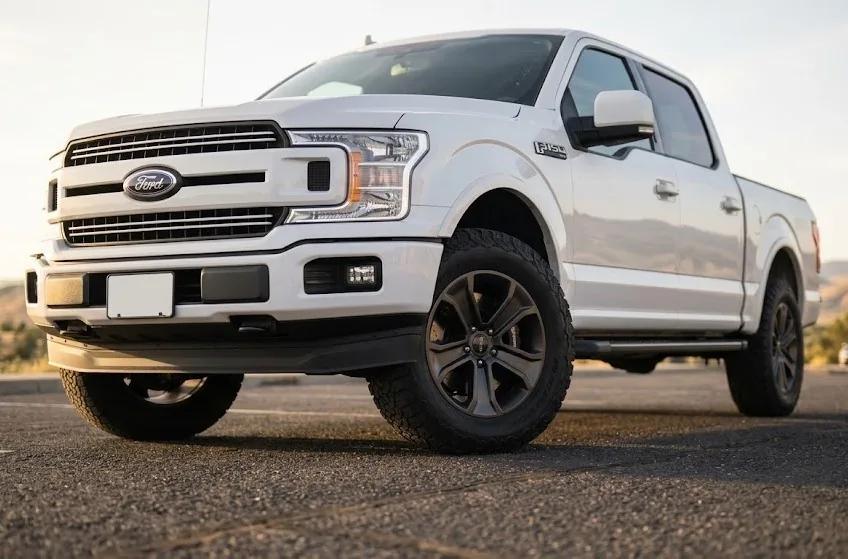
F150 Wheel Specs — Critical Differences From Silverado
The F150 uses a 6x135mm bolt pattern — this is unique to Ford trucks and is not interchangeable with the Silverado's 6x139.7mm pattern. This is the single most important spec to confirm before purchasing any wheel for the F150. A wheel that fits the Silverado will not fit the F150 and vice versa, despite both being six-lug half-ton trucks.
Hub bore is 87.1mm for the F150 1500. This is larger than the Silverado's 78.1mm. Wheels with a universal centre bore larger than 87.1mm require hub-centric rings to prevent vibration at highway speeds. Any quality wheel brand will either machine the correct F150 centre bore or include the appropriate rings — confirm before installing.
Understanding F150 wheel offset is essential before buying. Factory offset on most F150 configurations is ET44. This is higher positive offset than the Silverado's ET24-ET28, which means the wheel sits more toward the inside of the arch from the factory. Aftermarket F150 wheels targeting a more aggressive stance typically run ET18-ET24 — significantly less positive than factory but still within a range that does not cause handling issues or accelerate component wear on a street-driven truck.
What Size to Run — Stock vs Leveled vs Lifted
Stock ride height: 18x9 or 20x9 at ET24-ET34 gives a noticeably more aggressive stance than the factory wheel while remaining within the clearance envelope at full steering lock. The factory 265/70R17 or 275/55R20 tyre sizes fit cleanly at these offsets without any contact.
With a 2-inch leveling kit: 18x9 or 20x9 at ET18-ET24 opens up significantly. The leveled front geometry eliminates the clearance constraint at full steering lock that limits more negative offsets at stock height. This combination — 2-inch level with 18x9 ET18-ET24 and 33-inch tyres — is the most popular F150 build combination and works cleanly on most cab configurations.
With a 4-inch lift: 20x10 or 20x12 at ET-18 to ET-24 fits 35-inch tyres on most F150 configurations. This is the aggressive lifted build territory where wheel width and offset start to meaningfully affect handling feel and component wear if taken too far negative.
For a deeper explanation of how offset numbers work and what the consequences of going too negative are, our positive vs negative wheel offset guide covers the physics and platform-specific numbers.
Top Wheel Brands for the F150
Sizing Guide — F150 by Build Level
| Setup | Recommended Size | Offset Range | Max Tyre |
|---|---|---|---|
| Stock ride height | 18x9 or 20x9 | ET24-ET34 | 275/65R18 or 33" |
| 2" Leveling kit | 18x9 or 20x9 | ET18-ET24 | 285/70R17 or 33-34" |
| 4" Suspension lift | 20x10 or 20x12 | ET-18 to ET-24 | 35" or 37" with trimming |
| 6" Suspension lift | 20x12 | ET-24 to ET-44 | 37-40" |
Finish Options — What Holds Up on the F150
Matte black is the dominant finish on F150 builds — suits the truck's proportions on both dark and light body colours and hides road grime better than gloss. The Fuel Rebar and Black Rhino Calico are both available in matte variants that are consistently the bestselling configurations.
Matte titanium — as seen on the Method MR305 — is increasingly popular on F150 builds as an alternative to all-black setups. Works particularly well on white, silver, and light-coloured F150s where the contrast reads as intentional rather than default.
Gloss black shows brake dust and road grime more than matte but suits a cleaner, more road-focused aesthetic. Good choice on builds that prioritise appearance over off-road capability.
Lug Nuts and Hub-Centric Rings
The F150 uses 14mm x 1.5 thread pitch lug nuts — different from the Silverado's 14mm x 1.5 as well, but confirm your specific year before purchasing. Most aftermarket F150 wheel packages include lug nuts or specify what is needed. Confirm seat type matches your wheel — conical seat vs ball seat — before using any lug nut with a new wheel.
If your chosen wheel has a larger universal centre bore than 87.1mm, hub-centric rings fill the gap and prevent vibration that develops at highway speeds when the wheel is not centred on the hub. Quality wheel brands include these when needed. Do not skip them — a wheel that is not hub-centric will develop a vibration that is misdiagnosed as a balance issue and wastes time at a tyre shop.
Weight — Why It Matters More on a Truck Than Most Owners Think
Trucks already carry significant unsprung mass from heavy axles, hubs, and brakes. Adding heavier aftermarket wheels increases this further, affecting suspension response, fuel economy, and how the truck handles on rough terrain. The difference between a 28-pound cast steel wheel and a 22-pound quality cast aluminum wheel is meaningful when multiplied across four corners of a truck that already pushes the limits of its suspension components.
Forged wheels are lightest and most expensive — typically 15-20 pounds per wheel versus 24-30 pounds for standard cast alternatives of the same size. Flow-formed wheels sit between forged and standard cast — lighter than standard cast through a manufacturing process that stretches the barrel under pressure, improving both strength and weight simultaneously. For trucks that are primarily daily drivers, quality cast aluminum from Fuel or Black Rhino is the practical sweet spot. For builds that see regular off-road use where unsprung weight affects terrain capability, the flow-formed or forged premium becomes genuinely worthwhile.
Method Race Wheels specifically advertises their construction methods and weight data — the MR305 NV is built to a higher structural standard than appearance-focused wheels at a comparable price. For F150 owners who take trails seriously, the Method's construction is relevant rather than just a marketing claim. For owners whose truck primarily sees grocery runs and occasional gravel, the construction premium is less critical and the visual choice between brands becomes more important than the engineering specifications.
Before ordering: read the F-150 Wheel Offset & Backspacing Guide to compare wheel position, backspacing and clearance.
Frequently Asked Questions
What bolt pattern is the Ford F150? 6x135mm — unique to Ford trucks and not shared with the Silverado's 6x139.7mm. Always confirm 6x135 fitment before purchasing any wheel for the F150.
Will Silverado wheels fit on an F150? No — 6x135mm and 6x139.7mm are different bolt patterns. The bolt circle diameter is different and the wheels will not mount safely regardless of visual similarity.
What is the hub bore for F150? 87.1mm. Confirm this matches your chosen wheel, or ensure hub-centric rings are included for wheels with a larger universal bore.
There is no universal offset range for every leveled F-150. The right offset depends on wheel width, tire dimensions, generation, suspension, brake package and the intended stance. Compare the proposed wheel with the factory dimensions and verify clearance for the exact truck before ordering.
Are Fuel wheels good quality for F150? Yes — Fuel is one of the most trusted aftermarket wheel brands for trucks with strong quality control, accurate fitment specs, and a wide selection specifically for the 6x135 F150 bolt pattern.
Do I need a leveling kit before buying aftermarket wheels? Not always — stock offset aftermarket wheels fit without a leveling kit. If you want aggressive fitment with more negative offset and larger tyres, the leveling kit should come first to confirm clearance before committing to a wheel purchase.
What is the best aftermarket wheel brand for F150? Fuel Off-Road for the best selection, widest style variety, and strongest community presence on the F150 platform. Black Rhino for aggressive fitment on leveled and lifted trucks. Method Race for off-road focused builds where construction quality matters alongside appearance.
Can I run 20x10 wheels on a stock F150 without rubbing? At ET-18 or less negative on the rear — generally yes. The front may require a 2-inch leveling kit to clear at full steering lock depending on tyre width. Always check specific fitment for your exact year and cab configuration against owners running the same combination.
The F150 aftermarket wheel market has matured significantly over the past decade — quality brands with confirmed fitment data, accurate offset specifications, and genuine load ratings make the selection process straightforward once you know your bolt pattern, hub bore, and target offset range for your specific build level.
Should I level before buying wheels? If you want aggressive fitment with more negative offset and larger tyres — yes, level first so you can confirm clearance before committing to a wheel purchase. If you are buying wheels at stock offset ranges that work at stock ride height — the leveling kit can come later without affecting your wheel choice. Sequence matters when pushing clearance limits.
Before You Buy
Use the F-150 Wheel & Tire Fitment Guide to verify width, offset, backspacing and tire clearance before selecting a wheel.