33-Inch vs 35-Inch Tires on a Leveled F-150
A practical comparison of 33s and 35s for a leveled F-150, focused on fitment variables rather than a one-size-fits-all promise.
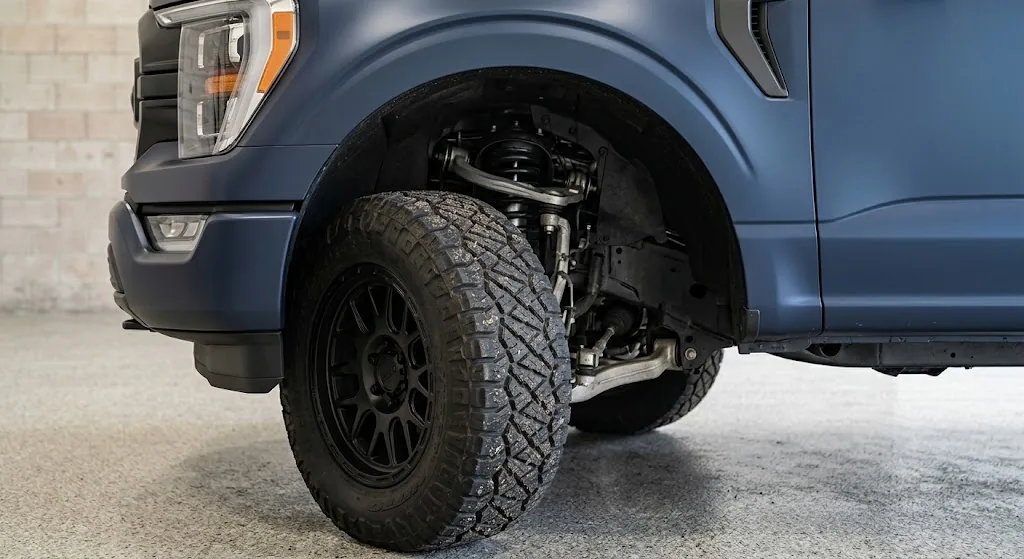
The Short Version: 33s Are Not Automatically “Easy” and 35s Are Not Automatically “Too Big”
The correct answer depends on the exact F-150, leveling height, wheel width, offset, tire model and intended use. A nominal tire diameter does not tell you how far the sidewall will sit toward the suspension or fender. Even fitment catalogs can list different maximum tire sizes for different leveling heights and wheel offsets.
Use this comparison as a decision guide, then verify the exact application with the wheel and tire manufacturer. The existing leveled F-150 tire-size guide covers the fitment variables in more detail.
What You Gain With 35s
A 35-inch tire can provide a larger visual footprint and more ground clearance at the tire, but it also brings more fitment sensitivity and can add rotating mass. Depending on the exact tire and wheel, the change can affect steering feel, road noise, acceleration and fuel economy.
Why 33s Are Often Easier to Package
A 33-inch-class tire generally gives you more clearance margin than a 35-inch-class package, but “33-inch” still does not guarantee no-rub fitment. Width, wheel offset and the particular tire’s measured dimensions remain important.
Wheel Offset Can Matter as Much as Tire Diameter
Moving the wheel outward can increase outer-fender clearance in one area while creating a different problem at the liner or suspension. Moving it inward can do the opposite. That is why the F-150 offset and backspacing guide should be used with any 33/35-inch decision.
Daily Driving vs Towing vs Off-Road
For daily driving, prioritize steering clearance, road noise and predictable alignment. For towing, keep tire load rating and the truck’s factory payload/towing limits in view; a larger tire does not increase those ratings. For off-road use, static clearance is not enough—suspension compression and articulation need to be considered.
How to Check the Package Before You Commit
- Confirm the exact F-150 year, cab, drivetrain and suspension configuration.
- Record the wheel diameter, width and offset, including any spacer.
- Check the tire manufacturer’s measured section width and diameter where available.
- Check clearance at steering lock and inspect the liner, suspension and outer fender areas.
- If the truck will see off-road articulation, check clearance through suspension travel rather than only at rest.
- After installation, inspect for contact marks and recheck alignment and hardware torque.
- Choose the truck’s intended use first: daily driving, towing, highway travel or off-road use.
- Choose a leveling height that matches that use rather than selecting height only for appearance.
- Select wheel width and offset before finalizing tire size.
- Verify the tire’s measured dimensions and load/speed rating.
- Check clearance before and after the suspension settles, then recheck alignment and hardware.
A Sensible Order of Operations
Two tires with the same nominal size can have different measured diameters, section widths and tread shapes. One may fit while another with the same size code contacts the liner. When possible, compare the manufacturer’s published dimensions and the wheel-width range rather than relying only on the size printed on the sidewall.
Why Tire Brand Still Matters
Rubbing is usually a geometry problem, not simply a “35-inch problem.” The contact point can be the liner, bumper edge, upper control arm or another component depending on wheel offset and suspension height. Check at full steering lock and, for off-road use, through suspension compression and articulation. If a spacer or different wheel offset is added later, repeat the clearance check.
What About Rubbing?
Going from a smaller tire to a larger package can change more than the look of the truck. The added diameter can alter effective gearing, while a wider or heavier tire can affect steering response, road noise and rotating mass. Those changes vary by tire construction, wheel weight and the truck’s drivetrain, so they should be treated as package-level trade-offs rather than fixed penalties for every 35-inch tire.
How Tire Size Affects the Rest of the Truck
If you are starting with a stock truck, work through the F-150 first mods guide, then decide whether leveling is actually useful for your goals. From there, use the leveling guide, wheel offset guide and tire-size guide before choosing the final package. That sequence prevents the common mistake of buying a tire first and trying to make the suspension and wheel geometry fit around it.
How This Fits Into the Existing F-150 Build
The practical difference is not just whether the tire physically fits while parked. A truck that clears at straight-ahead steering can contact the liner or bumper at full lock, and a truck that clears on the street can contact under compression off-road. That is why “no rub” claims should always be tied to a specific truck, wheel, offset, tire and suspension setup. If you change one of those variables later, the old fitment result may no longer apply.
33s vs 35s: The Clearance Question Comes First
Frequently Asked Questions
Can a leveled F-150 fit 35-inch tires? Sometimes, but the answer depends on the exact truck, leveling height, wheel width, offset and tire model.
Are 33-inch tires easier to fit than 35s? Generally they provide more clearance margin, but exact fitment still has to be checked for the complete package.
Do 35s hurt towing capacity? The tire itself does not raise or lower the truck’s rated capacity, but tire load rating and the added mass of the package should be considered alongside the vehicle’s published ratings.
Sources & Fitment Checks
The exact year, configuration and wheel/tire package must be verified before installation. ModManual does not treat a nominal tire diameter as a universal fitment guarantee.