Best Tires for Ford F150 — AT vs Highway Ranked
Choosing the best tires for F150 owners starts with one decision: all-terrain or highway. Tires are the single most impactful upgrade on any truck. The right set transforms how the F150 rides, looks, handles, and performs off-road. Here is exactly what each category and each major brand delivers.
All-Terrain vs Highway — Which Is Right for Your F150
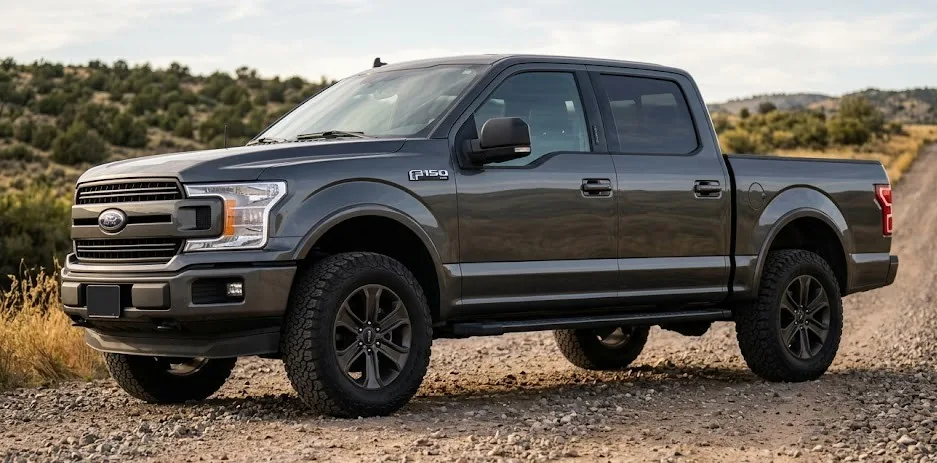
This is the most important decision before looking at any specific brand. All-terrain and highway tires serve genuinely different use cases, and choosing the wrong category costs you in either capability or comfort every mile you drive.
The best highway tires for F150 daily drivers — Michelin Defender LTX, Bridgestone Dueler — are the right choice for owners whose primary use is highway commuting, daily driving, and occasional light gravel or unpaved road driving. They offer significantly quieter highway noise, better fuel economy, longer tread life, and more comfortable ride quality than all-terrain alternatives. If the truck spends 90%+ of its time on pavement and the occasional gravel road, highway tires deliver better daily performance in every metric that matters for that use case.
The best all-terrain tires for F150 — Falken Wildpeak AT3W, BFG KO2, Toyo Open Country AT3 — are the right choice for owners who regularly drive off-pavement — unpaved forest roads, ranch access, seasonal trails, mud, or genuine off-road terrain. The more aggressive tread pattern provides meaningfully better traction in these conditions at the cost of higher highway noise, marginally worse fuel economy, and shorter tread life than highway alternatives.
The honest answer for most F150 owners who never leave pavement but want the aggressive look: buy highway tires and accept that appearance is the reason, not capability. There is nothing wrong with that choice — but know what you are trading off.
Top Picks — Highway Tires
Top Picks — All-Terrain Tires
Comparison Table
| Tire | Category | Highway Noise | Off-Road | Tread Life |
|---|---|---|---|---|
| Michelin Defender LTX | Highway | Very Low | Light gravel only | 70,000+ miles |
| Toyo Open Country AT3 | All-Terrain | Low-Moderate | Good | Manufacturer/warranty rating varies by size |
| Falken Wildpeak AT3W | All-Terrain | Moderate | Very Good | Application-specific |
| BFG KO2 | All-Terrain | Moderate-High | Excellent | Application-specific |
Tire Sizing for the F150 — What Fits Stock and Leveled
The factory F150 comes with a range of sizes depending on trim and model year — 265/70R17 on base trims, 275/55R20 on higher configurations. Most aftermarket tire choices stay within or close to the factory diameter to avoid speedometer inaccuracy and fitment issues.
With a 2-inch leveling kit the F150 gains meaningful tyre clearance in the front arch. Most F150 owners running a 2-inch level clear 33-inch tyres (285/70R17 or 275/65R18) without any contact. 35-inch tyres require a minimum 3-inch lift and potentially some trimming depending on cab configuration. Confirm specific fitment against owners running your exact year, cab, and lift combination before purchasing.
Towing — Does Tire Choice Affect Towing Capacity
LT and P-metric tires have different load characteristics, but the correct choice depends on the truck’s placard, tire size, axle ratings, actual loads and tire load tables. If you tow near the vehicle’s limits, confirm the required capacity and pressure with the vehicle and tire manufacturers rather than treating one tire category as universally correct.
All four tires recommended in this guide are available in LT ratings appropriate for F150 towing applications. If towing is a primary use, specifically select LT-rated versions rather than the lighter-duty P-metric alternatives when both are available.
Noise — The Trade-Off Nobody Warns You About
Highway tyre noise is the single most commonly reported regret among F150 owners who buy aggressive all-terrain tyres primarily for appearance. The difference in cabin noise between a quality highway tyre and an aggressive all-terrain at 70mph is significant — measured in decibels and experienced as a constant background roar on long highway drives that highway tyre owners simply do not have.
If quiet tires for Ford F150 highway use are the priority, the Michelin Defender LTX is nearly silent at highway speeds — a quality that owners notice immediately after years on all-terrain tyres. The Toyo AT3 is the quietest all-terrain but still produces meaningfully more noise than any dedicated highway tyre. The BFG KO2 is honest about its priorities — excellent off-road capability and sound that confirms it was built for terrain use, which is exactly the right tyre if that is the use case and exactly the wrong choice for a primarily highway truck.
Before buying all-terrain tyres for a truck that spends most of its time on pavement, drive a friend's truck or rent one that is running the specific tyre you are considering for a highway stretch at 70mph. The experience is more informative than any review and makes the choice between categories concrete rather than abstract.
Tyre noise also increases as all-terrain tyres wear — the tread pattern that produces moderate noise when new becomes louder as it wears and the tread blocks harden and square off. Highway tyre noise typically stays consistent or decreases slightly as the tyre wears to its optimal profile. Over the life of the tyre, the noise difference between categories is even more pronounced than it appears from new.
How to Choose an F-150 Tire by Actual Use
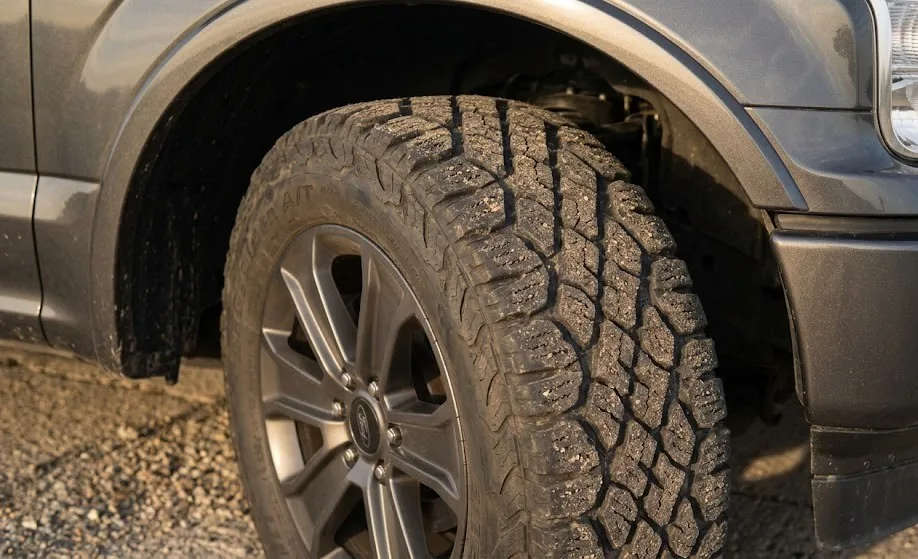
"Best" changes quickly once the truck's job changes. A highway-focused tire can make sense for an F-150 that spends most of its time on pavement, while an all-terrain tire may be the more appropriate compromise for gravel, construction access roads or regular trail use. Neither category automatically makes the truck better for towing; tire size, load rating, inflation pressure and the truck's own limits still matter.
| If you mainly do... | Start by prioritizing... | Watch for... |
|---|---|---|
| Highway commuting | Wet braking, ride, noise and tread life | Heavy aggressive tread that adds unnecessary noise |
| Mixed pavement/gravel | Sidewall durability and wet traction | Excessive weight and road noise |
| Towing | Correct load rating, stable handling and pressure management | Assuming a tire upgrade increases the truck's rated towing capacity |
| Leveled truck | Complete wheel/tire clearance and overall diameter | Rubbing at steering lock or suspension compression |
Wheel and Tire Changes Should Be Evaluated Together
Changing only the tire is not the same as changing the complete wheel-and-tire package. A different wheel width or offset can move the tire inward or outward, while a taller tire can affect clearance and gearing. On a leveled F-150, suspension height alone does not guarantee that a particular tire will clear the upper control arm, liner or body through the full range of steering and suspension movement.
Before buying, compare the proposed setup with our F-150 leveled tire-size guide and F-150 wheel offset and backspacing guide. If the truck is being leveled specifically to change tire fitment, also review the F-150 leveling guide so the suspension change and tire decision are considered together.
Do Not Confuse Tire Capability With Truck Capability
A tire's load rating is one part of the system, but installing a higher-rated tire does not raise the F-150's manufacturer-rated payload, towing capacity, axle rating or GVWR. Those limits remain tied to the vehicle configuration and manufacturer's specifications. The useful question is whether the tire is correctly specified for the truck and intended load, not whether the tire itself has a larger number on the sidewall.
A larger or heavier tire can change steering feel, road noise and rotating mass. More importantly, the tire does not increase the truck’s rated payload or towing capacity. Keep the vehicle’s ratings, tire load index and the actual trailer/load combination in view when changing tire size.
When a Larger Tire Is Not the Better Towing Choice
If you are considering a larger tire after leveling, use the leveled F-150 tire-size guide and wheel offset and backspacing guide together. Tire Rack fitment listings also demonstrate how a manufacturer’s recommended maximum can change with leveling height, wheel width and offset, so published fitment should be treated as application-specific rather than universal.
A “33-inch” or “35-inch” label is a useful shorthand, not a universal fitment guarantee. Actual tire dimensions vary by tire model, wheel width and inflation, while clearance depends on the truck year, drive system, suspension height, wheel offset and steering travel. That is why the same nominal tire size can work on one leveled F-150 and rub on another.
33s vs 35s: Tire Size Is Only One Part of the F-150 Setup
Frequently Asked Questions
What are the best tires for a Ford F150? Michelin Defender LTX for highway-primary trucks. Falken Wildpeak AT3W for the best all-terrain value. BFG KO2 for proven off-road capability. Toyo AT3 for the quietest all-terrain option.
Are all-terrain tires louder than highway tires on the F150? Yes — the aggressive tread pattern creates more road noise at highway speeds. The difference is significant between highway tires and more aggressive all-terrains like the KO2. The Toyo AT3 is the quietest of the all-terrain options but still louder than a dedicated highway tire.
What size tires fit a stock F150? Depends on trim and year. Base trim 17-inch configurations clear up to 265/70R17. Higher trim 20-inch configurations clear 275/55R20. Always confirm against your specific year and trim before purchasing.
Will larger tires affect F150 fuel economy? Yes — larger diameter tires change the final drive ratio, and heavier all-terrain tires increase rotating mass. Larger and heavier all-terrain tires can reduce fuel economy, but the size of the change depends on tire mass, diameter, gearing, pressure, alignment and driving conditions. The impact varies significantly by driving style and conditions.
How often should F150 tires be rotated? Every 5,000-7,500 miles on trucks running all-terrain tires, which wear less evenly than highway tires. Every 7,500-10,000 miles on highway tires. Consistent rotation significantly extends tread life on all truck tires.
Does the F150 need a leveling kit before buying bigger tires? For sizes up to 33 inches — a leveling kit is recommended for the front clearance it provides. For stock sizing — no leveling kit needed. For 35 inches and above — a minimum 3-inch lift is required.
What is the best all-terrain tire for F150 towing? Michelin Defender LTX in LT rating for highway towing where comfort and tread life matter most. Falken Wildpeak AT3W in LT rating for mixed-use towing including off-pavement access. Both provide adequate load ratings for F150 towing applications when specified in LT sizing.
How long do all-terrain tires last on an F150? There is no dependable real-world mileage guarantee. Use the tire manufacturer's published treadwear/warranty information as a reference, then adjust expectations for load, alignment, rotation, road surface and driving style. Regular rotation every 5,000-7,500 miles is essential for even wear on all all-terrain options.
The right tyre choice for the F150 is one of the most personal decisions in a truck build — it affects how the truck looks, sounds, rides, and performs every single day, which means getting the category decision right before selecting a brand is more important than any individual product comparison between brands in the same category.
Should I buy all-terrain or highway tires for my F150? Depends entirely on use. If the truck is primarily a daily driver and highway commuter — highway tires deliver better noise, fuel economy, and tread life. If the truck regularly goes off-pavement on trails, ranch roads, or seasonal access roads — all-terrain tires deliver the traction those conditions require. The look of all-terrain tires is not a sufficient reason to accept the highway noise penalty if pavement is where the truck actually spends its time.
Pick the Right F-150 Tire, Not Just a Popular Tire
Tire choice should follow the truck's job. A tire that is excellent for highway commuting may be a poor match for regular dirt-road use, while an aggressive all-terrain tire can add noise, weight, and fuel consumption you may not need.
Match tread to use
Highway-oriented tires make sense when most miles are paved. All-terrain tires are a compromise for owners who regularly leave the pavement. Mud-terrain designs are specialized and make the most sense when their off-road traction is genuinely needed.
Load and speed ratings
Check the tire specifications against the truck and intended load. Towing, payload, wheel diameter, and tire pressure all affect behavior. Heavier tires can also change acceleration, braking feel, and suspension response.
Consider the complete package
When changing stock sizing, calculate overall diameter and width rather than assuming a nominal size will fit. Verify clearance at full steering lock and suspension compression, especially on leveled or lifted trucks. See the 33-Inch vs 35-Inch F-150 Tire Guide for the next fitment decision.
Match the Tire to the Wheel
The F-150 Wheel & Tire Fitment Guide shows how tire width and diameter interact with wheel width, offset and suspension height.