F-150 Wheel & Tire Fitment Guide — Offset, Width & Clearance
Choosing F-150 wheels and tires is not just a diameter decision. Width, offset, backspacing, tire construction, suspension height and intended use all affect the final fit.
Start With the Truck, Not the Wheel
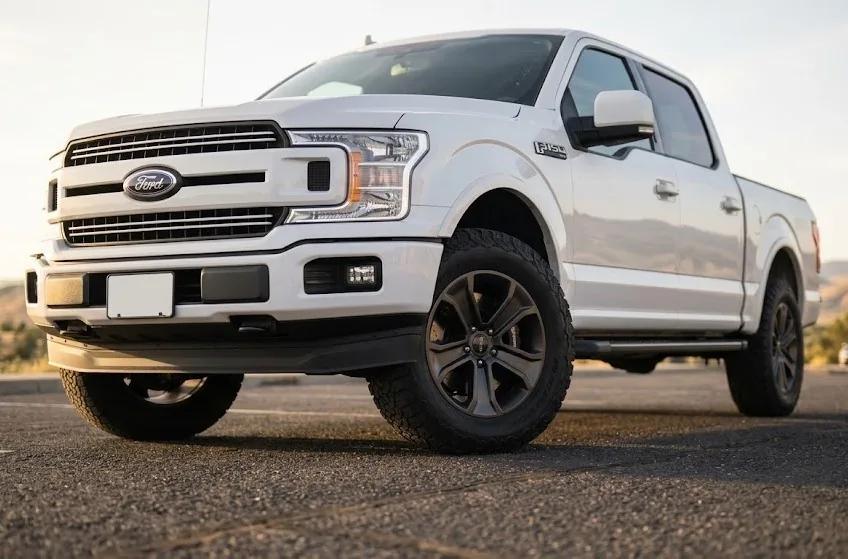
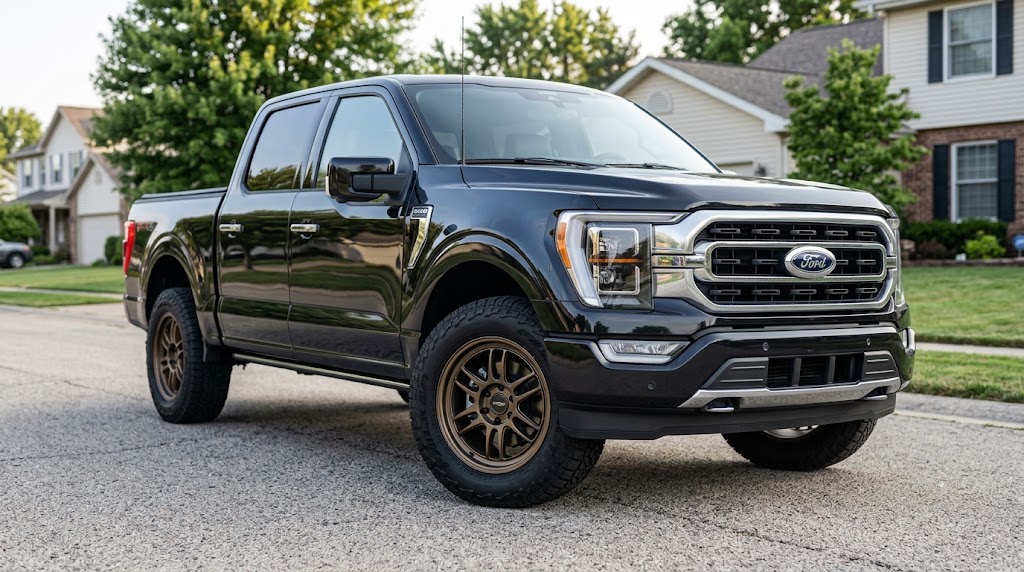
An F-150 can have very different fitment requirements depending on generation, cab, drivetrain, brake package, factory wheel size and suspension height. A wheel that fits one F-150 should never be treated as automatically compatible with another.
Before shopping, record the current wheel diameter, width and offset if known, tire size, suspension changes and whether the truck is stock, leveled or lifted. That gives you a baseline to compare against.
Wheel Diameter Is Only One Number
A larger wheel does not tell you how aggressive the setup will be. Two 18-inch wheels can have different widths and offsets, putting the inner barrel closer to suspension components or moving the outer lip farther toward the fender.
Read our F-150 Wheel Offset & Backspacing Guide for the detailed calculations. This guide is the practical overview for combining those numbers with tire size.
Offset and Backspacing: What Changes?
Positive offset moves the wheel mounting face toward the outside face of the wheel, generally pulling the wheel farther inward compared with a lower-offset wheel of the same width. Negative offset does the opposite. Backspacing describes the distance from the wheel's mounting surface to its inner edge.
Do not compare offset values without considering wheel width. A 20 mm change on a narrow wheel and the same change on a much wider wheel do not produce the same overall clearance picture.
Tire Size Changes the Equation Too
Tire diameter affects speedometer behavior, gearing and vertical clearance. Section width affects clearance toward suspension components and the fender. Sidewall height affects ride and wheel protection. A tire can therefore rub even when the wheel itself clears.
For leveled trucks, use our What Size Tires Fit a Leveled F-150? guide and the 33-Inch vs 35-Inch Tire comparison before choosing a larger setup.
Stock vs Leveled vs Lifted
Check These Clearance Points
Check the tire at full steering lock, through the suspension's usable travel, and around the inner liner, control-arm area and other nearby components. Also inspect the outer fender and bumper edge. A truck that looks clear while parked straight ahead can still rub at full lock.
Do Not Forget Load Capacity
For a truck, wheel and tire load capacity is not a cosmetic specification. Match the setup to the truck's intended use, payload and towing requirements. If you use the F-150 for work or towing, do not choose a wheel solely because it has the look you want.
What About Wheel Spacers?
Spacers can change the position of a wheel without buying a different wheel, but they also change the relationship between the wheel and hub and can affect clearance and hardware requirements. Treat them as a fitment component, not a visual shortcut.
Simple F-150 Fitment Checklist
- Confirm generation and exact truck configuration.
- Record factory wheel and tire dimensions.
- Choose tire diameter and width.
- Calculate wheel width, offset and backspacing together.
- Check brake, suspension and fender clearance.
- Check load capacity and intended use.
- Plan alignment and final clearance inspection after installation.
What to Read Next
Best Wheels for F-150 · Best Tires for F-150 · F-150 Leveling Kit Guide · F-150 Suspension Guide