Best Coilovers for Honda Civic Type R
How to choose Civic Type R coilovers that preserve usable travel, verified fitment and real-world control.
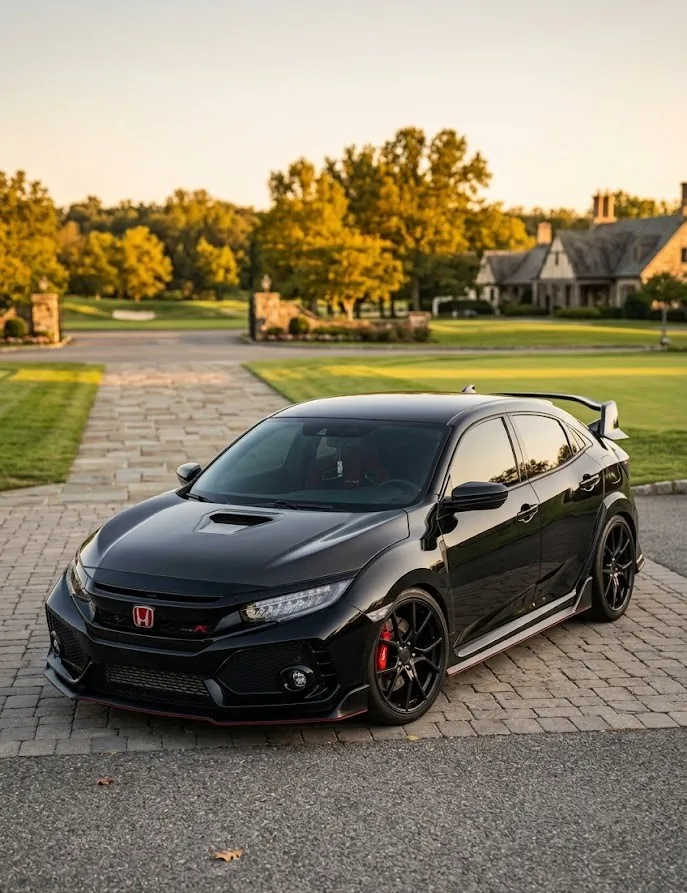
Buy the Suspension You Actually Need
The best coilover for a Civic Type R is not the one that goes lowest or has the most clicks. It is the one whose spring, damper and adjustment range match the way you use the car. A daily-driven FK8 on rough roads has a very different job from an FL5 that spends most weekends at a circuit.
Start with three questions: Do you need adjustable height? Do you need adjustable damping? Are you willing to give up some factory behavior to get those controls? If the answer to the first two is no, a good lowering spring may actually be the smarter purchase.
FK8 and FL5 Fitment Must Be Verified
Do not order a coilover because a retailer lists “Civic Type R” without the generation. FK8 and FL5 are separate applications. Honda's current Type R uses a dual-axis MacPherson front suspension, multi-link rear suspension and adaptive dampers; the FL5 also uses 19 × 9.5J wheels with 265/30ZR19 tires in the factory specification. Those details matter when you evaluate clearance and suspension travel.
For every kit, verify the exact chassis, year range, damper-control requirements, included top mounts and whether an electronic cancellation solution is required. If a manufacturer does not clearly document the application, treat that uncertainty as a buying problem rather than assuming the parts will work.
What Matters More Than the Number of Clicks
| Feature | Why it matters | What to question |
|---|---|---|
| Damper quality | Controls how the spring moves after an impact | Is the adjustment useful over the range you will actually use? |
| Spring rate | Sets resistance to compression | Is the rate appropriate for street tires and your roads? |
| Usable travel | Lets the wheel absorb bumps without hitting the bump stop | Does the advertised drop leave enough travel? |
| Top mount | Affects isolation, steering feel and adjustment | Rubber for comfort or spherical for adjustment/NVH? |
| Support | Makes installation and future service easier | Are replacement parts and settings documented? |
A coilover can have sixteen or thirty-two clicks and still be a poor match for your car. Adjustment range is useful only when the damper responds predictably and the range includes settings that work on your road.
Product Paths Worth Considering
The product boxes below are included as starting points, not as a promise that one kit is universally best. Verify the exact application and current manufacturer specifications before ordering.
Daily Driver, Canyon Car or Track Car?
Daily driver: prioritize usable travel, moderate spring rates, good corrosion protection and predictable damping. The car should remain comfortable enough that you do not dread rough pavement.
Daily + canyon: spend more attention on damping quality and alignment than on maximum lowering. You want the chassis to settle quickly without becoming skittish over mid-corner bumps.
Track: spring-rate selection, alignment range, tire choice and repeatability become more important. A track build can justify firmer settings, but that does not make a track-oriented kit the right street kit.
Adaptive Damping Is a Real Tradeoff
The FK8 and FL5 were engineered around electronically controlled dampers. Replacing them with a conventional coilover changes that part of the car's behavior. Some aftermarket systems are designed around this change and some provide electronic solutions; the correct choice depends on the product.
Do not treat the factory adaptive system as a nuisance that must be deleted. If you love the ability to switch between comfort and aggressive modes, keeping the factory dampers with a compatible spring can be a very sensible route. If you specifically want mechanical damping adjustment, then a coilover becomes easier to justify.
Top Mounts and NVH: The Part You Feel Every Day
Rubber-isolated mounts filter small road inputs. Spherical or pillowball mounts provide a more direct mechanical connection. That can sharpen steering response and provide useful adjustment, but it also lets more vibration and small impact sounds into the cabin.
On paving blocks, expansion joints or sharp pothole edges, a pillowball setup can sound like a more pronounced solid tap or thud. That is different from a suspension component repeatedly knocking. A persistent metallic clunk, loose-sounding rattle or noise that changes with steering input should be inspected rather than dismissed as “normal coilover noise.”
Installation and Setup Are Part of the Purchase
Budget for installation, alignment and the small details that make a suspension work properly. Before the car leaves the shop, check that the springs are seated correctly, collars are locked, brake lines and ABS wiring have adequate clearance, and the tires do not contact the bodywork at full steering lock and through suspension movement.
Set the ride height from a repeatable reference point and allow the suspension to settle before final alignment. Record the damper settings and ride height. That simple record makes troubleshooting much easier later.
How to Choose Without Overthinking It
- Define the use case. Daily, canyon, autocross and track are different jobs.
- Choose whether factory adaptive damping matters to you.
- Verify the exact FK8 or FL5 application.
- Look at travel and spring/damper philosophy before maximum drop.
- Decide whether you can live with additional NVH from spherical mounts.
- Budget for alignment and installation, not just the kit.
What I Would Prioritize at Different Budgets
At the lower end of the market, the priority should be a correctly supported application and a sensible spring/damper package. Saving a little money is not useful if replacement parts are hard to find or the kit has no clear setup documentation.
In the middle of the market, look for a damper design with useful adjustment, service support and a spring rate appropriate to your driving. This is where a street-and-canyon owner can often find the best balance between control and comfort.
At the premium end, the value is usually in the damper quality, adjustability, rebuildability and support rather than the lowest ride height. If you cannot explain how you will use those advantages, the extra cost may be better spent on tires, alignment and installation quality.
What a Good Installation Check Looks Like
After installation, turn the steering from lock to lock and inspect the tire, liner, brake hose and ABS-wire clearance. Check the spring seats and locking collars. Listen for new noises at low speed before moving on to faster roads.
Then measure ride height consistently, let the suspension settle as directed by the manufacturer and perform the alignment. Keep a written record of ride height and damper settings. If something changes later, that record gives you a useful baseline instead of a memory of how the car “used to feel.”
FAQ
Verify the Listing Before You Order
Product catalogs change, part numbers change and retailers sometimes combine generations on one page. Before paying, open the manufacturer's current application listing and confirm the exact chassis, included hardware, damper-control requirements and warranty. That final check matters more than a retailer headline that simply says “Civic Type R.”
Useful references include Honda's Civic Type R specifications and the current application information from the suspension manufacturer you are considering. If a product page does not clearly identify FK8 or FL5 fitment, ask the manufacturer before ordering.
Bottom Line
For most Type R owners, the best coilover is the one that gives you the control you actually need without sacrificing the car's ability to deal with normal roads. Verify the generation, understand what happens to the factory adaptive damping, choose sensible spring and damping characteristics, and treat alignment and installation as part of the modification.
If the only goal is a modest drop, stop and compare a quality spring against the cost and complexity of a full coilover. If adjustable height and damping are genuinely useful to your driving, then a well-supported coilover is a much more compelling upgrade.
What Matters More Than the Coilover Brand
When comparing Type R coilovers, look at ride-height range, damping adjustment, spring rates, serviceability, warranty support, and intended use. A race-oriented kit is not automatically the best choice for a car driven daily on imperfect roads.
Match the kit to the road
For a street FK8 or FL5, usable bump travel and sensible damping matter more than achieving the lowest possible parked height. Excessive lowering can increase scraping and compromise suspension travel.
Installation is part of the result
Plan for a professional alignment after installation. Record your ride height and damping settings where applicable, then make one adjustment at a time so you can understand what changed.
Questions before purchase
- Is the kit primarily street, mixed-use, or competition focused?
- Is its adjustment range usable without sacrificing travel?
- Are replacement dampers and service parts available?
- What installation and maintenance requirements affect the warranty?
- Will the intended height work with your wheel and tire setup?