Civic Ducktail Spoiler Guide
A ducktail is one of the cleanest things you can add to a Civic — when it fits properly. This guide covers OEM vs aftermarket, materials, installation, and the fitment details that most listings leave out.
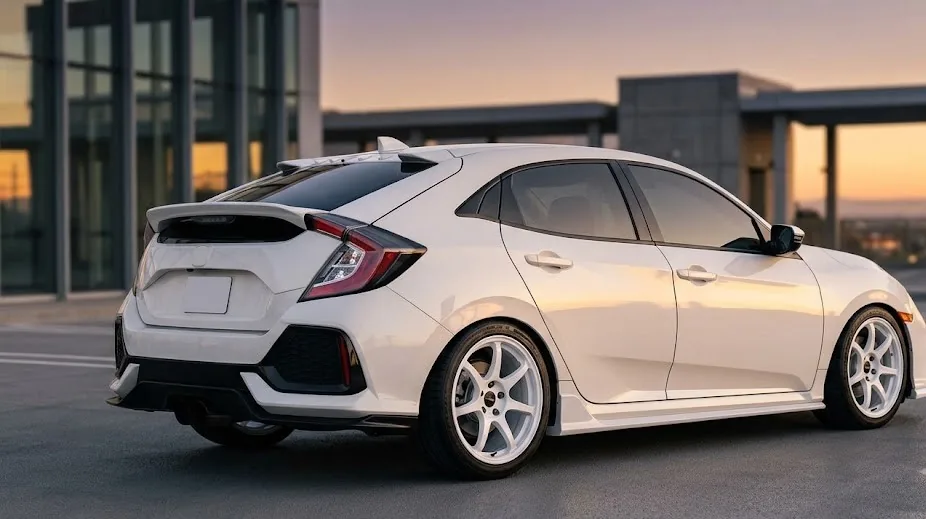
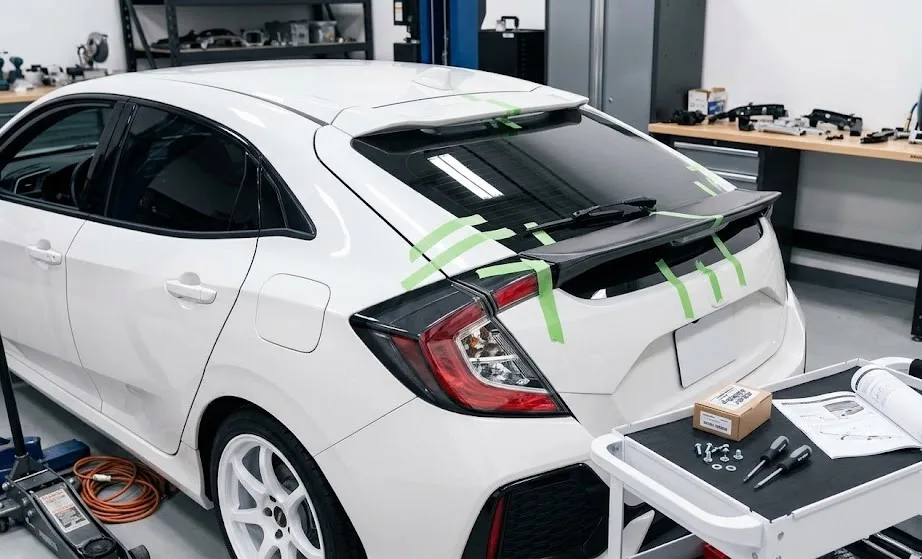
What is a ducktail spoiler?
A ducktail spoiler is a short, upswept lip that sits at the trailing edge of the boot lid. Unlike a tall wing, it does not require standoffs or raised mounting — it sits directly on or near the factory panel line, following the body's natural shape. The result is a lower, more integrated look that works with the car's original silhouette rather than fighting it.
On a Honda Civic, the ducktail's appeal is partly aesthetic and partly aerodynamic. At road speeds, a correctly profiled ducktail increases downforce at the rear by redirecting airflow upward as it leaves the boot. Whether that downforce is measurable in normal driving is debatable — the gains are modest on a street car. The visual effect, however, is substantial. The rear of the Civic reads as more purposeful with a ducktail than without one.
OEM Type R spoiler vs aftermarket ducktail
The FK8 and FL5 Type R both leave the factory with a large wing assembly — a tall dual-axis wing that is clearly a track-originated design decision. Some Civic Si and hatchback owners want a similar rear emphasis without the height of the full Type R wing. The OEM Type R spoiler is one option, but it requires drilling into the boot lid and is sized for the Type R's boot surface, which differs in profile from the 10th-gen or 11th-gen Civic sedan and hatchback variants.
Aftermarket ducktail spoilers are designed for specific Civic body styles and generations. A spoiler designed for the 10th gen FK sedan mounts differently from one designed for the 11th gen FL hatchback. Getting the generation wrong is the most common purchase mistake. Confirm your exact model year and body style before ordering.
| Option | Fitment | Look | Typical install method | Notes |
|---|---|---|---|---|
| OEM FK8 wing assembly | FK8 Type R only | Tall, track-derived, polarising | Bolt-on with drilling | Not a ducktail — included here for comparison only |
| OEM-style Type R lip (sedan) | 10th gen sedan variants | Low, subtle, factory appearance | Adhesive tape + optional clips | Honda Genuine Accessories item on some markets |
| Aftermarket ABS ducktail | Model-specific — confirm year and body | Varied — depends on manufacturer | Adhesive tape; some with screws | Paintable; most common choice; quality varies widely |
| Carbon fibre aftermarket | Model-specific | Aggressive; CF texture or painted | Adhesive tape + optional mechanical fix | Weight saving negligible on a boot lid; mainly aesthetic |
| FRP (fibreglass) | Model-specific | Similar to ABS in profile | Adhesive; often thicker flange | Heavier than ABS; stronger than ABS in minor impacts |
ABS vs carbon fibre vs FRP — which material?
ABS plastic
ABS is the most common material and the right choice for most street builds. It takes paint well, is available in a wide range of Civic-specific profiles, and holds up to weather and car wash equipment without issue. Quality varies between manufacturers — a good ABS spoiler has even wall thickness, clean edge radii, and pre-drilled or pre-taped mounting surfaces. A cheap one has thin sections, sharp moulding lines, and adhesive tape that will not survive a UK winter or a Texan summer.
Carbon fibre
Genuine carbon fibre spoilers are lighter and visually distinctive, but the weight reduction on a boot lid is small — we are talking a few hundred grams at most. The visual case for carbon is stronger: the weave adds texture that ABS cannot replicate without wrap or paint. The tradeoff is cost. Genuine carbon fibre ducktails from quality manufacturers cost three to five times what a comparable ABS part costs. Many listings describe parts as "carbon fibre" that are actually ABS with carbon vinyl film applied — inspect photos carefully and read reviews before ordering.
FRP (fibreglass reinforced plastic)
FRP is stiffer than ABS and heavier. It is often found on older-style bodykit ducktails. The flange that bonds to the boot lid is typically thicker, which can make getting a flush fit harder on curved boot surfaces. It is paintable and durable but has largely been superseded by better-quality ABS for street applications.
What to look for before buying
Fitment specificity is the most important factor. A spoiler that is listed for "Honda Civic 2016?2021" covers multiple body styles — sedan, hatchback, and coupe in some markets — and those boot lids are different shapes. Request photos of the mounting underside, read fitment reviews that mention your exact year and body style, and avoid listings that are vague about which generation they fit.
Mounting method matters second. Double-sided automotive adhesive tape is the dominant method and it works well on prepared surfaces. But the quality of the tape matters. 3M automotive body tape is significantly stronger than the generic tape many cheap spoilers include. Some owners supplement tape with small screws through the boot lid inner panel — this is reliable but permanent. If there is any chance you want to remove the spoiler cleanly later, adhesive-only installation is preferable.
Pinterest image tip: If you are building a reference for your build, search for "Honda Civic [your gen] ducktail sedan" or "hatchback" specifically. Boot lid shape changes significantly between the sedan and hatchback, and a spoiler that looks flush on one will gap on the other.
Installation — what actually matters
Surface preparation is the whole job. The boot lid paint needs to be clean, dry, and free of wax, polish, or contamination before the adhesive tape goes down. Wipe the mounting area with isopropyl alcohol (90%+) and a clean lint-free cloth. Do not use panel wipe products that leave a residue — they defeat the purpose.
Before removing the tape backing, do a dry fit. Hold the spoiler in position and check the gap at both ends, the alignment with the boot edge, and that the underside flange is making even contact across the width. On curved boot lids, some aftermarket spoilers have a flange that does not follow the boot surface perfectly — slight gaps at the ends are a sign the profile does not match your specific car. A 1?2mm gap can often be corrected with extra tape thickness. A 5mm gap means the part was designed for a different body.
Apply the tape to the spoiler flange, not the car, unless instructions say otherwise. Remove the backing and position the spoiler carefully — tape bonds immediately on contact and repositioning usually means replacing the tape. Apply firm pressure across the entire flange for at least 60 seconds. Leave the car in a warm environment (above 15?C ideally) for 24 hours before washing or exposing the adhesive joint to water.
Does a ducktail do anything aerodynamically on a street Civic?
At motorway speeds, yes — but the effect is modest. A properly profiled ducktail lip generates a small amount of rear downforce by disrupting the airflow separation at the boot trailing edge. Independent tunnel testing on street car ducktails typically shows results in the range of a few kilograms of downforce at 100 km/h. That is real, but it is not wheel-loader-level grip change. The car will not handle measurably differently on the road.
Where aerodynamic benefit matters is on track, at sustained higher speeds, and in combination with a front splitter that manages the overall aero balance. Adding only a rear lip without any front aero work can, in theory, increase rear downforce relative to front — on an already understeer-biased FWD car, that is a minor consideration. See our lip spoiler vs wing spoiler guide and the front lip splitter guide for the full picture.
Buying guide: questions to answer first
- Which Civic generation and body style — 10th gen sedan, 10th gen hatchback, 11th gen, Type R?
- Painted to match, raw carbon weave, or primed for wrap?
- Adhesive only, or are you comfortable with mechanical fasteners?
- Does the manufacturer list reviews or fitment photos from your specific body style?
- Is the tape included OEM-quality automotive tape or generic packaging tape?
Frequently asked questions
Will a ducktail spoiler affect my boot lid opening? On properly fitted parts, no. The spoiler sits at the trailing edge below the boot lid hinge arc. Check the clearance on your specific part during the dry-fit stage — some taller profiles need an inch of clearance confirmed before committing to adhesive.
Can I remove the spoiler cleanly later? With patience, yes. Heat from a heat gun (low setting) softens the adhesive tape. Fishing line or dental floss worked behind the flange cuts through the tape slowly. Adhesive residue comes off with isopropyl alcohol. Paint damage is rare if the original paint is in good condition and you work slowly — but it is a risk.
Should I paint the spoiler before or after fitting? Before. Painting a fitted spoiler means masking the boot lid edge, which is harder than painting the part separately. Buy primed, paint off the car, allow full cure time, then fit. This also means you can inspect the paint quality before it is permanently attached.
Does a ducktail need any maintenance? Wax and protect it like painted bodywork. Check the adhesive bond at the flange edges twice a year, particularly after a harsh winter. If an edge lifts, clean and re-tape that section immediately before water gets underneath the flange.
What does a Civic ducktail look like for Pinterest-style reference? The cleanest street examples typically keep the spoiler low and matched to the body colour, with no additional wing or raised mounting hardware. A ducktail works best as a quiet addition rather than a competing focal point.