Best Wheels for Honda Civic Type R — Fitment and Top Picks
The FK8 Type R runs a 5x114.3 bolt pattern with a 64.1mm hub bore — the same pattern as most Japanese performance cars, which means an excellent selection of quality aftermarket wheels with confirmed fitment.
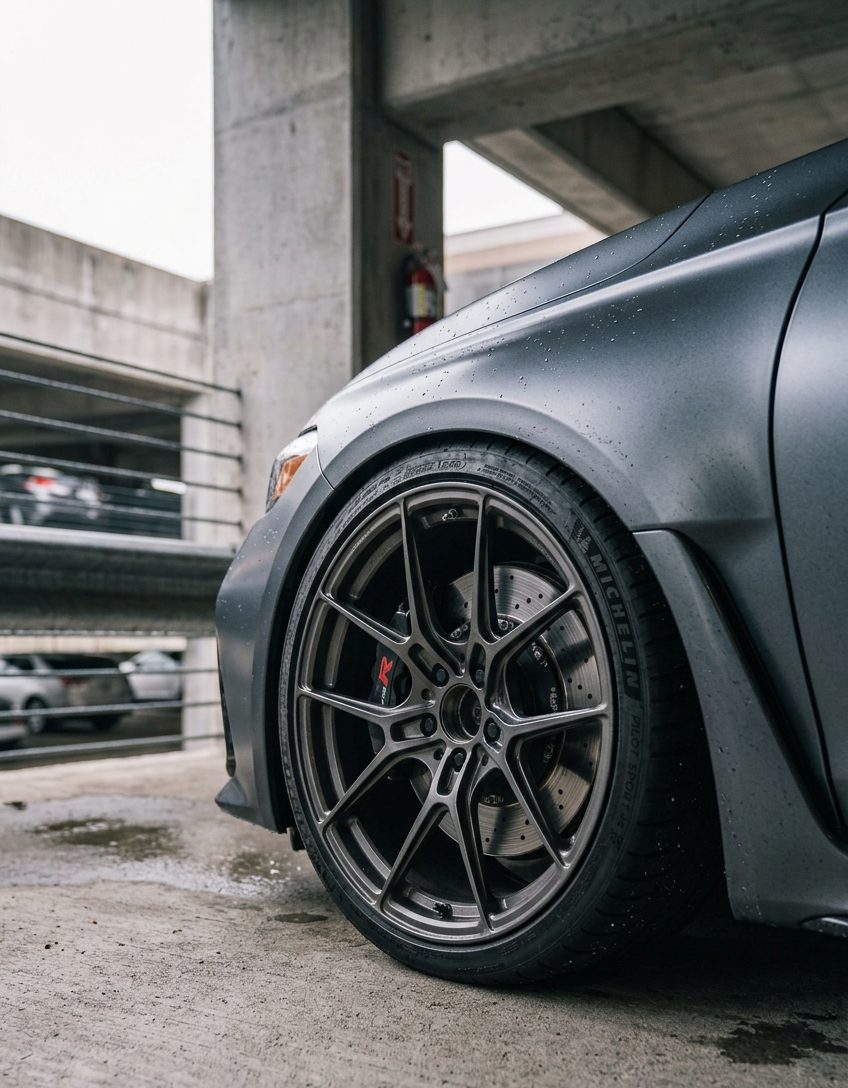
FK8 Wheel Fitment — What You Need to Know
Getting wheel fitment right on the FK8 matters more than on most cars because the Type R runs a wider track and more aggressive suspension geometry than a standard Civic. The wrong offset pushes the wheel too far in or out, which affects both clearance and the geometry the suspension was designed around.
The FK8's stock wheels are 20x8.5 with a +60mm offset — understanding what positive and negative offset actually means in practice helps avoid expensive fitment mistakes. Our positive vs negative wheel offset guide explains the scrub radius physics and real-world trade-offs in plain terms. — relatively high offset, which keeps the wheel tucked inside the fender. Going to a lower offset (more negative, further out) gives a more aggressive look but risks rubbing on the inner fender liner and affects steering feel. Going higher offset (further in) can cause clearance issues with brake calipers. The safe aftermarket range is generally +45 to +60mm offset for street use.
FK8 Fitment Specs — Quick Reference
| Spec | FK8 Stock | Safe Aftermarket Range |
|---|---|---|
| Bolt Pattern | 5x114.3 | 5x114.3 (exact match required) |
| Hub Bore | 64.1mm | 64.1mm or larger with hub rings |
| Stock Size | 20x8.5 +60mm | 17x9 to 19x9.5 typical range |
| Safe Offset | +60mm stock | +45mm to +60mm street safe |
| Max Width (street) | 8.5" stock | 9.0-9.5" with care |
Why going smaller than 20" makes sense: The FK8's stock 20-inch wheels prioritize looks and are relatively heavy. Moving to 17 or 18-inch wheels reduces unsprung weight and allows fitting a taller sidewall tire — better ride quality, more mechanical grip, and more cushion on track kerbs. Most serious track-day FK8 owners run 17" or 18" setups.
Best Wheel Options for the FK8 Type R
Tire Sizing for the FK8
The FK8 runs 235/35R20 stock — moving to a smaller wheel allows more performance tire options at lower cost. Our best tires for the Civic Type R guide covers which compounds work best on both the factory 20-inch size and the popular 17-18 inch track setups. — a low-profile tire on a large diameter wheel. Moving to a smaller wheel (17" or 18") allows running a taller sidewall which improves ride quality and gives more options for performance tire choices at lower prices than 20" fitments.
On a 17x9 +35mm wheel, a 235/40R17 or 245/40R17 tire is a common choice for track-day FK8 owners. The slightly taller sidewall compared to stock improves absorption of kerbs and bumps while maintaining the car's overall diameter (and therefore speedometer accuracy) within acceptable range.
Hub rings matter: If your chosen wheel has a hub bore larger than 64.1mm, always fit hub-centric rings to centre the wheel precisely on the hub. Lug-centric mounting alone on a performance car can cause vibration and in extreme cases wheel movement under load.
Frequently Asked Questions
What bolt pattern is the FK8 Civic Type R? 5x114.3mm — the same as most Japanese performance cars including Subaru, Mitsubishi, Nissan, and Toyota, giving you a very wide selection of confirmed aftermarket fitments.
Can I use standard Civic wheels on the Type R? Standard 10th gen Civic wheels share the 5x114.3 bolt pattern with the FK8, but the Type R's larger Brembo front calipers require wheels with sufficient brake clearance. Always confirm caliper clearance before fitting non-Type R Civic wheels.
Will going to 17" wheels hurt the FK8's looks? On a stock-height FK8, 17" wheels can look small under the wide arches. Most owners who go 17" for track use accept the visual trade-off for the performance benefit, or pair it with a modest drop for better proportion.
Do I need a TPMS relearn after fitting new wheels? If your new wheels don't come with TPMS sensors, you'll either need to transfer the stock sensors or fit aftermarket TPMS sensors and relearn the system. The FK8's TPMS warning will illuminate without functioning sensors in each wheel.
What FK8 Owners Actually Run and Why
The FK8 community has strong opinions on wheels that have been tested across thousands of owners and track days. The dominant consensus is that going lighter on wheel size (17-18 inches versus the stock 20 inches) is the right move for any owner who actually uses the car hard, while the stock 20-inch wheels suit owners who prioritise the factory appearance and rarely push the car on track.
Enkei RPF1 in 17x9 is consistently cited as the benchmark value choice — genuinely lightweight at around 14-15 pounds per wheel depending on size, broad availability, proven track record across the JDM and time attack community, and a price point significantly below forged options. The trade-off is that RPF1s are not the most visually distinctive wheel — they have a simple spoke design that some owners find understated, while others appreciate precisely that quality.
Volk TE37 in 17x9 or 18x9 is the aspirational choice across the entire 5x114.3 platform community. Forged construction produces weights in the 12-14 pound range per wheel at similar sizes to cast alternatives, with the structural integrity to handle sustained track abuse. The investment is significant — TE37s command premium prices — but owners who make the upgrade consistently report feeling the difference in steering response and overall chassis agility.
The Weight Argument — Why Unsprung Mass Matters on the FK8
The FK8 already handles exceptionally well from the factory. The argument for lighter wheels on a car that already handles this well is about feel and limit behaviour rather than dramatic lap time improvement. Unsprung mass is the weight that moves with the suspension rather than the chassis — wheels, tires, brake components, and part of the suspension arms. Reducing unsprung mass improves how quickly and precisely the suspension responds to road surface changes.
On a track day, lighter wheels mean the suspension recovers faster from kerbs and bumps, the steering communicates more precisely, and the car changes direction with less inertia to overcome. On the road, lighter wheels translate to a more connected feel and slightly improved ride quality since the lighter assembly follows road surface variations more easily. The FK8's already quick steering and responsive suspension amplify these benefits more than they would on a less capable base car.
The stock FK8 20-inch wheels weigh approximately 23-25 pounds each. A 17-inch Enkei RPF1 in 9-inch width weighs around 14-15 pounds. On four corners this is a 35-45 pound reduction in unsprung mass — a meaningful number on a car that weighs around 3,100 pounds total.
Tyre Selection for the FK8 on Aftermarket Wheels
Moving from 20 to 17 or 18-inch wheels opens up the tyre selection significantly, particularly for performance tyres where 20-inch sizes are limited and expensive. On a 17x9 setup, 245/40R17 or 235/40R17 options from Michelin PS4S, Bridgestone Potenza RE-71RS, Toyo R888R, and Yokohama Advan A052 are all readily available at competitive prices compared to the limited 20-inch equivalents.
For track day use on 17-inch wheels, the semi-slick options like Toyo R888R and Yokohama A052 deliver grip levels that genuinely challenge what the FK8's chassis is capable of — it becomes a tyre and driver limit rather than a chassis limit. This is a different experience from the stock setup and something most FK8 owners who get serious about track days eventually discover.
The practical summary: If you use your FK8 on track days or spirited road driving, 17-18 inch lightweight wheels are a genuine performance upgrade. Enkei RPF1 delivers the best value. Volk TE37 delivers the best performance. If your FK8 is primarily a street car where you care about the factory aesthetic, the stock 20-inch wheels are genuinely good and replacing them is an aesthetic rather than performance decision.
Buying Used Wheels for the FK8 — What to Check
The 5x114.3 bolt pattern's popularity means used wheels for the FK8 are readily available, often at significant discounts compared to new. Track day wheels in particular change hands frequently as owners upgrade or change their setup. Buying used is a genuinely good way to access premium wheels like Enkei RPF1 or even Volk TE37 at lower prices than new.
When buying used wheels for the FK8, verify the bolt pattern (5x114.3), confirm the hub bore (64.1mm or larger with appropriate hub rings), check offset is within the safe range (+35 to +60mm), and inspect each wheel carefully for curb rash, cracks, or bends. Cracks are a safety concern and disqualify a wheel from use. Curb rash is cosmetic and can be refinished. Bends cause vibration and should be inspected by a wheel repair specialist before purchase.
Track-used wheels deserve additional scrutiny — inspect the barrel and face carefully for stress marks or fatigue cracking from repeated kerb strikes and heavy braking loads. Reputable track day wheels from brands like Enkei and Volk are designed for this abuse, but individual examples can have hidden damage that only shows under load.
TPMS sensors from the stock FK8 wheels can be transferred to aftermarket wheels if the valve stem design is compatible. Alternatively, aftermarket TPMS sensors are available at lower cost than OEM. Either approach works — just confirm before buying wheels whether TPMS transfer is included in the plan and budget accordingly.