Civic Type R Suspension Guide — Coilovers and Springs for FK8
The FK8 Type R comes with one of the best factory suspension setups on any front-wheel-drive car. Understanding what it already does well is the starting point for any suspension upgrade decision.
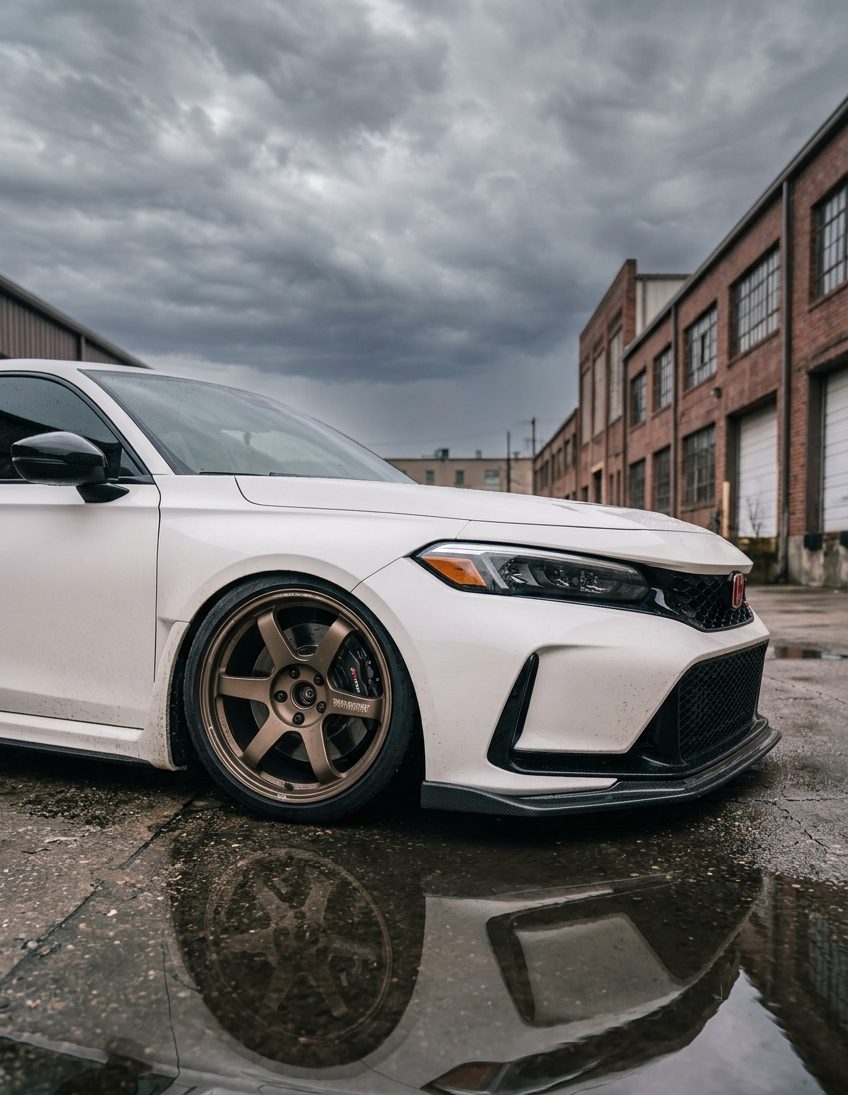
What the FK8 Factory Suspension Already Does
The FK8 Civic Type R comes standard with Honda's Adaptive Damper System — a three-mode electronically controlled suspension that adjusts damping in real time based on road conditions and driver input. In Comfort mode it absorbs road imperfections well for a performance car. In Sport mode it firms up without becoming harsh. In +R mode it runs at maximum stiffness for track use.
This is a genuinely capable factory system. Unlike most standard Civics where aftermarket coilovers represent a clear performance upgrade, the FK8's adaptive setup is already doing what most enthusiast suspension modifications aim to achieve. Any suspension upgrade on the FK8 needs to beat this factory system to justify the cost — and that sets a higher bar than on most other cars.
Important before upgrading: Fitting aftermarket coilovers to the FK8 removes the Adaptive Damper System entirely since aftermarket coilovers replace the stock adaptive shocks. You lose the three-mode electronic damping. Some owners consider this a worthwhile trade for consistent coilover adjustability — others prefer to keep the factory system. Know what you're giving up before buying.
When Aftermarket Coilovers Make Sense on the FK8
Despite the capable factory setup, aftermarket coilovers make sense in specific situations. If you want lower ride height than the adaptive system allows — the FK8 sits relatively high even in +R mode for aesthetic and airflow reasons. If you want consistent, manually adjustable damping for track work rather than electronic automatic adjustment. Or if your adaptive dampers have worn or failed and replacement is expensive enough that quality coilovers become cost-competitive.
For primarily street-driven FK8s that occasionally see track days, the factory adaptive system is genuinely hard to beat without spending significantly on coilovers. For dedicated track builds or owners who want a specific, lower static ride height, the aftermarket makes more sense.
Best Coilover Options for the FK8 Type R
Lowering Springs vs Coilovers on the FK8
| Option | Keeps Adaptive Damping | Ride Height Adjustable | Best For | Cost |
|---|---|---|---|---|
| Stock FK8 Setup | Yes — full 3 modes | No | Street, occasional track | — |
| Eibach Pro-Kit Springs | Yes — full 3 modes | No (fixed drop ~1") | Lower stance + adaptive damping | $$ |
| Skunk2 Pro-ST Coilovers | No — replaces adaptive | Yes | Street/track balance | $$$ |
| ST XTA Coilovers | No — replaces adaptive | Yes — height + rebound | Fine-tuned street and track | $$$ |
Frequently Asked Questions
Can I use lowering springs with the FK8's adaptive dampers? Yes — springs like the Eibach Pro-Kit are designed to work with the stock adaptive shocks, letting you lower the car without losing the three-mode electronic damping system.
Do I need an alignment after fitting coilovers on the FK8? Yes, always. Any suspension change that alters ride height requires a proper four-wheel alignment to correct camber and toe for the new ride height.
Will coilovers make my FK8 ride harsher than stock? Depends on the coilover and damping settings. Quality coilovers set to appropriate street settings can match or exceed stock comfort. Budget coilovers set too stiff will be harsher. The FK8's +R mode is already quite firm — a quality coilover at mid-settings should feel comparable.
How low can I go on the FK8 safely? The FK8's geometry and wider track give it more lowering tolerance than a standard Civic, but more than 1.5 inches still requires camber correction. The FK8 already runs significant negative camber from the factory for handling purposes.
What FK8 Owners Actually Experience With Suspension Upgrades
The FK8 community's consensus on suspension upgrades is nuanced in a way that sets it apart. And that nuance extends to tires — our best tires for the Civic Type R guide covers how tire choice interacts with both factory adaptive suspension and aftermarket coilover setups. from most other performance car discussions. The dominant view on CivicX forums and UK Type R communities is that the factory adaptive suspension is genuinely difficult to beat for street use — owners who rushed to coilovers early frequently comment that they gave up real capability for adjustability they didn't fully utilise.
The owners who are most satisfied with coilover upgrades on the FK8 tend to fall into specific categories: dedicated track day participants who want manual damping control for specific circuit setups, owners whose adaptive dampers have worn and found quality coilovers cost-competitive with OEM replacement, and owners building aggressively lowered show or stance builds where the factory system's height range is insufficient.
Street-focused FK8 owners who want to lower the car without giving up the adaptive damping consistently report the Eibach Pro-Kit spring approach as the most satisfying compromise — they get the visual improvement of a modest drop while retaining all three adaptive modes. This is genuinely underappreciated in the wider suspension modification discussion.
Alignment Specs After FK8 Suspension Changes
Any suspension change on the FK8 requires a four-wheel alignment, but the FK8's already-aggressive factory alignment specs make this more important than on most cars. The FK8 runs significant negative camber from the factory — approximately -1.5° front and -2.5° rear at stock ride height — because Honda's engineers optimised the geometry for handling at the car's designed ride height.
Lowering the FK8 further increases negative camber since the suspension geometry is designed around a specific height. At more than one inch of drop, most owners find that front camber increases to -2.5° or more and rear camber can push toward -3.5° or beyond. This level of negative camber produces very rapid inner tire wear and should be corrected with camber plates (front) and camber arms (rear) for anything beyond modest lowering.
Track Setup vs Street Setup — The FK8 Suspension Decision
| Goal | Recommended Setup | Cost Range | What You Gain | What You Give Up |
|---|---|---|---|---|
| Lower stance only | Eibach Pro-Kit springs | $300-500 | Lower look, keeps adaptive damping | Fixed drop, no height adjustment |
| Street/occasional track | Skunk2 Pro-ST coilovers | $800-1,200 | Adjustable height and damping | Loses adaptive 3-mode system |
| Serious track use | ST XTA or KW V3 coilovers | $1,200-2,500 | Full adjustability, track geometry | Loses adaptive system, firmer street ride |
| Keep everything stock | Stock adaptive system | $0 | Best all-round street performance | Nothing — this is often the right answer |
Common Mistakes FK8 Owners Make With Suspension
The FK8 Suspension Modification Sequence — Getting the Order Right
If you're building an FK8 with suspension modification in mind, the order of modifications matters for both budget efficiency and how each change feels in context. The wrong sequence means spending money twice or undoing modifications that were made prematurely.
The right sequence for most FK8 owners is: drive the car stock first for long enough to understand what it does, then add Eibach springs if a modest drop and retained adaptive damping is sufficient, then evaluate whether coilovers are genuinely needed for your specific use case. Most street FK8 owners who follow this sequence stop at the springs stage and are satisfied. Track-focused owners often skip springs entirely and go directly to quality coilovers once they know from experience what they want the car to do differently.
Camber correction should be budgeted into any coilover purchase on the FK8. Front camber plates are typically included in quality coilover kits. Rear camber arms are usually a separate purchase. Budgeting $200-400 for camber correction parts on top of coilover cost is realistic for owners planning to lower significantly.
An alignment with a shop experienced with lowered performance cars — not a standard quick-lube alignment bay — is essential after any suspension change. The FK8's geometry specifications are specific and achieving optimal camber, caster, and toe for the new ride height requires a technician who understands what to target rather than just returning to factory spec.