Window Tint Percentages Explained — Which Is Right for You
Window tint percentage numbers confuse most people at first. Here is exactly what each percentage means, what it looks like from inside and outside, and which is legal in your state.
What the Percentage Number Actually Means
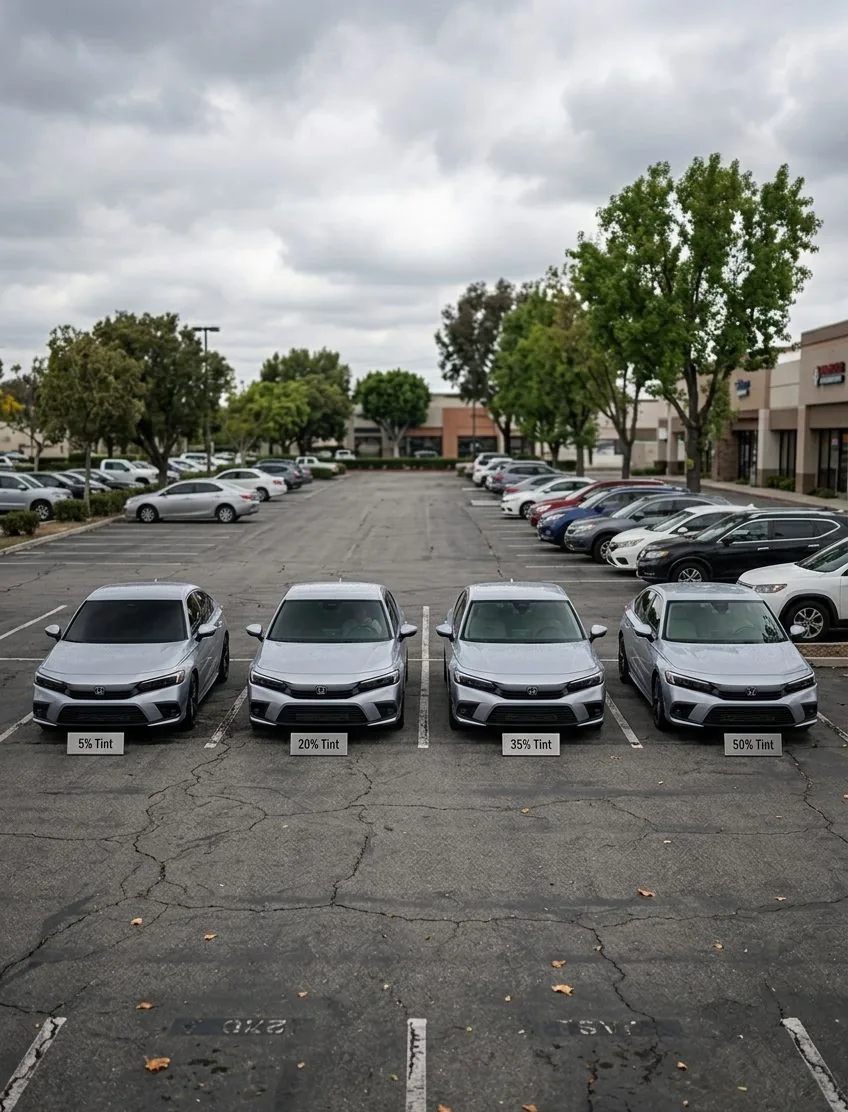
Window tint percentage refers to Visible Light Transmission — the amount of light the film allows through. A 50% tint allows 50% of visible light through. A 5% tint allows only 5% through — almost completely opaque.
The lower the number the darker the tint. This trips people up because they expect higher percentage to mean darker — it means lighter.
| Tint % | Appearance | Privacy Level | Legal in Most States? |
|---|---|---|---|
| 50% | Very light, barely noticeable | Low | ✅ Yes |
| 35% | Medium — noticeably tinted | Medium | ✅ Yes for rear, varies for front |
| 20% | Dark — hard to see in from outside | High | ⚠️ Rear only in most states |
| 15% | Very dark | Very high | ⚠️ Illegal in many states |
| 5% (limo) | Nearly opaque from outside | Maximum | ❌ Illegal for side windows most states |
Legal Tint Limits — What You Need to Know
Tint laws vary significantly by state, vehicle type, window position and sometimes the reason for the tint. Front side windows are commonly more restricted than rear glass, but there is no single U.S. percentage that can be treated as the nationwide legal limit. Check the current rule for your state before choosing a film.
State rules can change and may include exceptions, medical provisions, vehicle-specific rules and separate requirements for different windows. Use an official state source or current legal reference for your exact vehicle and location before installation; do not rely on a generic percentage table as legal advice.
Before you tint: Search "[your state] window tint laws" and read the current regulations. Laws change and vary by vehicle type. Knowing the rules before tinting is significantly cheaper than getting a ticket and having to redo the job.
Which Percentage to Choose
35% all around can be a useful visual starting point, but do not describe it as automatically legal. Whether it works for your vehicle depends on the current law where the vehicle is registered and the measured VLT of the finished glass-and-film combination.
35% front, 20% rear is one possible appearance, not a universal legal recommendation. Check the current front-window limit first, and remember that factory glass contributes to the final VLT.
20% all around is a styling choice that may or may not be legal depending on the vehicle and jurisdiction. Check the current rules before installation, particularly for front side windows.
DIY vs Professional Tinting
Tint pricing varies substantially with vehicle size, film type, installer and market. Ask the installer what film is being used, what the workmanship warranty covers and whether the quoted VLT is measured on the installed glass rather than assuming a universal price or warranty.
For most people professional tinting is the better value when you factor in the time, tools, and risk of a poor result with DIY.
How Film Type Affects What the Percentage Means in Practice
Two films rated at 35% VLT can look and perform very differently depending on how they achieve that light transmission level. Dyed film achieves its darkness through pigments in the film layers — it blocks light by absorbing it, which works well initially but fades over years as the dye breaks down. Carbon film uses carbon particles that block light without fading and add meaningful heat rejection. Ceramic film uses non-conductive ceramic nanoparticles that block heat and UV radiation more effectively than dyed or carbon film at the same darkness percentage.
This means a 35% ceramic film rejects significantly more heat than a 35% dyed film even though both appear equally dark from outside the vehicle. For owners in hot climates where heat rejection is a primary goal, the film type matters as much or more than the darkness percentage. For owners whose primary goal is privacy and aesthetics, dyed or carbon film at the correct percentage delivers the look they want at lower cost than ceramic.
The visible difference between film types at the same percentage is minimal to non-existent — you cannot tell from looking at a window whether the film is dyed, carbon, or ceramic. The difference shows up in heat inside the car during summer, in how the film ages over years, and in long-term durability.
How to Choose Your Percentage — A Practical Framework
Start with your state's legal limits — confirm the front side window limit for your state before making any other decision. Installing tint darker than the legal limit creates ongoing risk of fix-it tickets and the expense of removal and reinstallation to come into compliance.
Within legal limits, choose based on your primary goal. For maximum privacy on rear windows where legal limits are typically more permissive — 20% or 15% makes the interior essentially invisible from outside in normal lighting. For front windows where legal limits constrain options — install at or just above the legal limit for your state to maximize the effect within legal bounds. The permitted VLT varies by jurisdiction, so use the current rule for your vehicle and location rather than assuming 35% is the applicable front-window limit.
The factory glass on most modern vehicles already has a slight tint — typically 70-80% VLT. Adding 35% film to 70% factory glass produces a combined result that appears darker than either alone. Confirm the installed appearance with your tint shop before committing to a percentage if exact appearance at a specific darkness level is important to you.
Rear Windshield vs Side Windows — Different Considerations
Rear-window tint limits vary by state, vehicle class, window location and exemptions; do not assume 20% or darker is legal. Check the current law where the vehicle is registered before selecting film, and remember that reflectivity, color and required mirrors may also be regulated.
The front windshield has strict limits in virtually every state — typically only a non-reflective strip of 4-6 inches at the top is permitted. Full front windshield tinting is illegal in the US and meaningfully reduces forward visibility in low-light conditions. The strip at the top is useful for reducing sun glare during morning and evening drives without affecting overall forward visibility.
Window tint is one of the most cost-effective appearance modifications available on any vehicle — professional installation with quality ceramic film delivers comfort improvements and visual transformation that most owners use and appreciate every single day rather than only noticing at car meets or on spirited drives.
Frequently Asked Questions
What do window tint percentages mean? Tint percentage refers to VLT — Visible Light Transmission. 50% tint allows 50% of light through. 5% (limo tint) allows only 5% through. Lower percentage means darker tint. Factory glass is typically 70-80% VLT.
What tint percentage is legal? The limit depends on the jurisdiction, vehicle class, window position and any exemptions. Do not rely on a general percentage range or a remembered state example; check the current official rule where the vehicle is registered and driven.
What tint percentage is good for privacy? 20-35% on rear windows provides genuine privacy — difficult to see inside in daylight. 50% provides moderate privacy. 70% is barely noticeable to the naked eye and provides minimal privacy benefit.
What percentage tint should I get on my car? Choose only after checking the legal limits for each window. Film percentage alone does not determine heat rejection; film construction and the factory glass also matter. Pick a shade that remains comfortable for night driving and complies with the applicable rules.
Does darker tint block more heat? Darkness affects heat rejection, but film type matters more. A 50% ceramic film often blocks more heat than a 20% standard dyed film. Ceramic and carbon films reject heat based on blocking infrared radiation, not just visible light.
What tint percentage looks best on a black car? 20% on rear windows and 35% on front side windows (where legal) creates a cohesive blacked-out look on a dark vehicle. The contrast between the dark body and dark glass is minimal, which reads as factory-intentional rather than obviously aftermarket.
Can I tint my front windshield? In most US states, only a non-reflective strip at the top of the windshield is permitted — typically 4-6 inches. Full windshield tinting is illegal and reduces visibility in low-light conditions. The strip is useful for sun glare reduction during morning and evening drives.
How do I find my state tint laws? Your state DMV website lists window tint regulations. Most tint shops are also familiar with local regulations and can advise before installation. Installing within legal limits and keeping the shop certificate in the vehicle protects you if questioned by law enforcement.
Choosing Tint by Use, Not Just Percentage
Tint percentage describes visible light transmission, but it does not tell the whole story. Film type, heat rejection, glare reduction, interior color, and local regulations all affect the real-world result.
Start with the legal limit
Check the rules that apply where the vehicle is registered and driven. A shade that is legal in one jurisdiction may not be legal in another, and front side windows are often treated differently from rear glass.
Then consider visibility
Darker is not automatically better. Frequent night driving, poor lighting, or heavy rain can make excessive darkness harder to live with.
Film quality matters
Compare reputable film specifications for UV protection, heat rejection, optical clarity, warranty, and installation quality. Similar visible-light percentages can feel different in the vehicle.