Best Cold Air Intake for F150 5.0L — Real Dyno Numbers Compared
The F150 has one of the deepest intake aftermarkets of any truck. Here is what a cold air intake actually does on both the 5.0L Coyote and 3.5L EcoBoost — and which systems are worth buying.
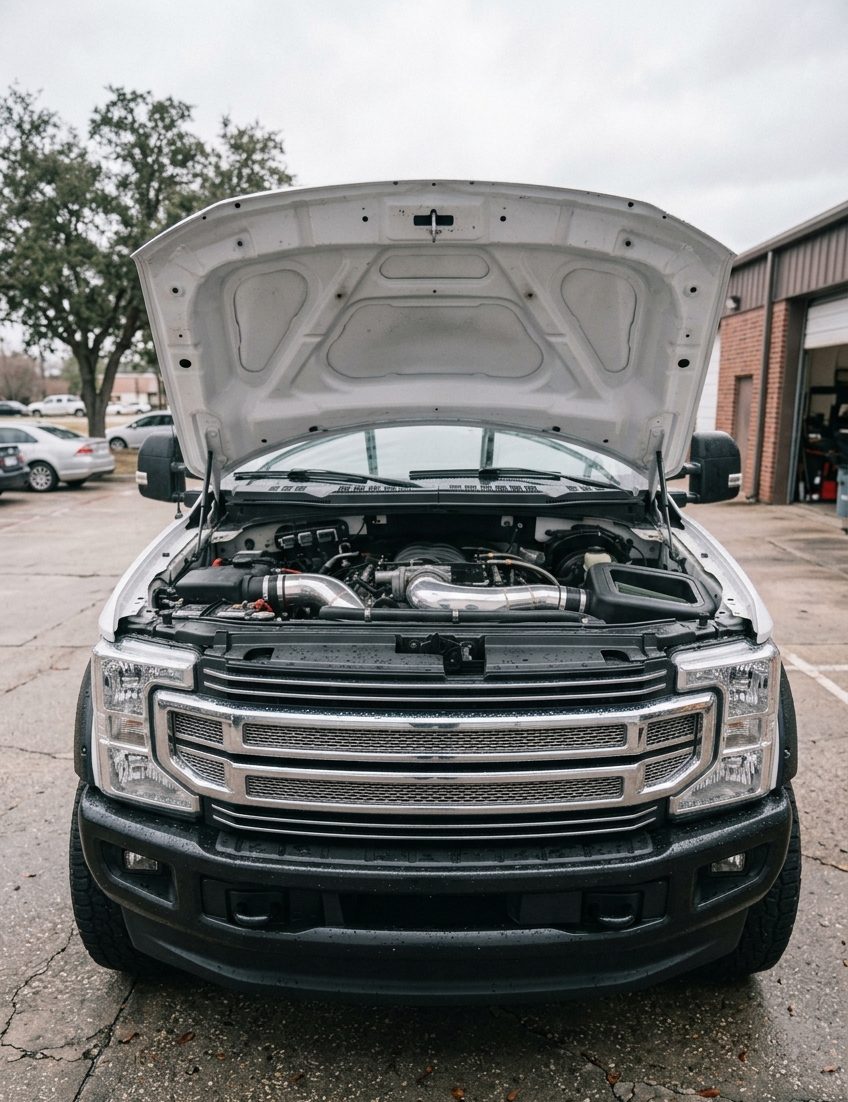
How the F150 Responds to an Intake Upgrade
The F150's response to a cold air intake depends significantly on which engine you have. The results are real on both — but they feel different and come from different mechanisms.
On the 5.0L Coyote V8 the improvement is primarily about airflow and temperature. The factory intake restricts the naturally aspirated engine's ability to breathe freely. A quality cold air intake gives it more air at a lower temperature — the result is sharper throttle response, a better intake sound, and typically 8-15 WHP.
On the 3.5L EcoBoost the dynamic is different. The turbochargers compress incoming air regardless of what intake system feeds them — but a freer flowing, cooler intake reduces the temperature of air entering the turbo compressor. Cooler compressor inlet air means more efficient compression and a denser charge entering the intercooler. Combined with a tune the EcoBoost responds very well to intake upgrades.
Top Intake Options for the F150
K&N — Most Popular, Proven Track Record
K&N makes vehicle-specific intakes for virtually every F150 configuration going back years. Their cotton gauze filters flow significantly more air than paper filters, the fitment is precise, and the installation is straightforward. Real-world gains on the 5.0L are typically 10-16 HP with noticeably sharper throttle response.
S&B — Best for the EcoBoost
S&B has built a strong reputation specifically in the F150 EcoBoost community. Their intake systems for the 3.5L EcoBoost are particularly well regarded for heat management — their intake tubes and shielding keep intake air temperatures lower than competing systems. On a tuned EcoBoost the S&B makes a measurable difference.
Installation — What to Expect
Both K&N and S&B F150 intakes are vehicle-specific bolt-on installations. Most owners complete the install in 45-60 minutes with basic hand tools. No cutting, no drilling, no professional installation needed. The factory airbox unbolts, the new intake bolts in its place using factory mounting points.
After installation give the ECU 50-100 miles to relearn the new airflow characteristics. You may notice a check engine light in the first few days — this is typically the ECU relearn process and clears on its own with driving. If it persists read our check engine light fix guide.
5.0L Coyote vs 3.5L EcoBoost — Different Intake Benefits
The naturally aspirated 5.0L Coyote and the turbocharged 3.5L EcoBoost respond to cold air intake upgrades in meaningfully different ways. Understanding which applies to your engine sets accurate expectations before purchasing.
On the 5.0L, the intake improvement is direct — better airflow into the engine means more air available on each intake stroke, which translates to modest power gains and noticeably better throttle response. The induction sound improvement is dramatic because without a turbocharger between the air filter and the engine, you hear the full induction noise directly. The 5.0L's high-revving naturally aspirated character through the intake makes the sound improvement one of the most compelling reasons to do this modification on the Coyote.
On the 3.5L EcoBoost, the intake improvement works through the turbocharger — cooler, denser air into the turbo inlet improves compressor efficiency and boost response. The power gains are comparable to the 5.0L at stock tune but increase significantly more with a tune because the ECU can recalibrate boost targets around the improved inlet conditions. The sound improvement on the EcoBoost is present but more subtle — the turbocharger buffers the induction noise compared to the open intake sound of the naturally aspirated 5.0L.
The MAF Sensor — Why It Matters for Intake Selection
The Mass Air Flow sensor measures the volume and density of air entering the engine and feeds this data to the ECU for fuel delivery calculations. When you install an aftermarket intake, the airflow pattern past the MAF sensor changes — the sensor sits in a different position relative to the filter and sees a different turbulence profile than it was calibrated for on the factory airbox.
Quality intakes are designed with MAF sensor positioning in mind — the inlet tube is shaped to produce smooth, laminar airflow past the MAF sensor location rather than turbulent air that causes erratic readings. Cheap intakes with poor tube geometry can cause MAF instability that results in rough idle, hesitation, or fault codes even though the filter and tube are physically installed correctly.
This is one of the practical reasons vehicle-specific intakes from established brands outperform universal-fit alternatives even when the universal option is physically adaptable — the MAF positioning and flow dynamics are engineered for your specific sensor location rather than approximated.
Sound Improvement — What F150 Owners Actually Report
The induction sound improvement from a quality cold air intake on the F150 is one of the most consistently praised aspects of the modification across both engine families. At partial throttle during normal driving the difference is subtle — a slightly fuller, more present induction sound compared to the muffled factory airbox. Under full throttle acceleration the difference is significant — a genuine induction roar that builds with RPM and makes the engine feel more alive and responsive.
Combined with an aftermarket exhaust, the intake's induction sound contributes to a layered acoustic experience — induction noise building at the front of the truck as exhaust sound exits the rear — that transforms the driving character in a way that neither modification alone fully achieves. Most F150 owners who do both modifications cite the combined sound improvement as the single most satisfying aspect of the build.
The F150 cold air intake is one of the best cost-to-improvement ratio modifications available on the platform — immediate sound improvement, real throttle response change, and a straightforward install that sets the foundation for further modifications if you choose to continue building.
For a dedicated 5.0L Coyote intake comparison, our best cold air intake for F150 5.0 guide ranks S&B, K&N, aFe, and Roush with honest sound and performance comparisons.
Frequently Asked Questions
What cold air intake fits the F150 5.0L? K&N 57 Series, S&B, aFe Power Momentum, and Roush are the most popular confirmed fitments for the F150 5.0L Coyote. Always verify the specific part number for your generation — 2011-2014, 2015-2017, and 2018+ all have slightly different fitments.
Will a cold air intake make my F150 faster? Yes, measurably — 5-10 horsepower on the 5.0L alone, more with a supporting tune. The improvement in throttle response and acceleration feel is often more noticeable than the raw numbers suggest, especially at mid-range RPM where the Coyote produces most of its power.
Does the F150 5.0L need a tune with a cold air intake? Not required — the Coyote ECU handles increased airflow without triggering codes on reputable vehicle-specific intakes. A tune unlocks significantly more of the performance potential and is the logical next step.
Which sounds better on the F150, K&N or Roush intake? Both produce significant induction improvement over stock. Roush intakes are designed specifically for Mustang and F150 applications with sound character in mind. K&N offers broader vehicle coverage. Both are significantly louder than stock under acceleration.
Can I install a cold air intake on my F150 myself? Yes — most F150-specific cold air intakes are bolt-on installs requiring basic hand tools. Budget 30-60 minutes for the install. The Coyote's engine bay is spacious and accessible.
What is the best cold air intake for the F150 5.0L? S&B Intake is the most consistently recommended option for the 5.0L Coyote — excellent flow numbers, quality dry filter that needs no oiling, and confirmed fitment across multiple model years. K&N and aFe are strong alternatives with similar performance at different price points.
Will a cold air intake improve F150 fuel economy? Marginally at steady highway cruise where better airflow efficiency helps. In practice the throttle response improvement encourages more use of that throttle, which offsets the efficiency gain. Realistic expectation is neutral to minimal change in real-world MPG.
Does the F150 EcoBoost intake need a tune? Not required — the ECU handles the new airflow within factory calibration. A tune after both intake and exhaust are installed extracts significantly more performance by recalibrating boost targets around the improved hardware combination.
Will an F150 intake affect towing performance? Positively — improved airflow and throttle response makes the engine feel more capable under towing loads, particularly in the mid-range RPM where towing loads live. Owners report less downshifting on grades and more confident highway towing with a quality intake installed.