Best Cold Air Intake for Honda Civic Si
The Civic Si's L15B4 turbo responds well to intake upgrades — but the Si has different fitment requirements from the Type R and different power characteristics that change which intake makes sense.
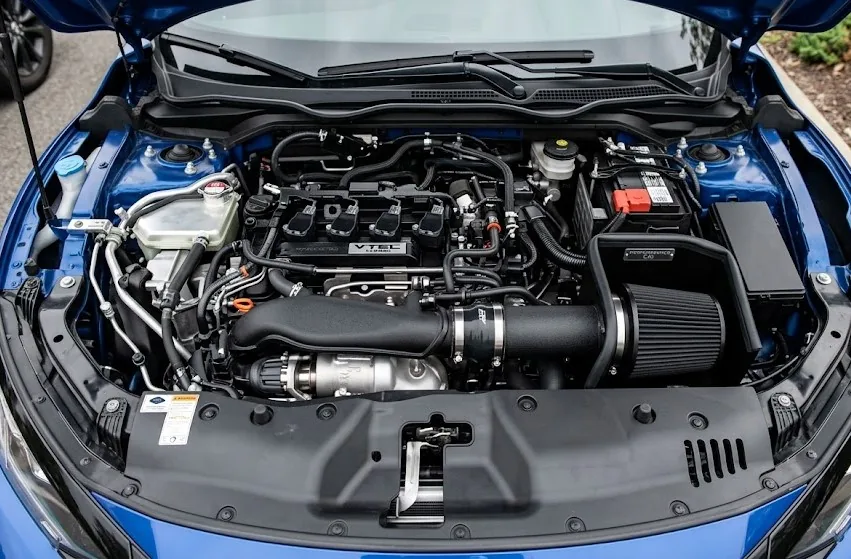
The Civic Si Engine — Why It Matters for Intake Choice
The Honda Civic Si uses the L15B4 1.5L turbocharged four-cylinder — a different engine from the Type R's K20C1. The Civic Si uses a turbocharged 1.5-liter engine, while the Type R uses the 2.0-liter K20C1. Engine output and exact engine designation vary by generation and market, so verify the year-specific specification before comparing power or turbo behavior. This matters for intake selection because the airflow requirements, inlet diameter, and turbo inlet positioning are all different between the two cars.
An intake designed for the Civic Type R should not be assumed to fit the Si. More importantly, an intake that works well on a lightly modified Type R may not produce the same results on an Si — the L15B4's smaller turbo is more sensitive to intake air temperature, which is why heat management (cold air vs short ram positioning) matters more on the Si than on the higher-flow K20C1.
10th gen vs 11th gen fitment: The 10th gen Si (2017–2021) and 11th gen Si (2022+) have different engine bay packaging. Always confirm your specific generation when ordering — a part listed as "Civic Si" without a year range may not fit both generations.
Cold Air Intake vs Short Ram Intake — Which Is Better on the Si?
This debate is more meaningful on the Si than on most turbocharged cars because the L15B4's intercooler is relatively small. A short ram intake (filter positioned near the engine) draws warm underhood air — on a hot day after spirited driving, this can noticeably reduce power output as the ECU pulls timing to compensate for higher intake temperatures.
A cold air intake routes the filter away from the engine bay heat, typically toward the front bumper or wheel arch where cooler ambient air is available. On the Si, cold air positioning consistently produces better results in real-world driving — particularly in warm climates or during track days where underhood temperatures build up.
| Type | Intake air temp | Power gain | Install complexity | Best for |
|---|---|---|---|---|
| Short ram intake | Higher (underhood air) | Modest — limited by heat | Simple | Cold climates, mild use |
| Cold air intake | Lower (ambient air) | Better — cooler charge | Moderate | Warm climates, spirited driving |
| OEM airbox with drop-in filter | Lowest (heat shielded) | Minimal | Very simple | Warranty-conscious owners |
What to Expect from an Intake Upgrade on the Si
Realistic power gains from an intake alone on the Si are generally modest, but there is no single horsepower figure that applies to every intake and test setup. If a manufacturer publishes dyno results, use the exact part number and test conditions rather than treating the result as guaranteed. Where you notice it more is in throttle response and induction sound. The L15B4 produces a satisfying turbo spool and induction noise through an aftermarket intake that the OEM airbox largely suppresses. For many Si owners, the sound improvement is as much of the appeal as the power gain.
If you plan to tune the Si with a piggyback or ECU flash, an aftermarket intake becomes more valuable — the tune can be calibrated to take advantage of the improved airflow rather than working within the OEM airbox restriction. See our Civic Si mods guide for the full modification sequence.
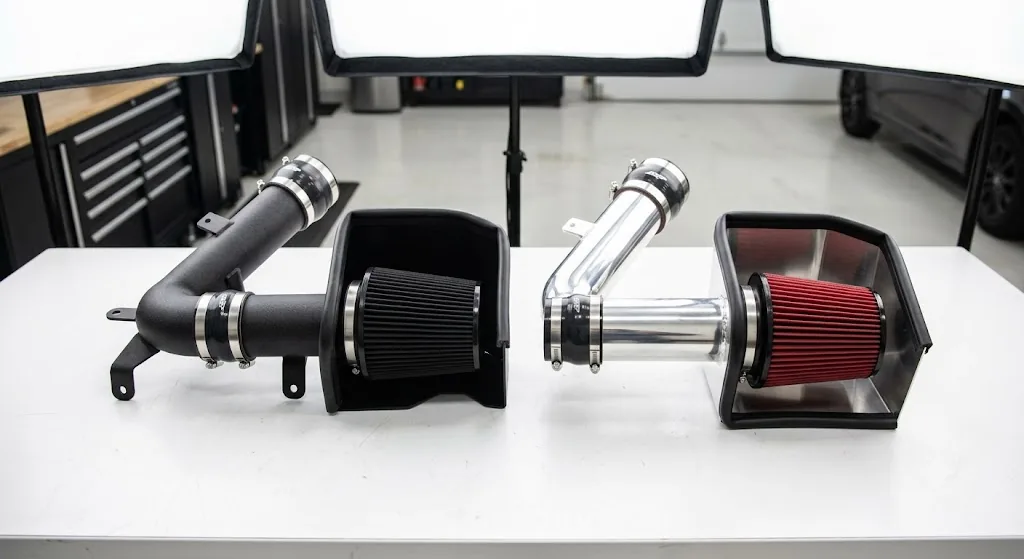
Recommended Intakes for the Civic Si
Installation Notes
Both intakes above are direct bolt-on replacements requiring no cutting or permanent modification. The basic process is: disconnect the battery, remove the OEM airbox and inlet pipe, route and secure the new intake tube, connect the MAF sensor and any boost pressure lines, reinstall the battery and check for fault codes before driving. The full install takes 30–60 minutes on a cool engine.
After installation, check for boost leaks at all connection points before driving hard. A loose clamp on a turbocharged engine causes boost loss and can trigger a check engine light. Start the car, let it idle for two minutes, then check all clamps and connections before putting the car under load.
Check engine light after install: Some Si owners see a temporary check engine light after fitting an aftermarket intake as the ECU adapts to the new airflow characteristics. Clear the code and drive normally — if it returns after 50–100 miles, check for boost leaks or confirm the MAF sensor is properly connected.
Fitment Details to Confirm Before Ordering
Start with the model year, not the product title. The 2017-2021 Si and the 2022-on Si use different engine-bay packaging, and an intake sold for a regular 1.5T Civic is not automatically correct for an Si. Confirm the supplied intake tube has the correct MAF sensor provision, that the silicone coupler matches the factory turbo inlet, and that the heat shield clears the battery, hood and factory ducting. A listing that does not name the engine and year range is not enough evidence of fitment.
Dry filters and oiled filters also deserve separate consideration. A dry filter is simple to clean and removes the risk of applying too much oil near the MAF sensor. An oiled cotton filter can be reusable and effective when serviced correctly, but excess oil can contaminate the sensor and create a drivability fault. Neither is inherently better for every owner; the sensible choice is the one you will maintain correctly.
Maintenance, Heat and Wet-Weather Use
Check the filter at every oil change, especially if the car sees dusty roads or frequent rain. A filter that is visibly loaded with dirt should be cleaned or replaced according to its manufacturer instructions. Do not clean an oiled filter with household solvents, and allow it to dry fully before reinstalling it. Recheck clamps after the first few heat cycles because silicone couplers can settle slightly once the engine bay gets hot.
A properly shielded cold-air intake is suitable for normal wet-weather driving. The concern is not rain on the road; it is deep standing water that can submerge a low-mounted filter. Avoid driving through water high enough to reach the lower bumper openings. If the car regularly sees flooded streets, retain a protected upper-engine-bay filter position rather than choosing the lowest possible routing for a small theoretical temperature benefit.
How to Judge Power Claims
Use intake dyno numbers as a comparison tool, not a promise. Results change with ambient temperature, tyre pressure, correction method, fuel quality and the state of tune. An honest claim identifies the test vehicle and whether it was stock or tuned. On an otherwise stock Si, the gain is usually less important than consistent intake temperatures, clean installation and the additional induction sound. Pair the intake with a sensible modification plan instead of buying around a single peak-horsepower number.
Making the Intake Part of a Sensible Si Build
An intake is most useful when it is chosen as part of a sequence. Begin with maintenance: fresh plugs at the correct specification, a clean fuel system, no boost leaks and tyres that can use the car's existing performance. Add the intake for improved response and sound, then decide whether the next priority is an intercooler, exhaust, tyres or a conservative tune. This order avoids buying an intake twice because a later modification requires a different pipe diameter or sensor arrangement.
Keep the original airbox, hardware and instructions. It makes diagnosis easier if a fault appears, helps with resale and allows a quick return to stock when a dealer visit or emissions inspection calls for it. Photograph the finished installation, especially vacuum, breather and sensor connections. That short record is more useful than memory when the car is serviced months later.
Quick Pre-Purchase Checklist
- Match the kit to the exact Si generation, year and engine code.
- Confirm MAF provision, coupler sizes and heat-shield hardware are included.
- Choose a filter service type you will genuinely maintain.
- Plan for normal wet-weather driving, not deep-water crossings.
- Buy from a seller with clear fitment and return information.
Sound, Comfort and Daily Use
Expect the largest sound change when the turbo is building boost, not at steady cruise. A properly installed intake should not whistle, surge or make a repeated hissing noise at idle. Those are reasons to recheck the MAF connector, breather hose and clamp seating before assuming the part is defective. If the car is a commuter, choose an enclosed or shielded design when possible; it keeps the engine bay tidy and makes the upgrade easier to live with in summer traffic.
Do not judge the result on the first drive alone. Let the ECU complete several normal hot and cold drive cycles, then listen for changes, inspect the filter and confirm there are no stored fault codes. A clean, repeatable installation is the goal; the best intake is the one that adds response without creating a maintenance problem.
Frequently Asked Questions
Will an intake void my Civic Si warranty? An aftermarket intake does not automatically erase every U.S. warranty obligation. If a claim is disputed, the relationship between the modification and the failure matters, along with the written warranty and applicable law. Keep the original parts and installation records where practical; see our warranty guide for the U.S. framework.
Do I need a tune after fitting an intake on the Si? Not required for the intake alone. The Si's ECU adapts to the new airflow within a few drive cycles. A tune becomes more valuable once you combine intake with other modifications — exhaust, downpipe, intercooler — where the cumulative airflow change benefits from a calibrated fuel and ignition map.
Is the Si intake the same as the regular Civic 1.5T intake? No. The Si uses a different engine tune and different engine bay packaging from the standard Civic Sport. Some intakes list both, but confirm your specific trim before ordering.
What sound difference should I expect? The most noticeable change is increased turbo spool noise under acceleration and a cleaner induction sound at part throttle. It is not dramatically loud — more of a purposeful, mechanical sound replacing the muffled OEM airbox note.