Best Wheels for Honda Civic 10th Gen — Honest Brand and Size Guide
Wheels are the single most transformative visual modification you can make to your 10th gen Civic. They are also the easiest modification to get wrong. This guide covers every brand, every size and every fitment consideration so you buy right the first time.
Why Wheels Matter More Than Almost Any Other Mod
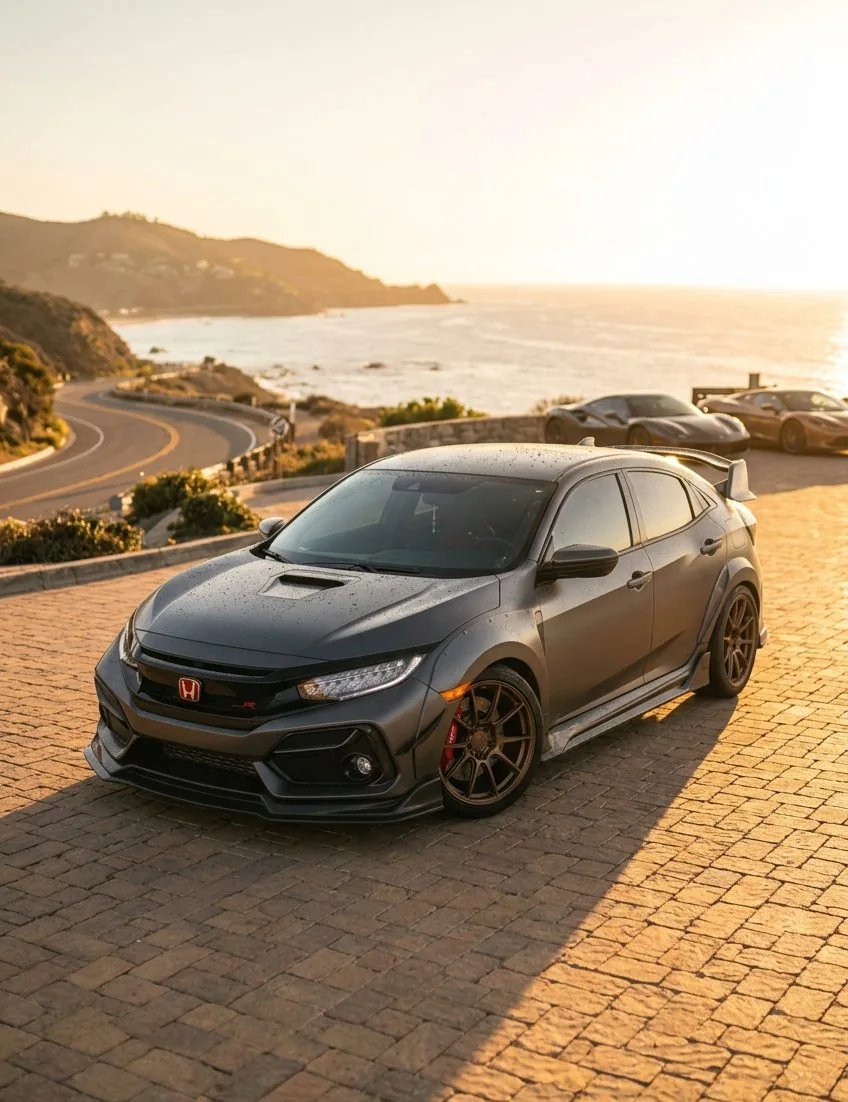
A cold air intake changes how your Civic performs. A cat-back exhaust changes how it sounds. But wheels change how it looks from every angle, every time someone sees the car. They define the character of a build more than any single modification. The right wheels on a 10th gen Civic make it look purposeful and intentional. The wrong wheels make an expensive car look cheap.
The 10th gen Civic is one of the best platforms for aftermarket wheel fitment in the compact segment. The 5x114.3 bolt pattern is one of the most common in the automotive world — meaning virtually every wheel manufacturer offers fitments for your car. The ET45 factory offset gives you meaningful room to go wider without rubbing issues. And the standard 18-inch Sport wheel gives you a starting point that is already better than most competitors offer from the factory.
This guide covers the brands worth spending money on, the sizes that work without modifications, the finishes that complement each paint color, and the brands to avoid regardless of how good the price looks.
The Fitment Numbers — Get These Right Before Anything Else
Before looking at a single wheel design you need to understand the three numbers that determine whether a wheel will fit your 10th gen Civic without rubbing, handling problems, or accelerated bearing wear.
Bolt pattern — 5x114.3. Five bolts arranged in a 114.3mm diameter circle. Every wheel must match this exactly. There is no adapter solution that works safely for daily driving. If a wheel listing does not specifically state 5x114.3 — it will not fit your car.
Hub bore — 64.1mm. The centre hole of the wheel must clear your car's hub. If it is larger than 64.1mm you need hub-centric rings to fill the gap — without them the wheel centres on the bolts rather than the hub, causing vibration at highway speeds. Most quality aftermarket wheels either come with hub-centric rings included or are machined to the exact 64.1mm bore.
Offset — ET45 factory. Offset determines how far inward or outward the wheel sits in the arch. There is no single safe offset range for every 10th gen Civic; fitment depends on wheel width, tire size, suspension height, brake clearance and the exact trim. Lower offsets can increase outer-fender or liner clearance risk, especially with wider tires or lowered suspension. Higher offsets move the wheel farther inward, so inner clearance to the suspension and brake components should be verified.
Before ordering any wheel: Use Tire Rack's fitment tool or the wheel manufacturer's vehicle search to confirm your exact year, trim and engine combination. The 10th gen Civic has slight suspension differences between trims that affect maximum wheel width without rubbing.
Wheel Sizes That Work on the 10th Gen Civic
| Size | Fitment | Tyre Size | Look |
|---|---|---|---|
| 17x7.5 ET42 | ✅ Perfect | 215/45R17 | Subtle, daily driver |
| 18x8.5 ET45 | ✅ Perfect | 225/40R18 | Most popular — balanced |
| 18x9 ET42 | ✅ Good | 225/40R18 | Slightly more aggressive |
| 18x9.5 ET38 | ✅ Good | 235/40R18 | Aggressive — needs low car |
| 19x8.5 ET45 | ✅ Good | 225/35R19 | Premium look |
| 18x9.5 ET25 | ⚠️ Risky | 235/40R18 | Pokes — likely rubbing |
| 20x9 ET45 | ⚠️ Check | 225/30R20 | Very low profile tyre needed |
The Best Wheel Brands for the 10th Gen Civic
Budget Tier — $150-250 per wheel
Konig is the most consistently recommended budget wheel brand in the Civic community and for good reason. They have been manufacturing aftermarket wheels since 1983 and their flow-formed construction delivers genuine performance benefits at accessible pricing.
The Konig Hypergram and Hyperspec are the two most popular models for the 10th gen Civic. Both are flow-formed — a manufacturing process that creates a lighter and stronger wheel than standard casting without the price of full forging. The Hyperspec specifically lists the 10th gen Civic as a confirmed fitment application.
Motegi Racing offers solid quality at budget pricing with a wide range of designs. Their MR116 and MR143 models are popular in the Civic community. Build quality is consistent and fitment is accurate. Good choice if you want more design variety than Konig offers at a similar price point.
MST Wheels is a newer brand that has gained significant traction in the JDM community. Their Time Attack and MT01 models are popular on Civics. Pricing is competitive and the designs are aggressive without being overdone.
Mid Range Tier — $250-450 per wheel
Enkei sits at the intersection of quality, heritage and value. Founded in Japan in 1950, Enkei has been producing wheels for both OEM manufacturers and the aftermarket for over seven decades. Their involvement in Formula 1 as Official Supplier to McLaren since 1995 is not just marketing — the engineering lessons from motorsport flow directly into their street products.
The Enkei RPF1 is the single most popular aftermarket wheel for sport compact cars globally and for the Honda Civic specifically. It is genuinely lightweight, extremely strong, and available in sizes that fit the 10th gen Civic perfectly. The RPF1 has won more time attack and autocross events than any other wheel in its segment — not because it is expensive, but because it does exactly what it promises.
Work Wheels Emotion CR Kiwami and Gram Lights 57DR are other popular mid-range options in the Civic community. Both are Japanese brands with strong reputations for quality and accurate fitment data.
Premium Tier — $500+ per wheel
Volk Racing TE37 is the aspirational wheel for most Civic enthusiasts and deservedly so. Forged aluminium construction, legendary lightweight credentials, and a design that has looked correct on sport compact cars for three decades. If budget allows — nothing beats a set of TE37s on a clean 10th gen Civic build.
BBS and SSR round out the premium tier. Both are Japanese forged wheel manufacturers with decades of motorsport heritage and impeccable quality standards.
Finish Guide — What Works With Each Civic Color
What to Avoid — Brands and Mistakes That Cost You Money
The wheel market has significant variation in quality and many no-name brands produce wheels that look identical to quality brands in photos but fail in real-world use. Here is what to watch for before spending money.
No-name Amazon brands with fewer than 500 reviews. A wheel is a safety component. It connects your car to the road. A wheel that fails at speed causes accidents. Unknown brands with no verifiable testing history are not worth the risk regardless of price. Stick to established brands with real customer bases and documented quality standards.
Incorrect hub bore without included rings. A wheel with a 73.1mm bore on a car with a 64.1mm hub is technically usable with hub-centric rings. But a seller who does not mention this in the listing does not understand wheel fitment — which raises questions about what else they do not understand about their product.
Significantly negative offset without lowering the car first. A very low offset can increase outer poke and may cause rubbing, but there is no universal cutoff because wheel width, tire size, ride height, alignment and body configuration all matter. Confirm the exact package and full-lock clearance before buying.
The Installation Checklist
Top Wheel Picks — 10th Gen Civic
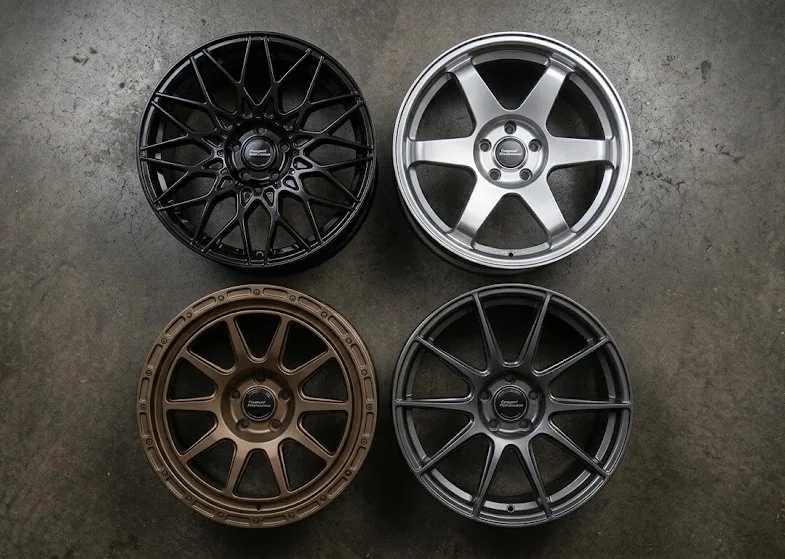
Three options covering the main use cases — a performance track-ready lightweight, a mid-range street wheel in a popular finish, and a budget-accessible option that does not sacrifice fitment accuracy:
Tyre Pairing by Wheel Size and Use
| Wheel size | Tyre size | Use case | Notes |
|---|---|---|---|
| 17x7.5 ET45 | 215/45R17 | OEM replacement / winter | Factory-size reference for the listed trim; verify your exact year/trim |
| 18x8.0 ET45 | 225/40R18 | Street daily | Clean fitment reference on stock-height applications; verify the exact tire and wheel design before purchase |
| 18x8.5 ET38 | 235/40R18 | Street / lowered | Check outer arch at full lock |
| 18x9.0 ET38 | 245/40R18 | Street / spirited | Lowering recommended for best look |
| 18x9.5 ET15 | 255/35R18 | Track / aggressive stance | Not recommended for stock ride height |
Winter Wheel Setup for 10th Gen Civic
If you live in a climate with genuine winter — snow, ice, or sustained temperatures below 7°C — running a dedicated winter wheel and tyre set is significantly safer and cheaper long-term than swapping winter tyres onto your summer wheels. Winter tyres are softer compound and designed to be fitted and removed seasonally — repeated mounting and dismounting on alloy wheels accelerates bead seat wear.
The practical winter setup for a 10th gen Civic: a 16-inch or 17-inch steel wheel in 6.5J or 7J width with an ET40–ET45 offset, running a 205/55R16 or 215/50R17 winter tyre. The smaller diameter keeps the overall rolling circumference close to OEM and the narrower section width improves snow penetration. Steel wheels are the right call here — they are cheap enough to accept salt corrosion damage without guilt and do not require the care that alloy wheels need in winter conditions.
Tyre pairing for a 16-inch winter setup: Michelin X-Ice Snow, Bridgestone Blizzak WS90, or Continental VikingContact 7 are the benchmark choices in 205/55R16 for the 10th gen Civic.
10th-Gen Civic, Civic Si and Type R Fitment Are Not Identical
The 10th-generation Civic uses 5x114.3 on the standard Civic and Civic Si, while the FK8 Civic Type R uses 5x120. Brake package, factory wheel diameter, ride height and tire choice also vary by trim. Treat a Civic Si or Type R fitment as its own calculation rather than copying a standard Civic sedan listing. Hub bore, offset and wheel-load rating still need to be checked for the specific car.
Wheel Weight and Everyday Performance
A lighter wheel can improve steering response and reduce unsprung mass, but it is not automatically the best wheel. Durability, spoke clearance, load rating and a wheel that fits without spacers matter first. For a daily driver, an 18-inch wheel often provides a useful balance of tire choice, ride quality and appearance. Owners looking specifically at Type R fitment should use the Type R wheels guide and compare tire sizes before ordering.
10th Gen Civic Wheel Buying Checklist
Does every 10th Gen Civic use the same wheel fitment?
No. Sedan, coupe, hatchback, Si and Type R applications can differ in wheel dimensions, brakes and clearance. Confirm the exact vehicle before ordering. Bolt pattern alone is not enough to establish fitment.
Are lightweight wheels worth paying more for?
They can be, particularly when the reduction in unsprung mass is meaningful, but price and replacement availability matter. A quality wheel that fits correctly and has a sensible weight can be a better street choice than a very expensive wheel whose size creates unnecessary tire or clearance compromises.
What should I ask when buying used Civic wheels?
Ask for the exact diameter, width, offset, bolt pattern and center bore. Inspect the inner barrel, bead seats, mounting face and spokes for bends, cracks and repairs. If possible, see the wheel without a tire mounted so damage is easier to identify.
- Confirm the exact Civic generation, trim and brake configuration before ordering.
- Match wheel diameter and width to a tire size that is approved for that wheel width.
- Calculate the effective offset if spacers are being used.
- Check inner clearance to the suspension and outer clearance to the fender at normal ride height and through steering travel.
- After installation, verify lug engagement, torque and clearance before normal driving.
10th-Gen Civic Wheel Fitment Checklist
For the next step, use the Civic wheel and tire guide for the general fitment process, then check wheel offset and the extended-stud and spacer guide if a spacer is part of the plan. Spacers change effective offset, so they should be evaluated as part of the complete setup rather than as an isolated cosmetic add-on.
A wheel should not be selected by diameter or brand alone. Treat the wheel, tire, offset and suspension as one package. A 19-inch wheel with a different width and offset can create a very different result from a 19-inch wheel that stays close to the factory geometry. If you are changing more than one variable, check inner clearance and outer fender clearance before assuming the package will fit.
Build the Wheel Package as One System
Frequently Asked Questions
Wheel Fitment: Five Checks Before You Buy
A 10th-gen Civic wheel can look perfect online and still be a poor fit. Check diameter, width, offset, center bore, and brake clearance together, then verify the intended tire size and suspension setup.
Width and offset
These determine where the wheel sits relative to the strut and fender. A wider wheel with the same offset does not behave like the original wheel, so compare inner and outer clearance separately.
Tire compatibility
Choose the tire and wheel as a package. Check the tire manufacturer's approved rim-width range and consider sidewall protection for rough roads.
Brake and suspension clearance
Diameter alone does not guarantee caliper clearance. Spoke shape and barrel design can matter. Lowering can also change clearance through suspension travel and steering angle.
Real-world usability
Consider potholes, parking ramps, replacement tire cost, and wheel availability. An aggressive setup that needs constant attention may be less enjoyable than a slightly more conservative fitment.