Best Cold Air Intake for Silverado 1500 5.3L — What Works
The 5.3L EcoTec3 V8 is a strong, capable engine that responds well to improved airflow. The stock airbox is restrictive by design. Here is what actually makes a difference on the Silverado platform.
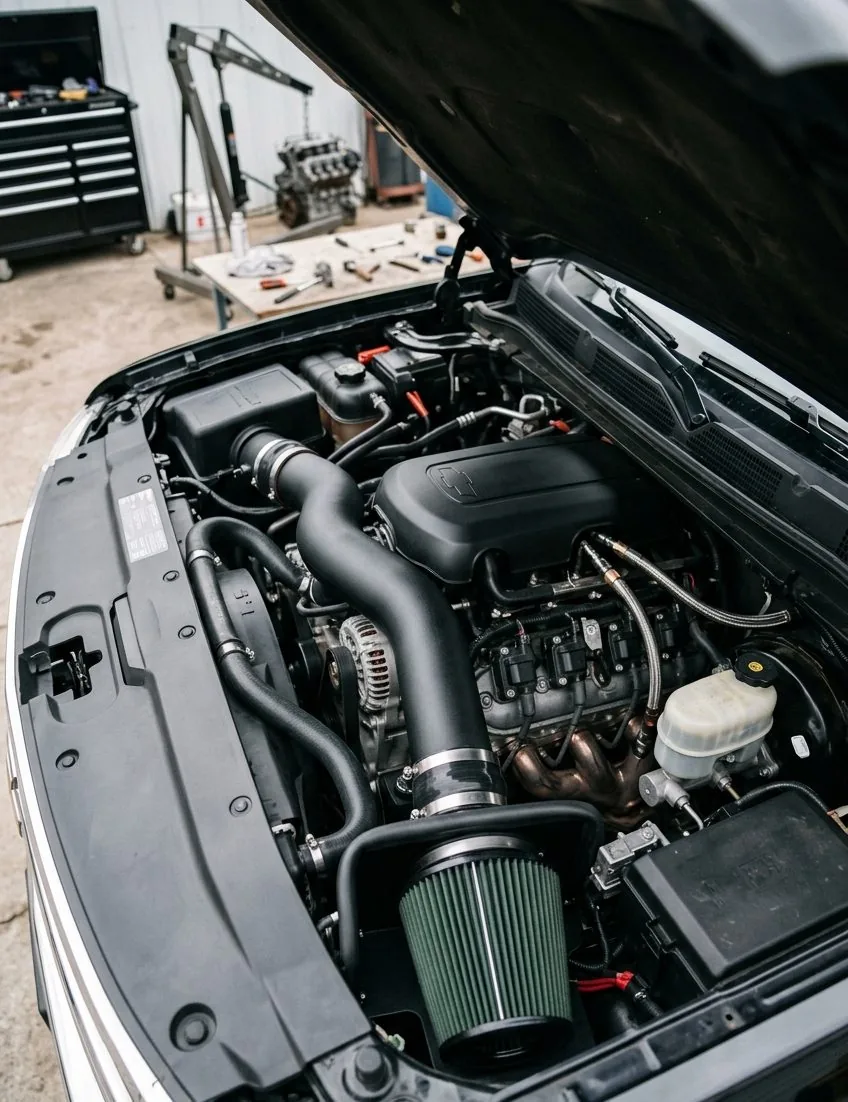
Why the 5.3L EcoTec3 Benefits From an Intake Upgrade
The 5.3L EcoTec3 uses cylinder-deactivation technology, but the exact system depends on model year and configuration. For example, 2019 introduced Dynamic Fuel Management on certain 5.3L applications while other 2019 configurations retained Active Fuel Management. GM's stock airbox keeps intake noise low and protects the engine from debris — but it does so at the cost of airflow restriction. An aftermarket cold air intake opens that restriction up, delivering more air to the engine more efficiently.
On a naturally aspirated 5.3L, an intake may change airflow and throttle/induction character, but there is no single horsepower gain that applies to every intake, vehicle and test condition. Where the intake delivers more obvious improvement is in throttle response, induction sound, and mid-range pull under load. Towing and hauling owners often notice this most clearly since the engine responds more immediately to throttle input.
Best Cold Air Intake Options for the Silverado 5.3L
Oiled vs Dry Filter — Which Is Better for the Silverado
This is a real debate in the Silverado community. Oiled filters (like K&N) flow slightly better and are reusable — you clean and re-oil them. Dry filters (like S&B) require no oiling and eliminate any risk of MAF sensor contamination, which is the main complaint against oiled filters when they're over-oiled.
The honest answer: both work well if used correctly. Over-oiling a K&N filter is the most common cause of MAF sensor issues — apply a light coating, not a heavy one. If you prefer to avoid the maintenance step entirely, S&B's dry filter is the cleaner choice for daily drivers.
Intake vs Tune — Which to Do First
| Modification | HP Gain (Standalone) | HP Gain (Combined) | Tune Required |
|---|---|---|---|
| Cold Air Intake Only | Application-specific; no universal figure | — | Usually not required for a stock application; verify the exact kit |
| Tune Only | Calibration-specific | — | Yes |
| Intake + Tune | — | Application-specific | Yes |
Best approach: If you plan to tune, have the tuner account for the exact intake and other hardware rather than relying on a generic sequence. Confirm the intake is correctly installed and free of leaks before calibration. The tuner calibrates around your specific intake setup, which produces better results than tuning first and adding the intake later.
Active Fuel Management — Does the Intake Affect It
Cylinder-deactivation hardware varies by Silverado model year and configuration; some 5.3L applications use AFM while others use DFM. Check the exact vehicle before applying advice about cylinder-deactivation behavior. An aftermarket intake does not directly disable or interfere with AFM — the system operates based on load and RPM signals, not intake design.
However, many Silverado owners who tune their truck choose to disable AFM as part of the tune since it can cause rough transitions and long-term engine wear concerns. If you're considering a tune alongside the intake, ask your tuner about AFM delete as a standard part of that process.
Frequently Asked Questions
Will a cold air intake void my Silverado warranty? In the U.S., aftermarket parts do not automatically void a vehicle warranty. However, a manufacturer or dealer may have grounds to deny a particular claim when the modification caused the damage; warranty disputes depend on the facts, the written warranty and applicable law. An intake does not automatically void the entire warranty. A particular claim can still be disputed if the modification caused the failure.
Do I need a tune with the intake? No — the intake runs fine without a tune on most Silverado applications. You'll feel improved throttle response and hear better induction sound. A tune unlocks significantly more of the performance potential.
Will my check engine light come on after installing an intake? Not typically on the 5.3L with a properly fitted, Silverado-specific intake. Generic universal intakes with incorrectly positioned MAF sensors can trigger codes. Stick to truck-specific intakes from reputable brands.
How long does installation take? 30-60 minutes for most Silverado-specific cold air intake kits. Basic hand tools only — no specialist equipment required.
What Silverado Owners Actually Experience With Cold Air Intakes
The most consistent feedback from Silverado 5.3L owners who've installed cold air intakes centers on throttle response improvement being immediately noticeable, induction sound being the most satisfying daily change, and the intake being a gateway modification that leads naturally to a tune.
A common observation on SilveradoSierra.com is that the intake alone feels like it wakes the truck up — the 5.3L responds more eagerly to throttle input, especially in the 2,000-4,000 RPM range where most daily driving happens. The raw power gain is modest without a tune, but the feel improvement is genuine and immediate. Owners who then add a tune consistently report that the intake's value multiplies significantly once the ECU is calibrated around the improved airflow.
The other consistent note from the Silverado community is on sound — specifically that the stock airbox on the 5.3L does an exceptional job of suppressing the V8's natural induction character. An aftermarket intake reveals a sound most Silverado owners didn't know their truck was capable of making. Under hard acceleration the intake roar becomes a defining part of the truck's personality in a way the stock setup simply doesn't allow.
Active Fuel Management — The Intake Connection
The 5.3L EcoTec3's Active Fuel Management (AFM) system is worth understanding before installing an intake because many Silverado owners choose to address AFM at the same time. AFM deactivates four of the eight cylinders under light load conditions — highway cruise, gentle acceleration — to improve fuel economy. The transitions between 4-cylinder and 8-cylinder mode can feel rough and are a known complaint among 5.3L owners.
An intake alone does not disable AFM. However, many Silverado owners who tune their truck specifically request AFM delete as part of the tune — it smooths out the power delivery, eliminates the rough cylinder transition feel, and some engine builders argue it reduces long-term wear on the AFM lifters. If you're planning to tune after the intake (which you should), discuss AFM delete with your tuner at the same time rather than as a separate conversation.
Which Silverado Generations Benefit Most
The 5.3L EcoTec3 spans multiple Silverado generations and the intake fitment and benefit varies slightly between them.
Budget Planning — Total Cost of the Intake Upgrade
| Component | Cost Range | Notes |
|---|---|---|
| Cold Air Intake (K&N 57 Series) | $250-350 | Most popular choice — proven fitment |
| Cold Air Intake (S&B) | $300-450 | Best flow numbers — dry filter |
| Cold Air Intake (aFe Power) | $350-500 | Best sound — sealed cold air box |
| Professional Installation | $0-100 | Most owners DIY in under 1 hour |
| Tune (Hondata/HP Tuners) | $400-700 | Strongly recommended to maximize intake |
| Total (intake + tune) | $650-1,200 | Best investment sequence for the 5.3L |
The honest recommendation: Buy the intake now, drive it for 2-3 weeks to enjoy the immediate feel and sound improvement, then schedule the tune. The intake alone is satisfying. The intake plus tune is transformative. Don't skip the tune thinking the intake alone is enough — you're leaving most of the hardware's potential on the table without it.
Maintaining Your Silverado Cold Air Intake
A cold air intake requires minimal but important maintenance to keep performing correctly. K&N oiled filters should be cleaned every 50,000 miles under normal driving conditions or when visibly dirty — operating a clogged filter defeats the purpose of the upgrade and can restrict airflow below stock levels in extreme cases.
The cleaning process for oiled filters is straightforward: apply K&N Power Kleen filter cleaner, allow it to soak for 10 minutes, rinse thoroughly from the inside out with low-pressure water, allow to dry completely (this takes several hours — do not use heat to speed drying), then apply a light coat of K&N filter oil. The key mistake to avoid is over-oiling — a light coating across the entire filter surface is sufficient. Excess oil can migrate to the MAF sensor and trigger fault codes.
S&B dry filters require no oiling and are replaced rather than cleaned, typically every 30,000-50,000 miles. The lower maintenance requirement is one of S&B's main selling points for owners who prefer to set-and-forget.
Beyond filter maintenance, periodically check the intake pipe and all couplers for cracks or loose clamps. Vibration over time can loosen hose clamps on the couplers connecting the intake pipe to the throttle body. A loose coupler creates an unmetered air leak that the MAF sensor cannot account for, causing lean running conditions and potentially triggering fault codes. A quick visual inspection every oil change takes 30 seconds and catches this before it becomes a problem.
Where to Go Next
If you are planning a Silverado build, use the guide that matches the decision you are making rather than jumping between unrelated upgrades.