Best Cat-Back Exhaust for Silverado 5.3 — Ranked
The 5.3L EcoTec3 is one of the best sounding V8 truck engines when the factory exhaust gets out of the way. Here is exactly what each major system delivers and which one suits your build.
Why the 5.3L Responds So Well to a Cat-Back
Finding the best cat-back exhaust Silverado 5.3 owners actually want — and the best cat-back exhaust for a Silverado 5.3 build specifically — comes down to one decision above all others — sound level vs drone management. The EcoTec3 5.3L is a naturally aspirated V8 with a firing order and exhaust pulse character that suits aftermarket exhaust systems particularly well. Unlike turbocharged engines where the turbocharger buffers the exhaust note, the 5.3L's sound travels directly from the exhaust ports through the system and out the tips — which means a quality cat-back produces a dramatic transformation in how the truck sounds, not just a subtle improvement.
The factory exhaust on the Silverado 1500 is engineered for noise suppression and emissions compliance. The muffler design and pipe diameter are conservative by performance standards, which is why the gap between stock and aftermarket is so noticeable on the 5.3L. An aftermarket cat-back replaces the restrictive factory muffler and typically upgrades to 3-inch or 3.5-inch piping, both of which improve exhaust flow and produce the V8 rumble the stock system deliberately suppresses.
The one complication unique to the 5.3L Silverado is Active Fuel Management — the cylinder deactivation system that drops the engine to four cylinders during light load highway cruising. AFM changes the exhaust pulse pattern significantly, and some aftermarket systems that sound excellent in eight-cylinder mode develop noticeable drone specifically during AFM operation. This is the most important factor to research before buying a 5.3L cat-back and the reason brand and system selection matters more on this platform than on simpler V8 applications.
2014-2018 vs 2019-2026 — Does It Matter for Exhaust?
Yes — and it matters more than most buyers realise. The 2019+ Silverado has a different exhaust routing, tip exit position, and in some configurations an active exhaust valve system that the 2014-2018 does not have. Systems designed for the 2014-2018 will not bolt cleanly onto the 2019+ and vice versa. Always confirm the specific year range listed on any exhaust system before purchasing — and be sceptical of listings that claim universal Silverado 1500 fitment without specifying generation.
The good news is that all four major brands covered in this guide offer generation-specific fitment. Borla, Corsa, MagnaFlow, and Flowmaster each have distinct part numbers for the two Silverado generations, and the affiliate links below are matched to the correct generation.
Top Picks — Ranked by Value and Real Owner Feedback
Sound and Drone Comparison
| System | Sound Level | Highway Drone | AFM Drone | Character |
|---|---|---|---|---|
| Stock | Quiet | None | None | Suppressed, refined |
| MagnaFlow Street | Moderate | Very Low | Low | Clean, refined V8 |
| Borla S-Type | Moderate-Loud | Low | Low | Deep, authoritative |
| Corsa Sport | Loud | Low | Low-Moderate | Aggressive, controlled |
| Flowmaster Outlaw | Very Loud | High | High | Aggressive, raw |
The AFM Problem — What You Need to Know Before Buying
Active Fuel Management deactivates four of the eight cylinders during light load conditions — typically highway cruise between 1,400-1,800 RPM. When this happens the exhaust pulse pattern changes from an eight-cylinder firing rhythm to a four-cylinder rhythm, and many aftermarket exhaust systems produce significant drone specifically at this operating condition.
The fix that most Silverado exhaust owners combine with their cat-back is an AFM disabler — a device that plugs into the OBD2 port and prevents the engine from entering four-cylinder mode. It keeps the engine running on all eight cylinders at all times, which eliminates AFM drone entirely and produces a more consistent exhaust note at highway speeds. It is reversible, requires no ECU modification, and costs $50-100. Most experienced Silverado exhaust owners consider it essential alongside any cat-back system.
Our Silverado exhaust drone fix guide covers the full diagnosis and solution process if you are already experiencing drone with your current system.
Performance Gains — What a Cat-Back Actually Delivers
A quality cat-back on the 5.3L consistently shows 8-15 horsepower and 8-12 lb-ft of torque on a dyno from reduced backpressure improving exhaust scavenging efficiency. These are real numbers — not marketing claims. The mid-range torque improvement is particularly relevant for towing, where better exhaust flow in the 2,000-4,000 RPM range reduces the frequency of downshifts on grades and improves sustained highway towing stability.
Without a tune the ECU self-adjusts within factory calibration limits. With a supporting tune from DiabloSport or HP Tuners the gains increase as the ECU is recalibrated around the improved exhaust flow — most tuned 5.3L builds with cat-back show 20-30 horsepower over stock.
Installation — What to Expect
The best cat-back exhaust for 5.3 Silverado builds is a bolt-on installation 1500 is achievable for a home mechanic comfortable with basic exhaust work in 2-3 hours. The system connects to the factory catalytic converter flange and uses the factory hanger positions. No welding required on quality bolt-on systems.
The most common installation challenge is seized hardware on older trucks — the factory bolts at the cat flange can be difficult to remove on trucks with significant mileage or exposure to road salt. Penetrating oil applied the day before makes this significantly easier. A second set of hands is useful for supporting the system weight while aligning it to the factory hangers.
Single vs Dual Exit — Which Looks and Sounds Better
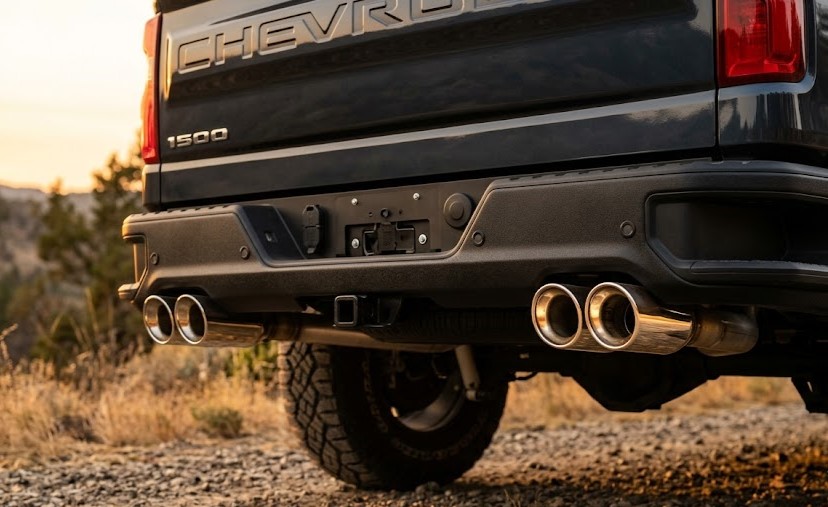
Most factory Silverado exhausts use a single offset exit on the passenger side. Aftermarket cat-back systems give you the choice between continuing with single exit or upgrading to dual exit — one tip on each side of the rear bumper. The visual transformation from single to dual exit is dramatic and is one of the most cited reasons owners choose specific systems beyond sound character alone.
Borla, Corsa, and MagnaFlow all offer dual exit configurations for the Silverado. The performance difference between single and dual exit at street power levels is negligible — the visual benefit is the real reason to choose dual, and it is a legitimate one. A Silverado with dual polished or black tips filling both sides of the rear bumper looks like an intentionally built truck rather than a stock truck with a muffler swap.
Side exit and turndown configurations are popular on lifted builds. Side exit directs exhaust downward or to the side rather than out the rear, which changes how the sound reflects off the ground and road surface. Drone characteristics can be unpredictable with side exit — some owners find it better than rear exit, others find it worse. If drone management is a priority, stick with a rear exit configuration from an established brand rather than experimenting with side exit on an aggressive chambered muffler.
Frequently Asked Questions
What is the best cat-back exhaust for a Silverado 5.3L? Borla S-Type for the best balance of sound and drone management on a daily driver. Corsa Sport for maximum sound with better drone control than Flowmaster. MagnaFlow Street Series for the most refined daily driver improvement. Flowmaster Outlaw for maximum aggression if drone is acceptable.
Will a cat-back exhaust drone on a Silverado? Depends on the system. Borla and MagnaFlow are engineered to minimise drone. Corsa uses patented technology to manage drone at higher sound levels. Flowmaster Outlaw will drone noticeably, particularly during AFM four-cylinder operation. An AFM disabler significantly reduces drone on any system.
Does the 2014-2018 exhaust fit the 2019+ Silverado? No. Different exhaust routing, tip positions, and active exhaust hardware mean separate part numbers are required for each generation. Always confirm year-specific fitment before purchasing.
Do I need a tune after a cat-back on the Silverado? Not required — the ECU handles the change within factory calibration. A tune after both intake and exhaust are installed extracts more performance by recalibrating around the hardware combination.
Should I get an AFM disabler with my Silverado exhaust? Most experienced 5.3L owners recommend it. It eliminates the drone that occurs specifically during AFM four-cylinder operation, keeps the engine in the operating mode that sounds best, and costs far less than dealing with drone after the fact.
How much does a Silverado cat-back cost installed? Quality systems run $500-900 for parts. Professional installation adds $150-250. Total landed cost: $650-1,150 depending on the system chosen.